






This is THE question everyone asks before buying. And honestly, the answer deserves better than a simple yes or no. Abdominal belts work — but not in the way most people believe, and certainly not in every situation. This article debunks the myths and provides a factual answer based on available scientific data.
Let's start by understanding what an abdominal belt really is
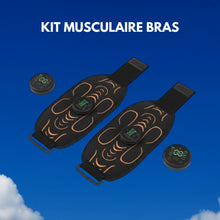
The term "abdominal belt" encompasses radically different products. There are heating belts that simply make you sweat, post-operative lumbar support belts, and muscle electrostimulation (EMS) belts. It is the latter that we will analyze, as they are the only ones for which there is a serious scientific basis.
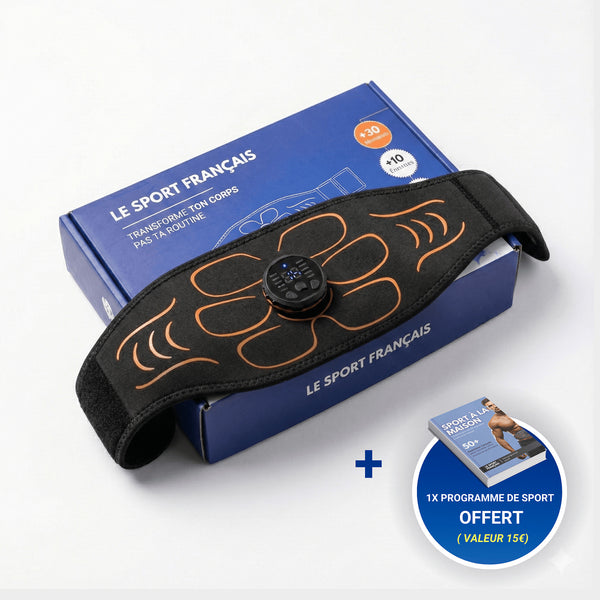
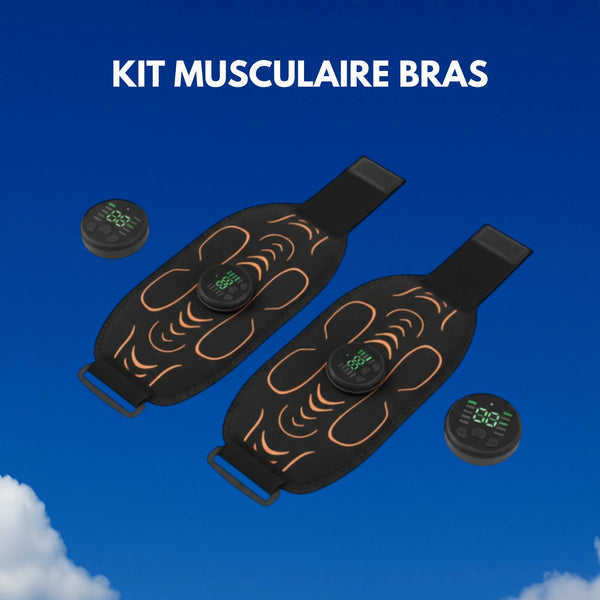
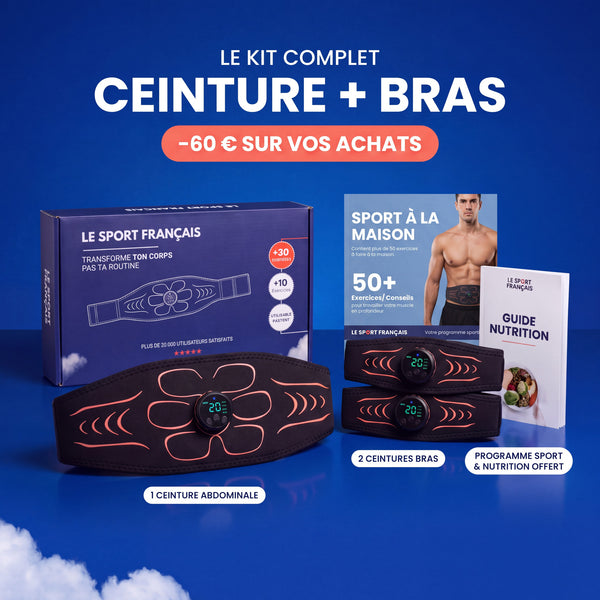
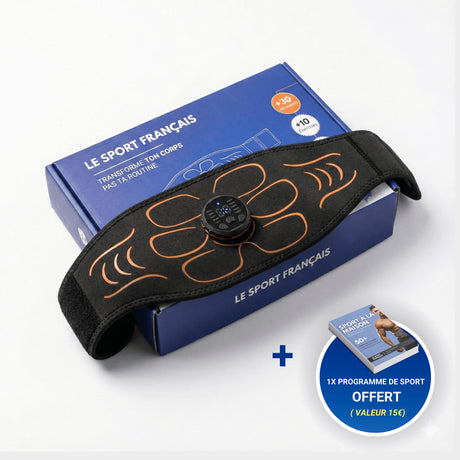
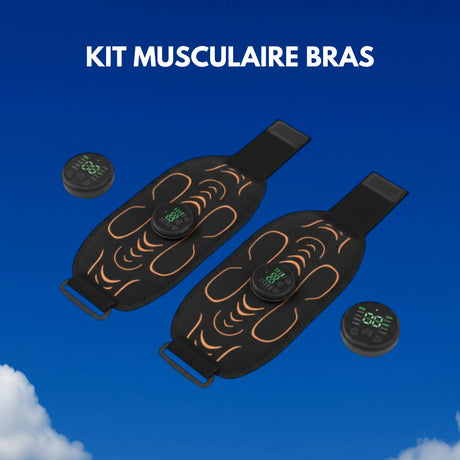
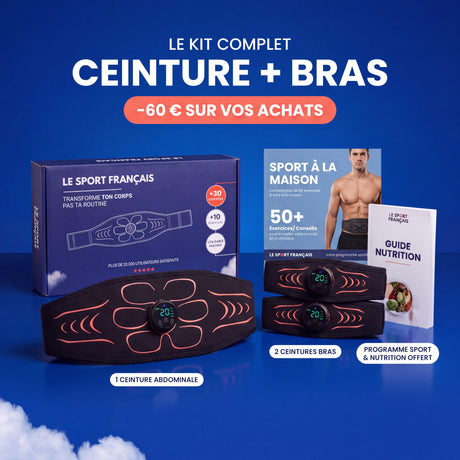
An EMS abdominal belt uses low-frequency electrical currents to trigger involuntary muscle contractions in the abdominal muscles. These contractions are very real — they work your muscle fibers exactly as voluntary exercise would, with a few important differences that we will detail.
The scientific answer: yes, it works, but not for everything
What the evidence is strong for
Abdominal muscle strengthening: This is the best-documented effect. Electromyography (EMG) studies have confirmed that EMS pulses generate measurable and significant muscle activity in the abdominal muscles, including deep layers like the transverse abdominis. This deep muscle — the primary stabilizer of the lumbar spine — is notoriously difficult to target with conventional exercises. The EMS belt reaches it directly.
Improved tone and firmness: Regular use protocols (3 to 5 sessions of 20 minutes per week for 8 to 12 weeks) have shown measurable improvements in abdominal tone. Consistent users report a noticeably firmer midsection, improved posture, and, in many cases, a waist reduction of between 2 and 5 centimeters.
Reduction of lower back pain: Strengthening the transverse abdominis improves the stability of the lumbar spine. In fact, the French National Authority for Health (HAS) recognizes the strengthening of core stabilizer muscles as a first-line treatment for mechanical lower back pain. Many users report a significant reduction in their chronic back pain after 6 to 8 weeks of regular use.
Post-workout muscle recovery: Used in low-frequency mode after a sports session, the belt produces a deep massage effect that improves local blood circulation and reduces muscle soreness. This is a well-documented use in the world of professional sports.
What the evidence is weak or non-existent for
Direct abdominal fat loss: This is where abdominal belts are most often overestimated. Localized lipolysis — the idea of "burning" fat in a specific area — is not supported by science. Your body mobilizes fat systemically according to genetically determined priorities, not locally where you are stimulating. An EMS belt used alone, without a caloric deficit, will not melt your belly fat.
Total replacement of a sports program: The belt specifically works the abdominal muscles. It does not generate significant cardiovascular benefits, does not strengthen the rest of the body, and does not compensate for a generally sedentary lifestyle.
Why some people say it doesn't work
Negative testimonials exist and deserve to be taken seriously. Here are the most frequent reasons for a disappointing result:
1. The product was of poor quality
The market is flooded with low-end EMS devices sold for between 15 and 30 euros on general retail websites. These devices do not deliver pulses powerful enough to create real muscle adaptation. They produce a pleasant tingling sensation without working the deep fibers with the necessary intensity. These are not serious EMS tools — they are gadgets.
An effective EMS belt requires at least 30 progressive intensity levels, medical-grade conductive electrodes, and several stimulation modes calibrated for different physiological goals.
2. The protocol was not followed
Using the belt once a week for two weeks and expecting a visible result is unrealistic. Like any muscle training, EMS requires consistency and progression. The minimum to start seeing changes is 3 sessions of 20 minutes per week for 6 consecutive weeks, with a regular progression in intensity.
3. Diet was not adjusted
This is the most common reason for dissatisfaction. People hope to see their stomach flatten without changing what they eat. However, even excellent abdominal muscle strengthening will not make the abs visible if a layer of fat still covers them. The belt improves the underlying muscle. Fat loss depends on a caloric deficit.
4. Expectations were unrealistic
No device gives you a six-pack in 15 days. Muscle strengthening is a biological process that takes time. Significant changes occur between 6 and 12 weeks depending on the individual.
How to maximize the results of your abdominal belt
If you really want your abdominal belt to give you visible results, here is the strategy that works:
Diet: the key to a visible flat stomach
Create a moderate caloric deficit of 300 to 500 kcal per day. Increase your protein intake (minimum 1.6 g per kg of body weight) to preserve muscle mass during fat loss. Reduce simple sugars and alcohol, which promote abdominal storage. The ANSES provides detailed nutritional references to adapt your diet to your activity level.
Active exercises combined with the belt
The EMS belt used during core exercises produces significantly higher muscle activation than the passive belt or exercise alone. The optimal program: abdominal vacuum with belt activated at 50-60%, plank (core strengthening) with belt at 60-65%, dead bug and bird dog with belt at 50%. 20 to 25 minutes per session, 4 times a week.
Intensity progression
This is the most often neglected factor. Muscles adapt to repeated stimuli. If you stay at the same intensity level indefinitely, you will plateau. Increase by one or two levels per week until you reach 65 to 75% of your maximum tolerated intensity.
Consistency over time
3 to 5 sessions of 20 minutes per week for at least 12 weeks. This is the protocol that yields documented results. People who give up after 3 weeks cannot judge the effectiveness of the technology.
Real results: what consistent users report
By analyzing feedback from thousands of Le Sport Français abdominal belt users who followed a complete protocol (diet + exercise + regular EMS):
- 87% report a noticeable improvement in abdominal tone after 4 weeks
- 73% observe a reduction in lower back pain after 6 to 8 weeks
- Average waist reduction: 3.2 cm over 8 weeks (diet maintained but not optimized)
- With an adapted diet: 4 to 7 cm reduction over 10 to 12 weeks
These figures are consistent with what science predicts for a properly conducted EMS protocol.
What is the best abdominal belt?
To answer this question objectively, here are the criteria that distinguish an effective belt from a gadget:
- Number of intensity levels: minimum 30, ideally 36+. Fine progression is essential to adapt to every body type and avoid plateaus.
- Variety of modes: at least 5 modes covering toning, endurance, performance, massage, and recovery. Each mode corresponds to different frequencies with distinct physiological effects.
- Quality of electrodes: hypoallergenic certified, ensuring uniform conductivity across the entire contact surface.
- Rechargeable battery: USB-C, sufficient battery life for 3 to 4 sessions between charges.
- Adjustability: must adapt to a waist size of 60 to 110 cm to function properly on all body types.
Conclusion: do abdominal belts really work?
Yes — for abdominal muscle strengthening, improving posture, reducing lower back pain, and post-workout muscle recovery. These are documented and reproducible effects when the protocol is followed and the device is high quality.
No — for directly melting abdominal fat, replacing overall physical activity, or providing visible results without dietary adjustments.
The abdominal belt is not magic. It is an effective technological tool that fits into a coherent global approach. Used correctly, as part of an active lifestyle and a balanced diet, it significantly accelerates results and allows you to achieve a level of deep abdominal tone that few exercises can match.
Frequently Asked Questions
How many times a week should I use my abdominal belt?
3 to 5 times a week for strengthening sessions (toning/performance mode). In massage/recovery mode, you can use it daily without any issues. Always allow 48 hours of recovery between two intense sessions.
Is the abdominal belt suitable for pregnant women?
No, abdominal electrostimulation is strictly contraindicated during pregnancy. It may also be contraindicated in the first few weeks postpartum depending on the nature of the birth. Consult your doctor before any use in these situations.
Can I use the abdominal belt with a pacemaker?
No, absolutely not. Electrical impulses can interfere with the operation of a pacemaker. This is an absolute contraindication.
Does the abdominal belt give results without exercising?
It gives muscle strengthening results even without simultaneous exercise. But the results are significantly better (about twice as much according to our observations) when used during active exercises like planks. For visible abdominal fat loss, diet remains the predominant factor.
🔗 Read also:
— EMS Belt: gadget or real solution? The full analysis
— Effective use: the 4-week program
— Real results over 8 weeks
The belt that convinced 10,000+ customers
Le Sport Français — 36 levels, 6 modes, documented results.
See the EMS belt →📚 Sources
- HAS. Chronic adult low back pain. has-sante.fr
- INSERM. Physical activity and health. inserm.fr
- Ameli.fr. Back pain. ameli.fr
- ANSES. Nutritional references. anses.fr