




Do you lose fat by sweating? The question comes up after every workout that ends with a soaked t-shirt and a scale showing 500 g less. The honest answer fits in one sentence: sweat gets rid of water and heat, not fat. But that's not the whole story. Sweating goes hand in hand with physical effort, which does burn energy, and a sweat garment can have its place in a well-built routine.
In this guide, we explain what sweat contains, where fat actually goes when you lose weight, why the scale fools you after a workout, and how to use sweat gear without kidding yourself.
Do you lose fat by sweating? The short answer
No: you don't lose fat by sweating. You lose water, which you get back by drinking over the following hours. Fat only goes down when your body spends more energy than it takes in, day after day. Sweating is your body's cooling system, not its fat-removal system.
That doesn't mean sweating is pointless. A workout that makes you sweat is often a workout where you moved, and movement is what counts. Here's the nuance: sweat can be a sign of effort, never the cause of fat loss. In fact, you can sweat heavily while burning almost nothing (sauna, heatwave) and burn a lot of energy without dripping (swimming, cycling in cold weather).
What is sweat made of, and what is it for?
Sweat is about 99% water. The rest is mineral salts (mainly sodium and chloride, a little potassium) and traces of other compounds such as urea and lactate. It contains no significant amount of fat. The idea of fat "melting" and flowing out through your pores is an image, not a physiological reality.
Its job is thermoregulation. When your muscles work, they produce heat. To avoid overheating, your body releases water onto your skin: as that water evaporates, it carries heat away. It's evaporation that cools you, not sweat dripping off. That's also why waterproof clothing makes you sweat more: sweat can no longer evaporate, your body cools down less efficiently and produces even more of it.
The amount of sweat varies enormously from one person to another. It depends on temperature, humidity, intensity, body size, fitness level and genetics. Trained people often start sweating earlier and sweat more: their cooling system is simply better tuned. So sweating a lot is neither a sign of a "good metabolism" nor proof of a successful workout.
Where does fat actually go when you lose weight?
This is the most surprising part. Stored fat (triglycerides) is neither "turned into sweat" nor "converted into muscle". It is oxidised: your cells combine it with the oxygen you breathe to produce energy, and this reaction leaves two waste products, carbon dioxide and water.
Two Australian researchers, Ruben Meerman and Andrew Brown, did the maths atom by atom in a paper published in the British Medical Journal (2014). The result: for every 10 kg of fat lost, about 8.4 kg is breathed out as CO2 and 1.6 kg becomes water. In other words, nearly 84% of the fat you lose leaves through your lungs. The remaining 16% joins your body water, which is eliminated through urine, breathing, stools… and, only to a small extent, through sweat.
Don't get the wrong idea: breathing faster while sitting on the sofa won't make you lose weight. You only breathe out more CO2 if your cells have actually burned more fuel, meaning you moved more or ate slightly less than you need. The only way in is still an energy deficit. On the nutrition side, our 7-day flat stomach meal plan gives you a simple framework to get there without starving yourself.
Why does the scale drop after a sweaty workout?
Because one litre of sweat weighs one kilo. During exercise, losses commonly range from 0.5 to 2 litres per hour depending on conditions and individuals, according to the American College of Sports Medicine position stand on hydration. A 45-minute workout in a sweat garment can therefore bring the scale down by several hundred grams. It's real, but it's water.
Compare that with fat. The commonly used figure is around 7,700 kcal per kilo of fat tissue. A moderate 45-minute cardio session represents a few hundred kilocalories, or a few dozen grams of fat at best. On the scale, that change is invisible, drowned out by fluctuations in water.
The water weight you lose comes back as soon as you eat and drink, usually within 24 hours. And that's a good thing: staying dehydrated to "keep" a lower number is pointless and hurts your fitness. To track real fat loss, rely on the trend over several weeks: waist measurement taken at the same spot, your weekly average weight taken in the morning on an empty stomach, and photos taken in the same conditions.
What sweating really does (and what it doesn't)
What it does
- It keeps your muscles warm. A top that holds in heat shortens that "getting going" feeling and makes warming up more comfortable, especially in winter or in a cool room.
- It slightly increases the strain of the workout. At the same pace, your heart beats a little faster when your body also has to cool itself down. A few small studies on sauna suits suggest slightly higher energy expenditure, but sample sizes are small and the difference is modest: it's not a shortcut.
- It gives you a sense of commitment. Many people say they push harder when they feel the heat building. If it helps you stay consistent, that's a very real benefit, even if it's psychological.
- It temporarily changes your silhouette. Less water under the skin and a garment that holds you in: the visual effect exists, but it lasts a few hours.
What it doesn't do
- It doesn't melt fat in one specific spot. Sweating from your belly doesn't release belly fat: fat loss happens across the whole body, driven by your energy balance and your genetics. Our guide on belly fat in men explains how it is actually released.
- It doesn't "flush out toxins" in any meaningful way: that work is done by your liver and kidneys.
- It doesn't replace physical activity or diet. Wearing a sweat garment without moving makes you lose water, nothing more.
We go through these limits product by product in our honest review of the sweat vest and in the article sweat belt: effective or gimmick?
How to use a sweat garment wisely
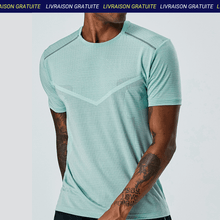
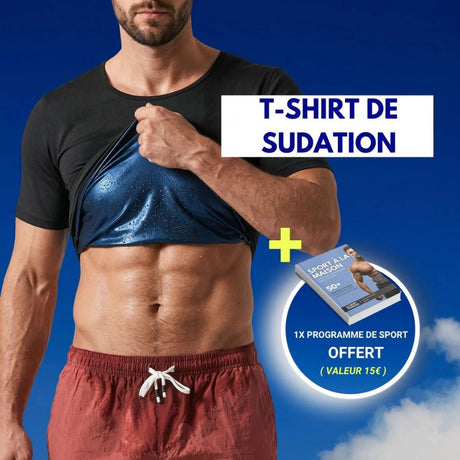
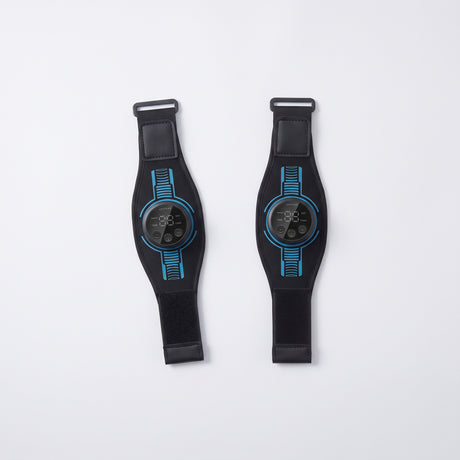
If you like the feeling of heat during exercise, a top like the Le Sport Français long-sleeve sweat t-shirt or, for waist support, the women's sweat waist shaper fits perfectly into a home workout. Depending on the area you want to keep warm, a sweat belt or a pair of high-waisted sweat leggings do the same job. As long as you see them as comfort and motivation accessories, not as the engine of fat loss.
A typical 30-minute workout
- 0 to 5 min: warm-up (brisk marching on the spot, shoulder and hip rotations, slow squats).
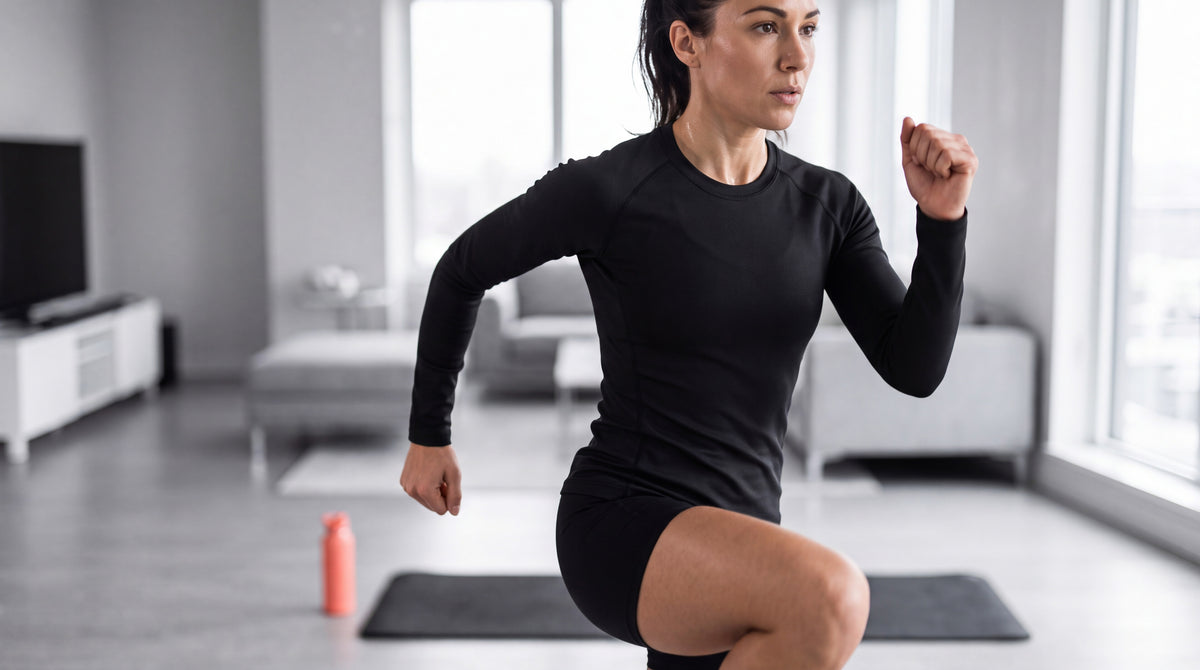
- 5 to 25 min: moderate-intensity circuit, 40 seconds of work, 20 seconds of rest: squats, high knees, reverse lunges, plank (see our 10 core exercises to do at home), side shuffles. You should be able to say a short sentence without gasping.
- 25 to 30 min: cool-down, deep breathing, light stretching. Take the garment off as soon as the workout is over.
Drink a glass of water before, keep a water bottle within reach during, and keep drinking afterwards. For the food side, our guide to sports nutrition: what to eat before and after exercise rounds out this workout.
4-week progression
- Week 1: 2 sessions of 20 minutes wearing the garment, to test your heat tolerance.
- Week 2: 3 sessions of 25 minutes, including one without the sweat garment to compare how you feel.
- Week 3: 3 sessions of 30 minutes, adding 30 minutes of walking every day. This is the official benchmark from the French public health programme Manger Bouger: at least 30 minutes of dynamic physical activity per day.
- Week 4: 3 to 4 sessions of 30 minutes. Measure your waist and compare it with week 1.
What will move your waist measurement over these four weeks is consistent workouts, walking and a slight calorie deficit. The French national health insurance (Assurance Maladie) makes the same point in its advice on recommended daily physical exercise: the amount of activity matters more than its intensity. For nutrition and planning, lean on our 30-day programme to lose belly fat.
The before/after weigh-in test
Weigh yourself just before and just after a workout, in the same conditions. The difference is almost entirely water lost. To recover properly, the ACSM recommendations mentioned above suggest drinking about 1.5 litres per kilo lost, spread over the following hours. This little test has another benefit: it shows you, with numbers, that the "weight lost" in a workout isn't fat.
What are the limits, mistakes and contraindications?
Sweating more isn't harmless. According to the ACSM, losing more than 2% of your body weight in water impairs endurance performance, especially in hot weather. Beyond that, the risks increase: cramps, headaches, dizziness, heatstroke. The French national health insurance lists the signs of dehydration to watch for: thirst, dry lips, less urine, unusual fatigue.
The most common mistakes:
- Not drinking to "lose more". You'll lose energy and workout quality, not fat.
- Piling on layers or training in an overheated room, in full sun or during a heatwave.
- Wearing the garment all day. It's designed for the length of a workout, not ten hours at the office: the risk of irritation and chafing goes up.
- Judging your workout by how much you sweat rather than by the effort you put in and your consistency.
- Going straight from the sauna to a sweat workout without rest or rehydration.
Ask for medical advice before using a sweat garment if you are pregnant, if you have heart disease, kidney disease or high blood pressure, if you take diuretics, or if you have ever fainted from the heat. Stop the workout immediately if you feel dizzy, nauseous, get chills or a headache.
Frequently asked questions
Does sweating a lot mean burning more calories?
No. The amount of sweat mainly reflects how much heat needs to be released: temperature, humidity, clothing, genetics. Two people putting in the same effort can sweat very different amounts. To estimate how much you burn, look instead at intensity, duration and how out of breath you are.
Do saunas or steam rooms help you lose weight?
They make you lose water, which comes back as soon as you rehydrate. They can be a pleasant way to relax after exercise, but they don't replace a workout: without muscle work, energy expenditure stays low.
How long does the weight lost through sweating stay off?
A few hours. As soon as you eat and drink normally, the water is restored, usually in under 24 hours. Only an energy deficit repeated over several weeks leads to a lasting drop.
Is a sweat t-shirt useful if you don't lose fat by sweating?
It can be, for thermal comfort, support and motivation, as long as you pair it with a real workout and stay well hydrated. Our guide sweat t-shirt: what it's really for covers the uses that make sense and the ones to avoid.
How can I tell if I'm losing fat and not water?
Follow the trend, not the daily weigh-in: your weekly average morning weight, your waist measurement every two weeks, clothes fitting differently. A slow, steady drop over a month is a much better indicator than a kilo "lost" after a workout.
Key takeaways on fat and sweating
Do you lose fat by sweating? No: you lose water, and fat leaves mainly through your breath when you spend more energy than you take in. Sweat is neither a goal nor a reliable indicator. On the other hand, regular workouts, a bit of walking every day and an adjusted diet do work, with or without a sweat garment.
If the heat motivates you and helps you stick to your workouts, the long-sleeve sweat t-shirt is a great training companion, to be used for short sessions while drinking enough. To go further, read our honest review of the sweat vest and our 30-day programme to lose belly fat.