




A sweat vest often promises the moon: a flat stomach in just a few sessions, "melted fat," and a sculpted figure with no effort. If you are looking for an honest review of the sweat vest, here is the short answer: it does not cause weight loss on its own, but when used correctly during your sessions, it has real, measurable effects. In this guide, you will discover what this garment actually does, what it will never do, what studies say, a concrete 4-week protocol, and the mistakes that turn a good tool into a bad idea.
What is a sweat vest and how does it work?
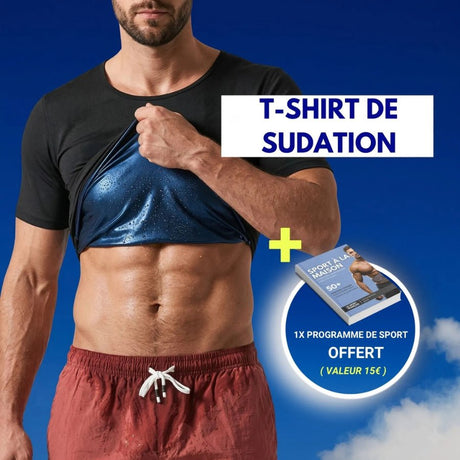
A sweat vest (or tank top) is a sleeveless top designed with a thermal, low-breathability fabric, usually made of neoprene or an equivalent polymer. Unlike a technical t-shirt that wicks away sweat, it does the opposite: it retains the heat produced by your muscles and limits the evaporation of sweat around the torso. As a result, the skin temperature rises faster, and the body triggers sweating earlier and more abundantly, hence the "sauna effect" highlighted by manufacturers.
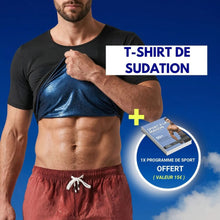
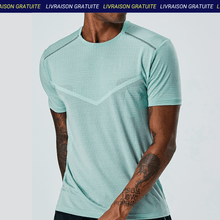
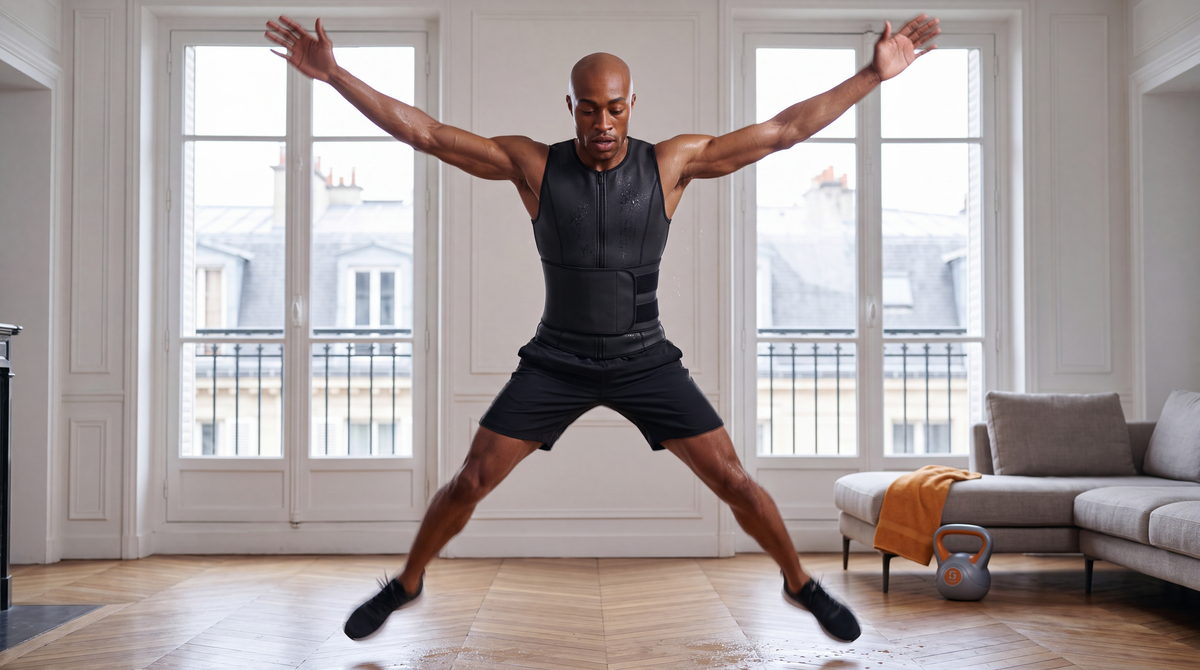
The premium men's sweat tank top Le Sport Français is a great example of the category: a fitted cut that hugs the torso, covering the abdominal and lumbar zones, while providing shoulder freedom of movement for running, jumping, or core exercises. It is neither a medical girdle nor compression clothing: its function is thermal, not mechanical.
This mechanism explains the rest of this article. What the vest changes is the thermal load of the session. It does not directly change your fat mass, and that is precisely where advertising promises go off track.
What the sweat vest really does (and what it doesn't)
Let's start with what is real. Wearing a sweat vest during a session increases sweating and heart rate for the same intensity of exercise, because the body has to work harder to dissipate heat. A study published in the journal Temperature on athletes wearing a sweat top during exercise measured a higher thermal and cardiovascular strain than in standard clothing, even in a temperate environment (Willmott et al., Temperature, 2018). In other words, the session becomes objectively more demanding.
What it does not do: melt fat locally. Sweat is composed of water and minerals, not lipids. The kilo "lost" on the scale after a sweaty session corresponds to water, which you recover by rehydrating in the hours that follow. No garment can target belly fat: fat loss depends on a sustainable caloric deficit, as we explain in our article on abdominal fat in men.
Between the two, there is a more interesting area: adaptation to heat. Training regularly with a moderate thermal load improves heat tolerance, increases plasma volume, and can improve certain endurance capacities. This is a well-known effect for runners preparing for a summer race, and that is the angle from which a sweat vest makes sense.
Concretely, here is what you can expect: 300 g to 1 kg less on the scale right after the session (water, which comes back), better endurance and better heat tolerance after a few weeks, a faster warm-up, and a real motivational effect when you see the vest soaked after 30 minutes. What you should not expect: a flat stomach without changing your diet, the elimination of "toxins" (the liver and kidneys handle that, not sweat), or any action on cellulite.
Sweat vest: what do the studies say?
Research on sweat clothing is limited, but a serious randomized controlled trial exists. Funded by the American Council on Exercise (a non-profit organization with no manufacturer backing) and conducted at Western State Colorado University by Dr. Lance Dalleck's team, it followed 45 sedentary, overweight adults for 8 weeks, divided into three groups: training with a sweat suit, the same training without, and a control group without exercise. The program consisted of 5 sessions of 45 minutes per week.
According to the ACE press release, the equipped group saw their VO2max increase by 11.7% compared to 7.3% for the group without the suit, with a more marked improvement in fasting blood glucose and slightly higher weight and fat mass loss (ACE press release, study published in Temperature, 2018).
Three nuances are necessary before getting too excited. First, the study focused on a full-body suit, not just a vest: the effect of a tank top that only covers the torso is probably more modest. Second, the participants trained under supervision, with regulated hydration and intensity. Finally, the gap between the two groups that exercised remains small compared to the gap between those who were active and those who did nothing. The message from science is therefore clear: exercise does 90% of the work, the vest provides a small bonus for physical fitness, not a shortcut to fat loss.
Sweat vest, t-shirt, or belt: which one to choose?
The sweat range comes in several formats, and the choice depends mainly on your practice. The sleeveless vest is the most versatile: it covers the torso, leaves the shoulders free, and can be worn under a loose t-shirt without getting in the way. It is the format to prioritize for cardio sessions at home, HIIT, stationary cycling, or jumping rope.
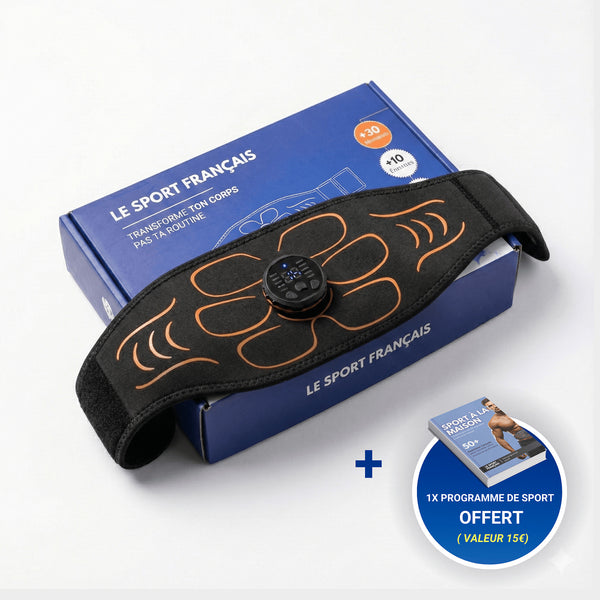
The sweat t-shirt with sleeves increases the covered surface area, therefore the thermal load, but can hinder arm movements in strength training. We detail its uses in our guide sweat t-shirt: what is it really for. The sweat belt, for its part, only covers the abdominal area: the sweating is very localized, which is visually appealing but changes nothing fundamentally, as we explain in sweat belt: effective or gadget?.
In practice, if you are hesitating, go for a vest: it is the best compromise between thermal effect, comfort, and freedom of movement. If you mainly do strength training with weights, a more covering men's sweat t-shirt may be suitable, provided you choose the right size.
How to use a sweat vest: instructions
The vest should only be worn during physical activity, directly on the skin or over thin technical underwear, never at rest, never for sleeping, and never all day "to sweat more." Here is the routine that works:
- Before the session: drink 300 to 500 ml of water in the hour before. You may want to weigh yourself to track your fluid loss.
- Put on the vest just before warming up. It should be snug without compressing the rib cage: you must be able to breathe deeply.
- Warm-up for 5 to 10 minutes at low intensity: the vest accelerates the rise in temperature; use this time to mobilize your hips, shoulders, and ankles.
- Main session of 20 to 40 minutes at moderate intensity (you should be able to speak in short sentences). Drink a few sips every 10 to 15 minutes.
- Remove the vest as soon as the effort is over, dry off, then drink 1.5 times the weight lost (500 g lost = 750 ml of water, ideally with a pinch of salt or a sports drink).
- Maintenance: rinse with clear water after each session, let dry flat in the open air, away from a radiator. No washing machine, no dryer.
This framework guarantees the desired effect without tipping into dehydration, which is the real risk of this type of clothing.
4-week program with a sweat vest at home
This progressive program is designed for a healthy adult who is resuming regular activity. The goal is twofold: to build a habit and let the body adapt to the thermal load. The days without a vest are intentional; they are part of the protocol.
Week 1: discovery (2 sessions with vest)
Two 20-minute sessions of brisk walking or stationary cycling at light intensity, wearing the vest. A third session without a vest: 15 minutes of core and mobility work, for example with our 10 core exercises to do at home. Record your weight before/after each session to calibrate your hydration.
Week 2: increasing intensity (3 sessions with vest)
Three 25-minute sessions: 5 minutes of warm-up, then 8 blocks of 1 minute of moderate effort (high knees, squats, side steps) and 1 minute of active recovery, then 4 minutes of cooling down without the vest. One additional strength training session without the vest.
Week 3: consolidation (3 sessions with vest)
Three 30-minute circuit sessions: squats, knee or classic push-ups, lunges, core work, jumping rope or jumping jacks, 40 seconds of effort, 20 seconds of rest, 5 rounds. Remove the vest before the last round if you feel the heat becoming uncomfortable.
Week 4: established routine (3 sessions with vest, 1 without)
Three 30 to 35-minute cardio or circuit sessions, plus one long, calm session without the vest (45-minute walk, easy cycling). By the end of the 4 weeks, you should feel better tolerance to effort and heat. This is the time to combine it with a suitable diet: our 30-day program to lose belly fat can take over.
Limits, errors to avoid, and contraindications
The first risk is dehydration, leading to a cascade of decreased performance, cramps, headaches, and in extreme cases, heat exhaustion. The warning signs described by health authorities are valid for a sweat vest session: dizziness, nausea, hot and dry skin, confusion. If any of these appear, remove the vest, stop, move to a cool area, and drink.
The most frequent errors: wearing the vest for too long (beyond 45 minutes, the benefit does not increase but the risk does); using it in hot weather or in an unventilated room; layering it over a sweat belt; using it to "make weight" before a competition without supervision; wearing it every day without rest days; or choosing a size that is too small and restricts breathing.
The sweat vest is not recommended for people with cardiovascular disorders, uncontrolled hypertension, diabetes (the ACE study explicitly mentions this), kidney problems, for pregnant women, minors, and anyone on diuretic treatment or treatment affecting thermoregulation. If in doubt, your doctor's advice takes precedence over any article, including this one.
Frequently asked questions
Does the sweat vest help lose belly fat?
No, not directly. It increases sweating in the torso area, but abdominal fat is only eliminated through an overall caloric deficit. The vest makes your sessions a bit more demanding, which can support this deficit, without ever replacing it.
How long should you wear a sweat vest per session?
Between 20 and 45 minutes, only during effort, 2 to 4 times per week with rest days. Beyond 45 minutes, the risk of dehydration increases without additional benefit.
Can you wear a sweat vest without exercising?
It is not useful and is not recommended. Without muscular effort, sweating remains low, and prolonged exposure promotes skin irritation and discomfort. The vest is only of interest when in motion.
Is the sweat vest dangerous?
Used for 20 to 45 minutes, with proper hydration and by a healthy person, it is safe. The danger comes from prolonged use, an overheated room, or a fragile health condition (heart, diabetes, kidneys, pregnancy).
How do you wash a sweat vest?
Rinse with cold or lukewarm water after each session, use mild soap if necessary, and let dry flat in the open air. Avoid the washing machine, tumble dryer, and radiator, which damage the thermal fabric and its seams.
Conclusion: our final opinion on the sweat vest
Our opinion on the sweat vest can be summed up in one sentence: it is a useful training accessory, not a slimming product. It makes your sessions more intense, improves your heat tolerance, and can give a small boost to your physical fitness, as the ACE trial showed. It will not melt your belly, and anyone who claims otherwise is lying to you. If you are looking for a companion for your cardio sessions at home, the premium men's sweat tank top is designed for this precise setting: 20 to 45 minutes of effort, hydration in hand, realistic results.
To learn more, read our analysis sweat belt: effective or gadget? and our guide sweat t-shirt: what is it really for.