

It promises a flat stomach, weight loss, and a trimmer waist in a few weeks. The sweat belt: effective or just a gadget? The question comes up as soon as you see those neoprene bands tightened around the waist at the gym. The honest answer is neither "miracle" nor "scam." A sweat belt does not melt belly fat and does not result in any lasting weight loss on its own. However, worn during exercise, it truly increases thermal stress, supports the lower back, and provides an immediate flat-stomach effect through simple compression.
This guide sorts it all out: what the belt offers compared to a sweat top, what controlled trials say, how to use it safely, and how it compares to an EMS belt or a shaper. Regarding the general science of sweating, our comprehensive guide on the sweat t-shirt covers the subject; here, we focus on the abdominal belt.
Sweat belt: effective or gadget? The honest verdict
A sweat belt is an accessory, not a method. The useful classification is therefore not "it works / it doesn't work," but "what it does / what it doesn't do."
What it actually does: it blocks sweat evaporation at the torso, which significantly increases perspiration; it compresses the abdominal wall and supports the lumbar region during movement; it smoothes the silhouette as long as it is worn.
What it does not do: it does not burn fat in the area it covers, it does not replace a caloric deficit, it does not tone abdominal muscles, and the weight loss displayed on the scale after a session is not fat. If you expect it to do the work for you, it's a gadget. Used as a session intensifier, it's a consistent tool.
How does a sweat belt work?
The principle is primarily thermal. The body expels heat produced by muscles by evaporating sweat. A neoprene belt—the insulating rubber used in wetsuits—prevents this evaporation on the abdomen. Heat stays trapped, the local skin temperature rises, and the body produces even more sweat to cool down.
The second principle is mechanical. Unlike a sweat top that wraps, the belt tightens. This compression gathers soft tissue at the waist and provides passive support to the lower back, like a flexible version of a weightlifting belt.
What actually happens during the session
At identical intensity, perceived exertion and heart rate are higher with sweat gear than with regular clothing, as measured by a study published in the journal Temperature. The same session therefore "costs" you a bit more. This increase is real but modest: it does not turn a walk into HIIT, and it requires you to drink more water.
What does a belt offer over a sweat t-shirt?
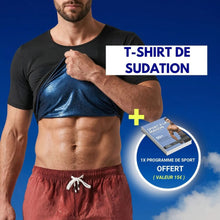
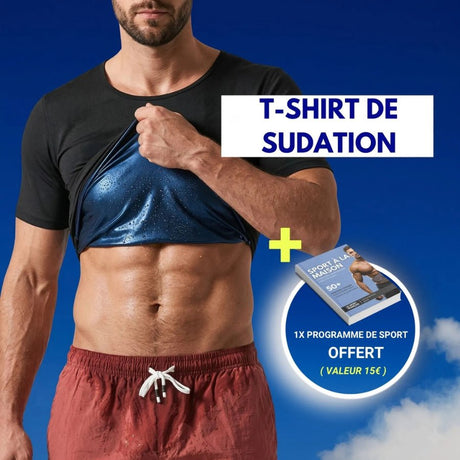
Targeting the area. A men's sweat t-shirt covers the entire torso: the thermal stress is distributed. The belt focuses the sauna effect on the waist and lower back. It doesn't make the waist slimmer per se, but it heats the area, which is beneficial for core work.
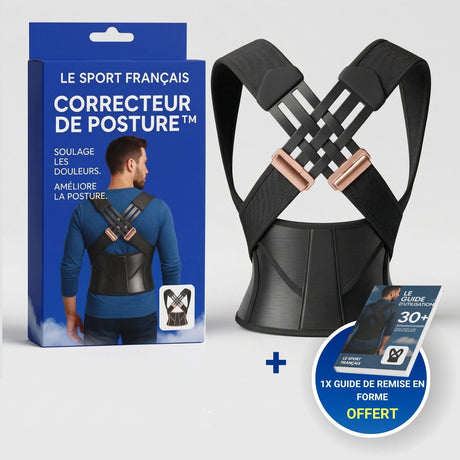
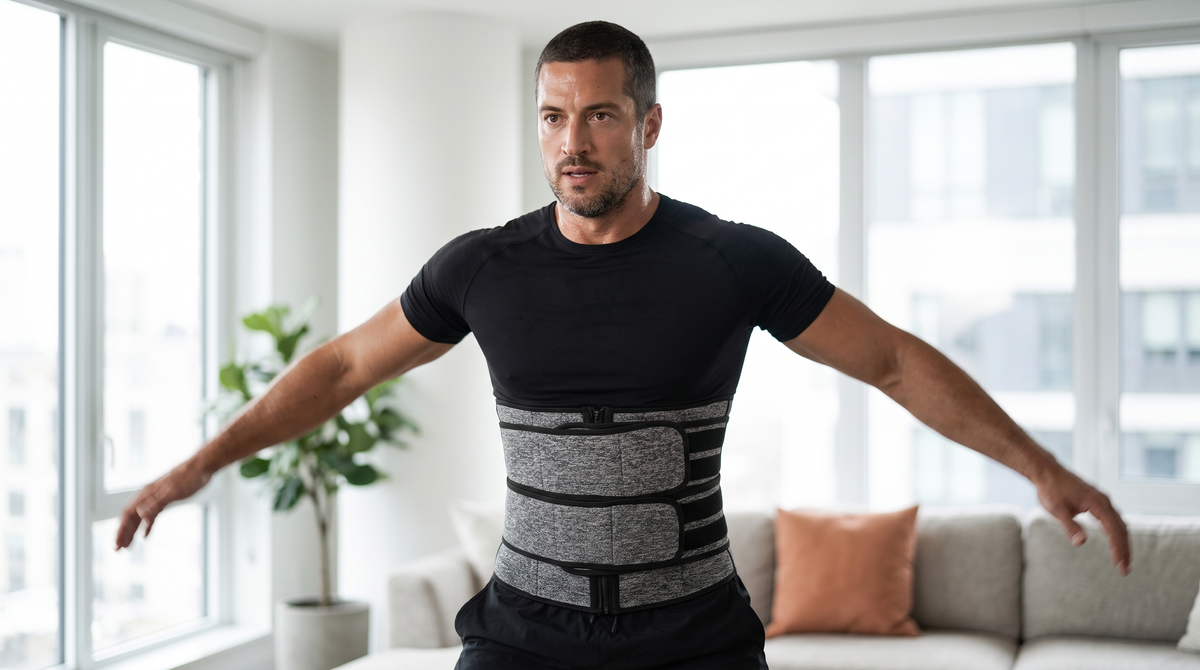
Lumbar support. This is the most tangible and underrated advantage. A wide, well-tightened belt supports the lower back during lunges, rowing, high knees, or lifting. The Le Sport Français men's sweat belt relies on this dual role: sauna-effect neoprene on the inside, and a dual adjustable support strap to cinch the abdominal wall and support the lower back.
Immediate flat-stomach effect. Compression smoothes the silhouette as long as the belt is worn. It is a cosmetic and reversible effect, exactly like shapewear: nothing has changed under the belt. It is honest to say so, and legitimate to appreciate this effect for what it is.
What science says about sweat clothing
There are few trials focusing specifically on the abdominal belt: most data concerns sweat gear worn during exercise, which is applicable in principle but not in magnitude.
The reference trial involved 45 overweight adults, 5 sessions per week for 8 weeks. The group trained with the sweat suit progressed more than the control group: VO2max +11.7% vs +7.3%, body mass -2.6% vs -0.9%, fat mass -13.8% vs -8.3%, fasting blood sugar -7.7% vs -2.1%.
Read the protocol carefully: the garment was worn during a supervised training program, five times a week, in a temperate environment. It was not the garment that produced these results, it was the training. No one lost weight by wearing a sweat suit in front of the television.
Can you lose fat locally with a belt?
No, and this is the point where marketing most often goes off the rails. Fat mobilization is a systemic process: fatty acids are released from all reserves, according to an order largely determined by genetics and gender. Heating or compressing an area does not tell the body to draw from it as a priority.
The most telling demonstration comes from electrostimulation: after 8 weeks of abdominal EMS, strength increased by 58% and endurance by 100%, waist circumference decreased by 3.6 cm, but no change was observed in weight or skinfolds. The waist can therefore be reduced through toning, without any fat having disappeared. If EMS, which actually contracts the muscle, does not cause local fat loss, a belt that heats and compresses will not do so either.
The real levers are known: sustainable caloric deficit, sufficient protein intake, sleep, daily activity, and global strengthening. Our guides on sustainable abdominal fat elimination and the 30-day program to lose belly fat detail the method.
What is the weight loss shown after the session worth?
Do you weigh 800g less after a session? Those 800g are water, and they will return as soon as you rehydrate. This figure has only one use: to tell you how much to drink. Weigh yourself instead on an empty stomach, always under the same conditions, and look at the trend over three to four weeks. Waist circumference, measured once a week at the same spot, remains a more reliable benchmark, one of the indicators used by the French Health Insurance (Assurance Maladie) in overweight assessments.
The usage protocol: duration, frequency, which sessions
A sweat belt is used during exercise, never during prolonged rest and never all day. Here is a progressive framework over 6 weeks.
Weeks 1 and 2 — adaptation
2 sessions per week with the belt, 20 to 25 minutes maximum, during moderate sessions: brisk walking, cycling, light circuits. Medium tightness: you must be able to breathe deeply and speak. 500ml of water during the session, the same after. Goal: evaluate your heat tolerance, not to perform.
Weeks 3 to 6 — cruising speed
3 sessions per week, 30 to 40 minutes, during your cardio sessions and full-body circuits. Remove the belt immediately after the effort and dry the skin. Beyond 45 minutes or in hot weather, reduce the duration: the marginal benefit does not justify the extra thermal stress.
In which sessions to use it (and which to avoid)
Relevant: moderate cardio, circuit training, core work, rowing, cycling, hill walking. Avoid: maximal sessions, outdoor sports in hot weather, wearing it at the office or at night, saunas and steam rooms. On lower-body days, some supplement with men's sweat shorts; the same duration framework applies.
The belt does not replace any abdominal work: it heats the area, it does not tone it. Combine it with a targeted routine like our best flat-stomach ab exercises and a diet structured like a 7-day flat-stomach plan.
How to choose your sweat belt?
The market ranges from a €9 piece of plastic to a technical belt. Four criteria make all the difference in use.
Criteria to check before buying
The material. Quality neoprene, non-irritating inner lining, exterior that doesn't stick. Cheap plastic films macerate, slip, and irritate by the second session.
The tightening system. A simple Velcro strap loosens after ten minutes. A dual adjustable strap system maintains compression throughout the effort: this is the criterion that separates a real belt from a decorative accessory.
The width. A belt that is too narrow rolls up as soon as you bend your torso. A wide band covers the lower back and provides the desired support.
The size. This is the most frequent buying mistake: trust your measured waist size, not your pants size. A wide range, from S to 6XL, avoids uncomfortable compromises.
Our solution
The men's sweat belt (€64) ticks these four points: sauna-effect neoprene, dual adjustable support that holds its tightness throughout the session, width designed to cinch the abdominal wall while supporting the lower back, and sizes S to 6XL.
For a more modest budget, the neoprene fitness sculpting belt (€47) uses the same principle in a lighter format, adapted for home strengthening.
The Le Sport Français Choice
Men's sweat belt — sauna-effect neoprene, dual adjustable support, sizes S to 6XL, €64. See the belt →
Sweat belt, EMS belt, or shaper: which to choose?
These three products look similar but are completely different in how they function.
The sweat belt acts through heat and compression, during exercise. It intensifies the session and supports the back; it tones nothing and does not burn fat locally.
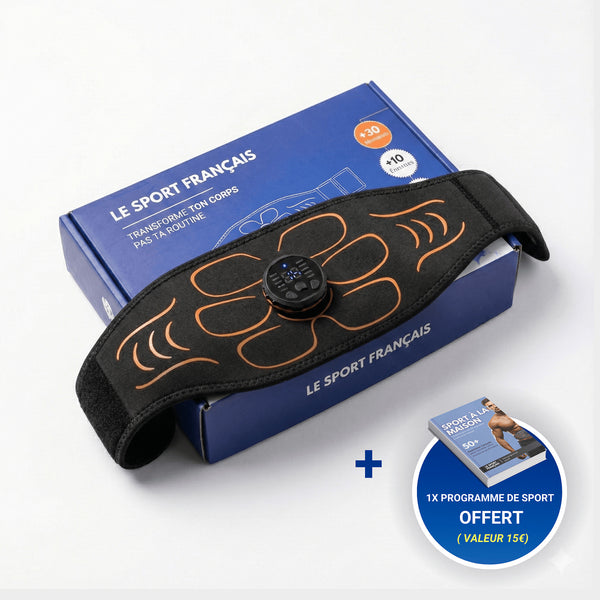
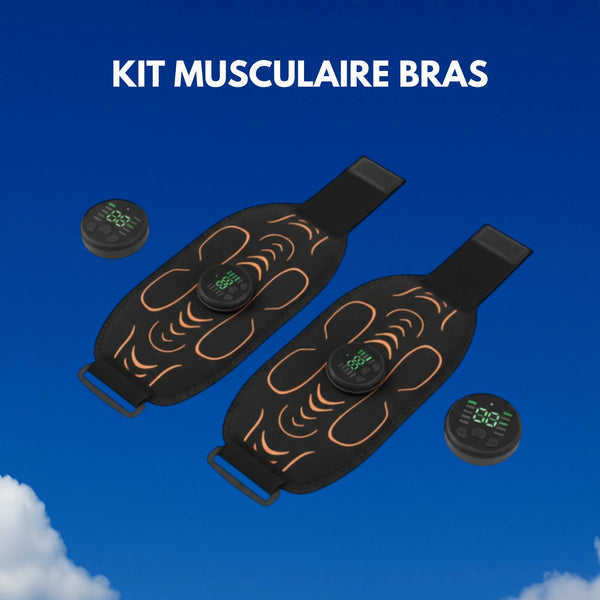
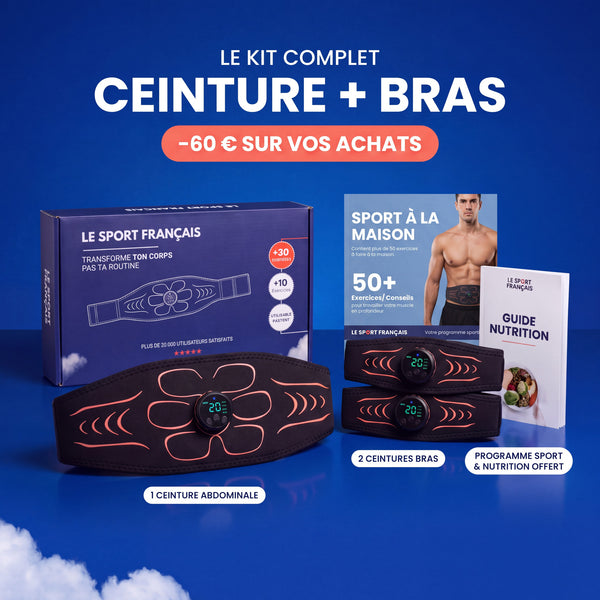
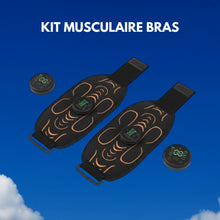
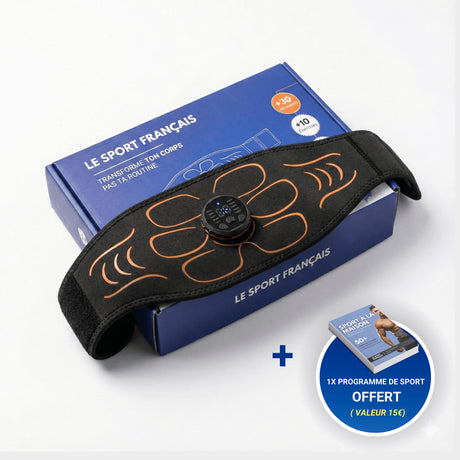
The EMS belt sends electrical impulses that cause involuntary contractions: it therefore actually works the muscle, with the gains in strength and endurance measured by trials on abdominal electrostimulation, but without weight or fat mass loss. It is a passive toning tool: see the EMS abdominal belt and our follow-up on the results of an EMS belt over 8 weeks.
The shaper produces neither active heat nor contraction: it compresses to smooth the silhouette. Some models combine both logics, like the women's sweat shaper, which combines shaping compression and sauna-effect material.
Limitations, mistakes to avoid, and contraindications
Four mistakes come up constantly. Tightening to the maximum: excessive compression hinders diaphragmatic breathing and can promote reflux; tightening should be firm but comfortable. Wearing the belt all day: no benefit, guaranteed maceration. Not drinking: this is the main risk, since all lost sweat must be compensated. And weighing yourself right after the session and drawing conclusions from a figure that only measures water.
Seek medical advice before using a sweat belt if you have cardiovascular disease or uncontrolled hypertension, pregnancy, complicated diabetes, thermoregulation disorders, significant gastroesophageal reflux, abdominal hernia, skin lesions in the area, or after recent abdominal surgery. Neoprene can also trigger skin reactions: test it during a short session. Stop in case of dizziness, nausea, headaches, palpitations, or if the skin stops sweating, signs of excessive thermal stress.
Frequently asked questions
How many kilos can you lose with a sweat belt?
Zero kilos of fat come from the belt itself. The visible loss after a session corresponds to water, recovered upon rehydration. Sustainable changes come from caloric deficit and regular training; the belt accompanies these sessions by increasing thermal stress, nothing more.
Can you wear a sweat belt all day?
It is not recommended. Outside of exercise, the sauna effect offers no benefit and prolonged maceration promotes irritation and fungal infections. Permanent lumbar support does not train deep muscles either. Limit wearing it to the duration of the session, 20 to 40 minutes, then remove it and dry the skin.
Sweat belt or sweat t-shirt: which is most effective?
They address different needs. The t-shirt covers the entire torso and distributes thermal stress over a larger surface. The belt focuses heat on the waist, adds lumbar support, and provides an immediate shaping effect. To support the back during sessions, the belt is more relevant.
Can a sweat belt make abs visible?
No. Visible abs depend on a sufficiently low body fat percentage, obtained through diet and activity, combined with strengthening work. The belt does not contract any muscle and does not act on subcutaneous fat in the area it covers.
Can you use it every day?
It is better to stick to 2 or 3 sessions per week, especially at the beginning. Daily use increases cumulative thermal load, the risk of skin irritation, and dehydration, without any demonstrated additional benefit. Alternate with sessions without the belt to honestly evaluate how you feel.
Key takeaways
- The sweat belt is a training accessory: it intensifies a session, it does not replace it.
- Immediate weight loss is water and returns upon rehydration; it indicates nothing about fat.
- Localized fat loss does not exist: heating or compressing the belly does not cause the body to draw from that area.
- Its three real contributions compared to a sweat top: waist targeting, lumbar support, immediate and reversible flat-stomach effect.
- Reasonable protocol: 2 to 3 sessions per week, 20 to 40 minutes of wear, during exercise only, with compensated hydration.
- Sweating, EMS, and shaping are three distinct logics: heat, electrical contraction, compression.
- Contraindications to respect: cardiovascular pathologies, pregnancy, complicated diabetes, hernia, skin lesions, recent abdominal surgery.
Conclusion
Effective or gadget? Neither in the absolute sense. The belt becomes a gadget as soon as you attribute powers to it that it does not have: melting belly fat, replacing effort. It becomes a consistent tool when you use it for what it really does—intensifying an already well-built session, supporting the lower back, maintaining consistency. The results measured in studies come from training; the garment is just an amplifier.
If this honest vision suits you, the Le Sport Français men's sweat belt is designed in this spirit: sauna-effect neoprene, dual adjustable support, and sizes S to 6XL, to accompany your sessions without promising anything unrealistic. The rest—consistency, your diet, sleep—is up to you.