







What are the best abdominal exercises for a flat stomach? Rather than repeating influencer rankings, this article is based on muscle activation measurements via electromyography (EMG) published in peer-reviewed journals. Ten exercises are ranked here according to the recruitment of the rectus abdominis, obliques, and transverse abdominis, with a technical sheet for each, a 12-minute session, and a 4-week progressive program, suitable for both men and women.
You will also read about what does not work: ab exercises alone do not melt belly fat. For a basic phase without any equipment, our guide for strengthening abs without equipment complements this ranking.
How is the effectiveness of an ab exercise measured?
Surface electromyography records the electrical activity of a muscle during a movement and then expresses it as a percentage of a maximal voluntary contraction. The higher the percentage, the more the exercise recruits the targeted muscle. This is the method used by Escamilla et al. (2006, Physical Therapy) on the rectus abdominis, external and internal obliques, and by Escamilla et al. (2010, Journal of Orthopaedic and Sports Physical Therapy) on exercises with a stability ball.
Two limits to keep in mind. The transverse abdominis, a deep muscle, is difficult to record on the surface: its activation is often estimated via the internal oblique, which shares its insertion. And high activation does not guarantee a safe exercise: sit-ups activate the rectus abdominis well but place massive strain on the hip flexors and the lumbar spine. Our ranking therefore weights the EMG by back safety. For the top-rated movement, a silent abdominal wheel is enough; the other nine are done using body weight.
What science says about abs and a flat stomach
Escamilla et al. (2006) compared classic exercises (crunch, sit-up, reverse crunch) with commercial devices. Ab wheel rollouts and hanging knee raises in straps produced the highest activations of the rectus abdominis and obliques, while the reverse crunch on a 30° incline stood out for the lower portion of the rectus abdominis.
Escamilla et al. (2010) tested eight exercises on a Swiss ball against the crunch and sit-up: the pike and the rollout on a ball were the most effective for recruiting the core musculature, followed by the knee-up and the skier. The crunch and the sit-up were at the bottom of the list, while also engaging the rectus femoris, a hip flexor, more heavily.
Finally, Vispute et al. (2011, Journal of Strength and Conditioning Research) followed adults performing seven abdominal exercises five days a week for six weeks: abdominal endurance improved, but neither abdominal fat nor waist circumference decreased compared to the control group. A flat stomach therefore requires two distinct things: toned muscles, obtained through the exercises below, and an adapted energy balance, which we cover in how to lose belly fat in 30 days.
Ranking of the 10 best ab exercises, from most to least effective
1. Ab wheel rollout
Muscles: rectus abdominis, obliques, transverse abdominis, latissimus dorsi. EMG activation among the highest measured (Escamilla et al., 2006 and 2010). Technique: on your knees, hands on the handles, pelvis slightly tucked. Roll forward while keeping your back flat, until your arms are aligned with your torso, then return by pulling with your abs. Beginners: 3 sets of 6 to 8 with reduced range of motion. Error to avoid: arching the lower back.
2. Pike on a ball or straps
Muscles: rectus abdominis, obliques, hip flexors for support. Most effective exercise in the ball study (Escamilla et al., 2010). Technique: in a push-up position, feet on the ball or in the straps. Lift your hips toward the ceiling while keeping your legs straight until you form an inverted V, then lower slowly. 3 sets of 8 to 10. Intermediate to advanced level.
3. Hanging knee raise
Muscles: lower rectus abdominis, obliques. One of the best activations measured with straps (Escamilla et al., 2006). Technique: hanging from a bar or in straps, bring your knees toward your chest by curling the pelvis, without swinging. Controlled descent over two seconds. 3 sets of 8 to 12.
4. Reverse crunch
Muscles: lower rectus abdominis, obliques. On an incline, it is among the most effective for the lower portion of the rectus abdominis (Escamilla et al., 2006). Technique: lying on your back, knees bent at 90°, hands flat on the floor. Curl your pelvis to lift your sacrum off the floor, without using momentum from your legs, then lower slowly. 3 sets of 12 to 15.
5. Ball crunch
Muscles: rectus abdominis, obliques due to instability. The instability of the ball increases the range of motion and oblique engagement compared to a floor crunch. Technique: lower back on the ball, feet hip-width apart, hands on your temples. Curl your torso 30 to 40 cm without pulling on your neck, exhaling on the way up. 3 sets of 12 to 15.
6. Side plank
Muscles: external and internal obliques, quadratus lumborum, gluteus medius. Benchmark exercise for the waist and anti-lateral flexion. Technique: on your forearm, elbow under the shoulder, feet stacked, pelvis aligned with the shoulders and ankles. Hold for 20 to 45 seconds per side, 3 times. Progression: top foot elevated, then top leg lifted.
7. Front plank and variations
Muscles: transverse abdominis, rectus abdominis, obliques, in isometry. Safe for the back and suitable for any restart. Technique: forearms on the floor, elbows under the shoulders, pelvis tucked, glutes squeezed. 30 to 60 seconds, 3 times. To increase activation, add shoulder taps or a partial rollout with the roller. Details on progressions can be found in our 10 effective core exercises to do at home.
8. Dead bug
Muscles: transverse abdominis, rectus abdominis, pelvic-lumbar coordination. Technique: lying on your back, hips and knees at 90°, lower back pressed into the floor. Slowly extend your right arm behind your head and left leg forward, without lifting your lumbar spine, then alternate. 3 sets of 8 per side. Ideal for learning to control the transverse abdominis, as we explain in transverse abs: flat stomach and strong back.
9. Bird-dog
Muscles: transverse abdominis, obliques in anti-rotation, back extensors. Moderate activation, good transfer to trunk stability. Technique: on all fours, simultaneously extend your right arm and left leg horizontally, hold for two seconds without rotating the pelvis, return, alternate. 3 sets of 8 per side.
10. Classic crunch
Muscles: mainly rectus abdominis. It serves as a reference in EMG studies and remains useful, but is outperformed by the nine previous exercises for overall recruitment (Escamilla et al., 2006 and 2010). Technique: lying down, knees bent, curl your shoulders up 15 to 20 cm without pulling on your neck, exhale on the way up, slow descent. 2 sets of 15 to 20 at the end of the session, no more.
Which exercises to prioritize based on the targeted muscle?
For the rectus abdominis and "six-pack": rollout, pike, knee raise, reverse crunch. For the obliques and waist: side plank, pike, diagonal rollout, ball crunch with rotation. For the transverse abdominis and flat stomach effect: plank with pelvic tuck, dead bug, bird-dog, as well as forced exhalation with stomach pulled in at the end of each repetition. A balanced program takes one exercise from each group.
The 12-minute ab session
Perform the six workshops below without a break, then rest for 60 seconds. Do two rounds for beginners, three rounds for advanced. Total duration: approximately 12 minutes. Frequency: three times a week, never two days in a row.
- Ab wheel rollout or plank with shoulder taps: 40 seconds.
- Reverse crunch: 40 seconds.
- Side plank: 30 seconds per side.
- Dead bug: 40 seconds.
- Ball crunch or slow classic crunch: 40 seconds.
- Bird-dog: 40 seconds.
4-week progressive program
Week 1: technical learning
Three sessions of 2 rounds. Rollout replaced by a 30-second plank, knee raises replaced by floor reverse crunch. Goal: neutral lower back on every exercise, continuous breathing.
Week 2: adding the rollout
Three sessions of 2 rounds. Introduce the kneeling rollout with short range of motion, 6 to 8 repetitions per round. Side plank increased to 40 seconds.
Week 3: increasing volume
Three sessions of 3 rounds. Rollout with medium range of motion, 8 to 10 repetitions. Add the pike on a ball or knee raise if you have the equipment, replacing the classic crunch.
Week 4: intensification
Three to four sessions of 3 rounds, rest reduced to 45 seconds. Rollout with full range of motion, side plank with top leg lifted, dead bug with a light weight in your hands. At the end of the week, retake the initial test (plank time, reverse crunches in 40 seconds).
What does not work for a flat stomach
Spot fat reduction. Doing 200 crunches a day strengthens the abdominal muscles, but subcutaneous and visceral belly fat is not used preferentially: this is what Vispute et al. (2011) showed over six weeks. Abdominal fat responds to a moderate energy deficit, overall physical activity, and sleep, not local exercise.
Endless sets of fast crunches. They strain the hip flexors, tire the neck, and do not provide more activation than slow execution. Finally, sweating: sweating more during the session does not melt the belly; the weight lost is water, which is recovered as soon as you drink.
Limits, errors to avoid, and contraindications
Most common errors: arching the lower back during a rollout or plank, pulling on the neck during a crunch, letting the pelvis drop in a side plank, and using momentum from the legs in a reverse crunch.
Contraindications: symptomatic herniated disc, acute lower back pain, diastasis recti not evaluated after pregnancy, abdominal surgery less than three months ago. In these cases, limit yourself to the dead bug, bird-dog, and transverse breathing, and consult a physiotherapist before resuming flexion exercises.
What equipment to choose for these exercises: our solution
Nine out of ten exercises only require a mat. For the top of the ranking, the non-slip silent abdominal wheel at 39.90 euros offers a wide wheel that does not mark the floor and non-slip handles that secure the return. It stores in a drawer and single-handedly replaces the bulky devices compared in our 2026 comparison of home ab machines.
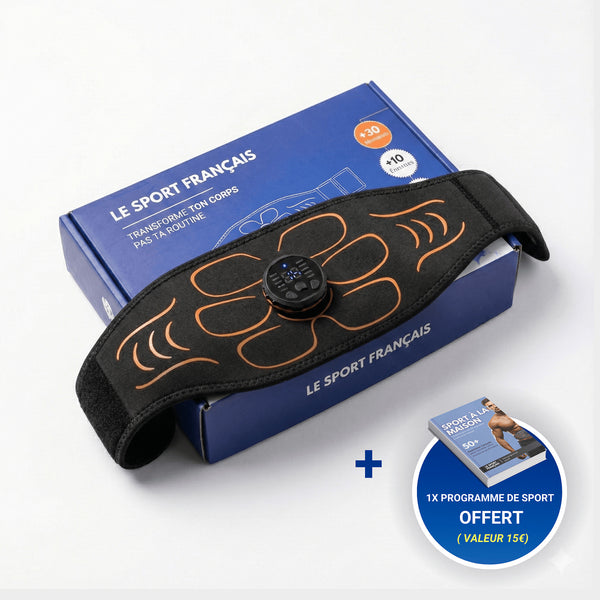
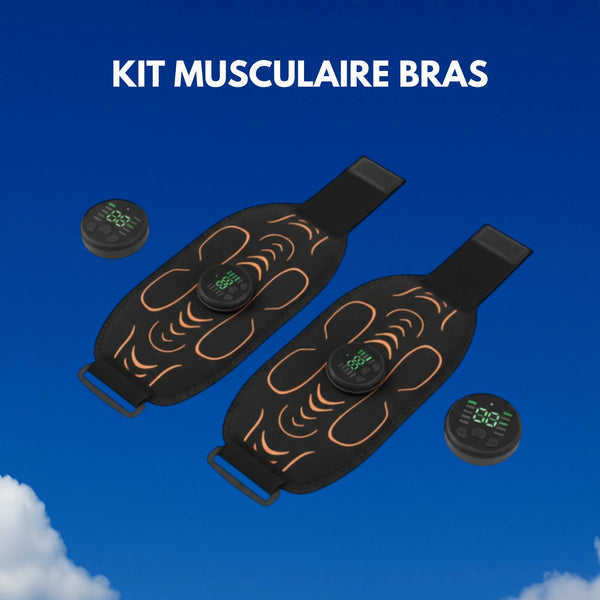
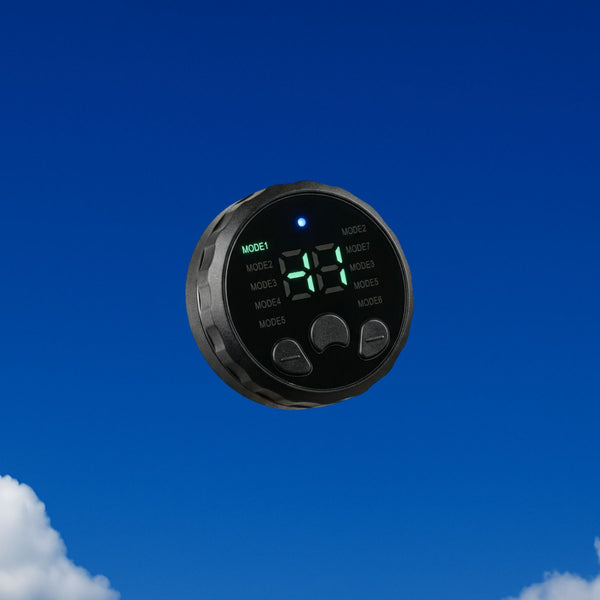
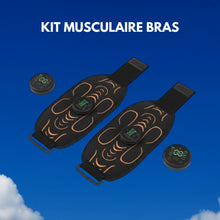
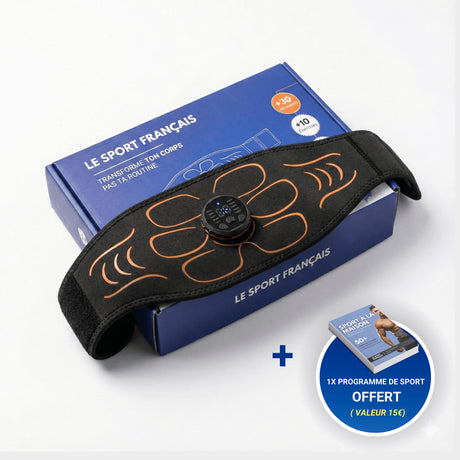
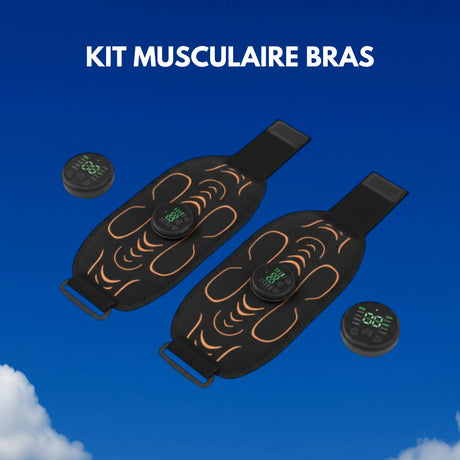
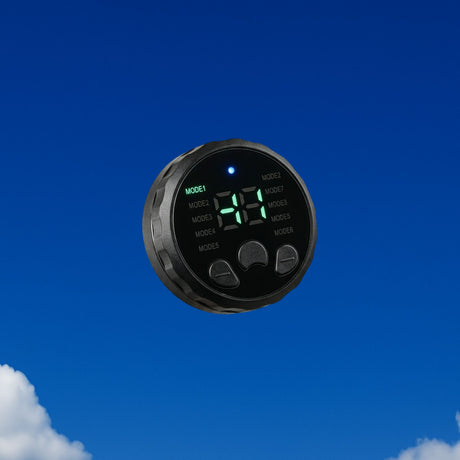
As a supplement on days without a session, the EMS muscle abdominal belt at 59.99 euros engages the rectus abdominis and obliques through electrostimulation: Porcari et al. (2005, Journal of Sports Science and Medicine) observed an improvement in abdominal strength and endurance after eight weeks, without fat loss.
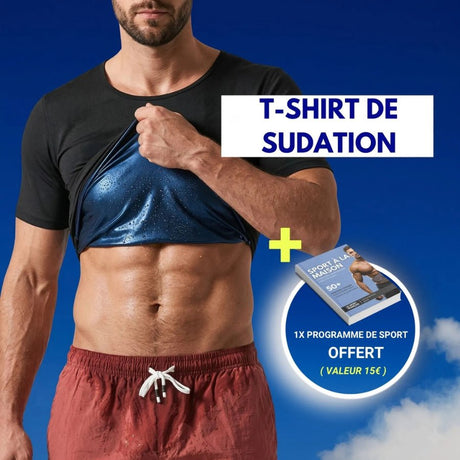
If you like sweating more during the 12-minute session, the neoprene men's sweat vest (S to 2XL, 39.99 euros) increases the sensation of heat. For women, the women's sauna effect sweat top at 49.90 euros plays the same role. In both cases, the effect is on comfort and sweating, not on abdominal fat.
Frequently asked questions
What is the most effective ab exercise?
According to EMG measurements by Escamilla et al. (2006 and 2010), the ab wheel rollout and the pike on a ball or straps most strongly recruit the rectus abdominis and obliques. The rollout is the most accessible at home: a wheel, a mat, and a range of motion adapted to your level are enough to progress.
How many times a week should I do abs?
Three 12-minute sessions per week, spaced by at least one day of rest, are enough to progress. Abdominals recover like other muscles; working them every day does not speed up results and increases the risk of lower back pain. Consistency over four weeks matters more than the duration of a session.
Do abs make you lose belly fat?
No, not directly. Vispute et al. (2011) observed no reduction in abdominal fat after six weeks of daily abdominal exercises, despite an increase in endurance. Exercises tone and flatten the core by strengthening the transverse, but fat depends on overall energy balance and total physical activity.
Should I do abs every day?
It is not necessary. Daily light work of transverse breathing or short planks is possible, but intense exercises like the rollout, pike, or knee raise require 48 hours of recovery. Three to four sessions per week constitute the right compromise between stimulation and recovery.
What to remember
- The ab wheel rollout and pike top the EMG measurements for the rectus abdominis and obliques.
- The knee raise and reverse crunch target the lower portion of the rectus abdominis.
- Side plank, front plank, dead bug, and bird-dog ensure oblique and transverse stability safely.
- The classic crunch remains useful but at the end of the session and in small quantities.
- A 12-minute session, three times a week, and a 4-week program are enough to progress.
- Abs do not melt local fat: flat stomach = toned muscles + adapted energy balance.
Conclusion
Ranking ab exercises by measured muscle activation changes how you train: fewer crunches, more rollouts, pikes, planks, and transverse control. Ten movements, a 12-minute session, and four weeks of progression are enough to feel your abdominal wall tone up, provided you accept that a flat stomach is also played out on your plate.
If you only need to invest in one accessory, the silent abdominal wheel covers the number one exercise in the ranking. Start week 1 today and note your plank times to measure your progress.
Sources
- Escamilla R.F., Babb E., DeWitt R. et al. (2006). Electromyographic analysis of traditional and nontraditional abdominal exercises: implications for rehabilitation and training. Physical Therapy, 86(5), 656-671. Consult on PubMed
- Escamilla R.F., Lewis C., Bell D. et al. (2010). Core muscle activation during Swiss ball and traditional abdominal exercises. Journal of Orthopaedic and Sports Physical Therapy, 40(5), 265-276. Consult on PubMed
- Vispute S.S., Smith J.D., LeCheminant J.D., Hurley K.S. (2011). The effect of abdominal exercise on abdominal fat. Journal of Strength and Conditioning Research, 25(9), 2559-2564. Consult on PubMed
- Porcari J.P., Miller J., Cornwell K. et al. (2005). The effects of neuromuscular electrical stimulation training on abdominal strength, endurance, and selected anthropometric measures. Journal of Sports Science and Medicine, 4(1), 66-75. Consult on PubMed