






Abdominal fat in men is not just a matter of silhouette. In men, it is primarily located around the organs as visceral fat, and it is this fat that puts a strain on the heart, blood sugar levels, and blood pressure. The good news is that it is also the most responsive to exercise and habit changes. This guide focuses on male-specific traits: why the belly, at what waist measurement to start worrying, which levers really count (alcohol, stress, sleep, hormones), and a 12-week plan for lasting results. It clarifies the honest role of accessories like the premium men's sweat vest or an EMS belt. If you are looking for a short program, our lose belly fat in 30 days program is designed for that.
Why do men store fat on their belly?
Men have what is known as "android" fat distribution: excess fat is deposited mainly on the abdomen, whereas women store more on their hips and thighs before menopause. This hormonal and genetic difference explains the round, firm belly, which is very different from the soft roll that one can pinch.
Visceral fat is metabolically active: it releases fatty acids and inflammatory substances directly into the liver. This is why a large waistline is associated with metabolic complications (diabetes, high cholesterol and triglycerides) and an increased cardiovascular risk (Assurance Maladie, ameli.fr). With age, sedentary lifestyles and alcohol exacerbate this storage.
Waist circumference: thresholds to know
Waist measurement is a better indicator of visceral fat than weight. Guidelines from WHO expert consultations for men are as follows: above 94 cm, the risk is increased; above 102 cm, it is significantly increased (WHO, 2011). In France, the Assurance Maladie uses the 94 cm threshold. Measure on an empty stomach, halfway between the lowest rib and the top of the pelvis, at the end of an exhalation.
What science says about visceral fat
The meta-analysis by Vissers et al. (2013, PLoS ONE) grouped 15 trials and 852 overweight adults. Conclusion: exercise significantly reduces visceral adipose tissue, even without a low-calorie diet, with a standardized effect of approximately −0.50. Intensity makes the difference: only moderate to high-intensity activities have an effect, and studies with direct measurement show a reduction of more than 40 cm² of visceral fat in men, sometimes in 12 weeks.
Regarding sweat clothing, an 8-week randomized controlled trial among 45 overweight adults compared training with or without a sauna suit. The equipped group gained 11.7% in VO2max compared to 7.3%, lost 2.6% of body mass compared to 0.9%, and 13.8% of body fat compared to 8.3% (Haney et al., 2017, International Journal of Research in Exercise Physiology). The difference is modest and depends entirely on the training performed while wearing them.
Regarding electrical stimulation, Porcari et al. (2005, Journal of Sports Science and Medicine) observed, after 8 weeks of abdominal EMS, a gain in abdominal strength and endurance, with no change in weight or body fat. EMS tones; it does not melt belly fat.
Initial assessment: where to start?
Baseline measurements
Before your first session, record your waist circumference and weight on an empty stomach, and take a profile photo. Take these again every four weeks, never every day.
Habit audit
Over a typical week, be honest: count drinks of alcohol, hours of actual sleep, and days with at least 30 minutes of walking. These indicators predict results better than a diet.
Signals to check with a doctor
A waist measurement over 102 cm, high blood pressure, family history of diabetes or heart attack, snoring with fatigue upon waking: a blood test before starting is justified (see "When to consult" below).
Specifically male levers
Alcohol, the first item to reduce
Alcohol provides calories without satiety, and the liver processes it first, which pauses fat burning for several hours. A 50 cl beer represents 200 to 250 kcal. Cutting down to one or two drinks on the weekend is often the most effective change you can make.
Stress and cortisol
Chronic stress is accompanied by an increase in cortisol, which promotes an appetite for fatty and sugary foods and, in men, abdominal fat storage. Realistic levers: daily walking, disconnecting from emails in the evening, and regular physical activity.
Sleep
Sleeping less than 6 hours disrupts appetite hormones and increases food intake the next day. Sleep apnea, common in men with large waist measurements, further degrades sleep quality. Aim for 7 hours and a regular schedule.
Testosterone
Testosterone decreases slowly with age and faster in cases of excess abdominal fat, short sleep, and alcohol consumption. Conversely, strength training, sleep, and visceral fat loss promote a more favorable hormonal profile. If symptoms are present, only a doctor can prescribe a blood test.
12-week plan to eliminate abdominal fat
Diet: the 12-week framework
A moderate deficit of 400 to 500 kcal per day, never more. Weeks 1 to 4: alcohol reduced to 2 drinks per week, elimination of sugary drinks, protein at every meal (1.2 to 1.6 g per kilo per day). Weeks 5 to 8: half the plate in vegetables, whole grains. Weeks 9 to 12: adjust evening portions if waistline stagnates, one free meal per week. For concrete menus, follow our 7-day flat belly meal plan.
Strength training: 3 sessions per week
Strength training preserves muscle during a deficit and supports metabolism. Weeks 1 to 4: 3 x 25-minute circuit sessions, 3 rounds of 12 squats, 10 push-ups, 10 rows with a resistance band or bottles, 30 seconds of plank. Weeks 5 to 8: 4 rounds, lunges (10 per leg) and side planks (20 seconds per side). Weeks 9 to 12: 3 x 35-minute sessions with the ab roller (3 sets of 8 knee roll-outs). Core exercises are detailed in our ab exercises for a flat belly.
Cardio: 150 to 200 minutes per week
Weeks 1 to 4: 4 brisk walks of 30 to 35 minutes, at a pace where talking becomes difficult. Weeks 5 to 8: 3 brisk walks of 40 minutes + 1 cycling or swimming session of 30 minutes. Weeks 9 to 12: 2 brisk walks of 40 minutes + 2 interval training sessions of 20 minutes (30 seconds of effort, 60 seconds of recovery, 10 repetitions, after a 5-minute warm-up). This level of intensity is what acts on visceral fat.
Sleep and recovery
Go to bed at a fixed time, 7 hours minimum 5 nights out of 7, screens off 30 minutes before. Take measurements again at weeks 4, 8, and 12. Over 12 weeks, a common result with this framework is 4 to 8 kg lost and 4 to 8 cm off the waistline, depending on the starting point.
Does sweating help lose abdominal fat?
Not directly. Sweating eliminates water, which you regain by drinking. What the Haney et al. (2017) trial shows is that regular training while wearing this type of clothing can provide a slight boost in physical condition and fat loss.
Use it therefore as an intensifier for your cardio sessions, during exercise only, for 45 to 60 minutes maximum, with increased hydration. Our article sweat shirt: utility and honest review details what to expect.
Does an EMS belt have a place in this plan?
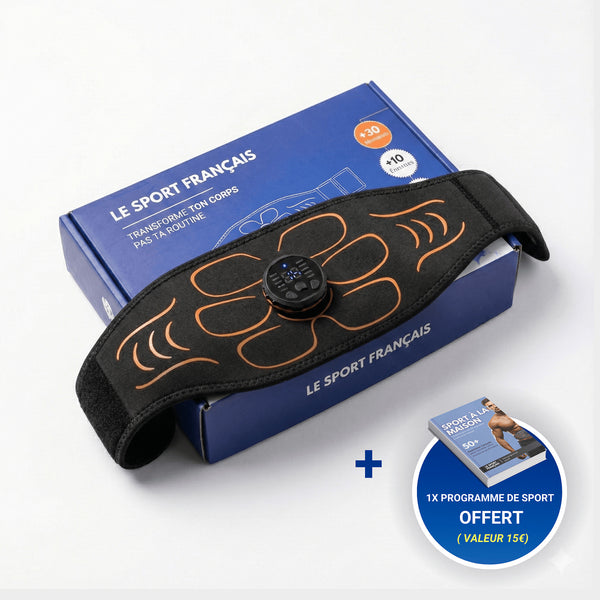
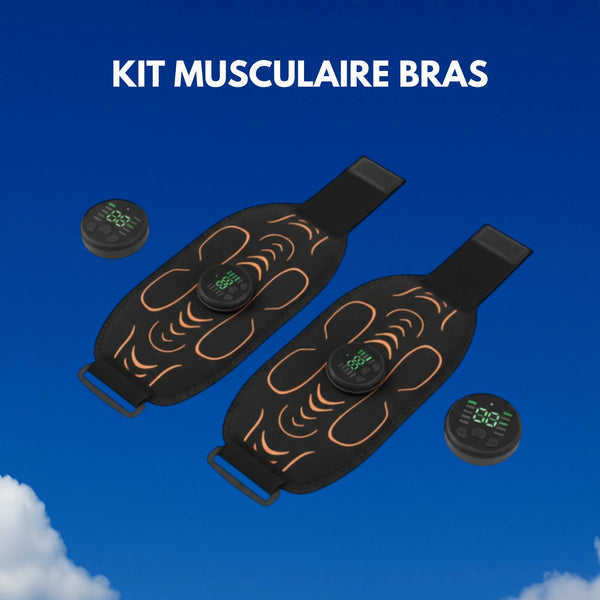
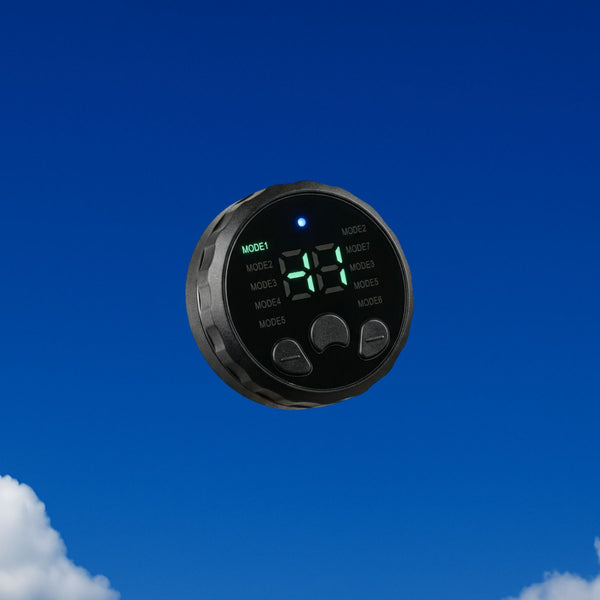
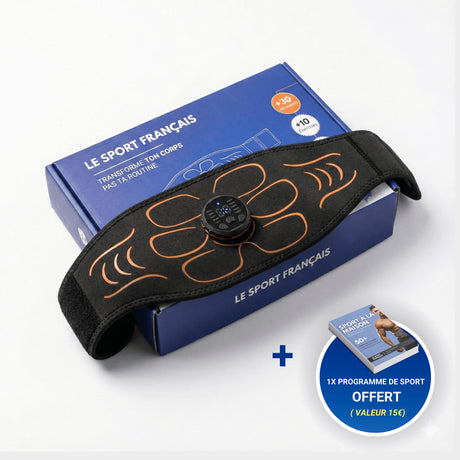
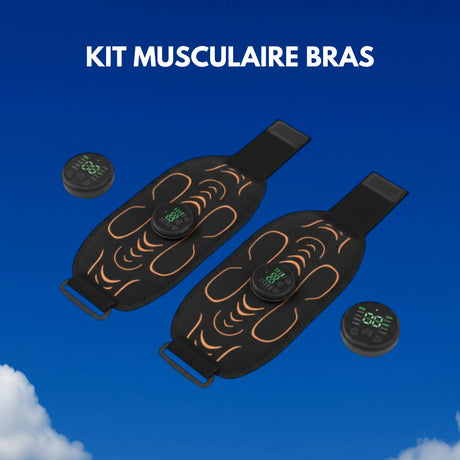
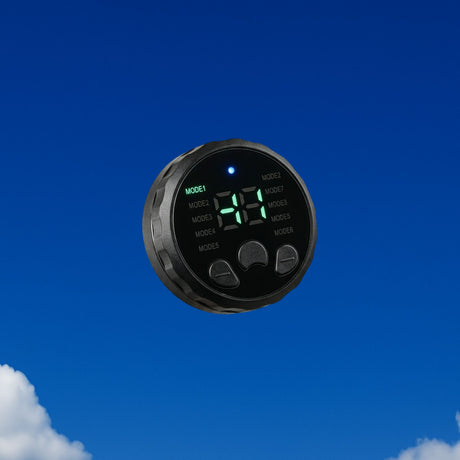
An electrical stimulation belt contracts the abdominals via pulses. It strengthens the core and the transverse muscles, which improves belly support as fat decreases. It does not burn fat (Porcari et al., 2005). In this plan, it complements days without a workout, for 20 minutes, 5 days a week. To choose a model suited to a male physique, see our comparison of the best abdominal belts for men.
Limits, errors to avoid, and contraindications
Common errors: reducing calories too drastically and losing muscle; keeping weekend alcohol and being surprised by a plateau; doing hundreds of crunches thinking you are targeting the belly; weighing yourself every day; sacrificing sleep to fit in an extra workout; buying a supplement instead of changing a habit.
Limits: long-standing abdominal fat, present for ten years, often requires more than 12 weeks. The plan sets the dynamic in motion; the next step is to maintain the framework while relaxing the deficit.
Contraindications: sweat clothing is not recommended in cases of heart disease, uncontrolled hypertension, or extreme heat. EMS belts are forbidden with a pacemaker, in case of epilepsy, recent abdominal hernia, or skin lesions. A caloric deficit should be medically monitored in cases of treated diabetes or chronic illness.
When to consult?
Consult a doctor before starting if your waist measurement exceeds 102 cm, if you are over 45 and have been inactive for a long time, in case of chest pain or abnormal shortness of breath during exertion, snoring with daytime sleepiness, or persistent fatigue and low libido. Also consult if, after 12 weeks of strictly following the framework, the waist measurement has not moved: a hormonal or metabolic assessment may be useful.
Which equipment to choose? Our solution
Nothing is indispensable. If you want to gear up, here is what makes sense in this plan.
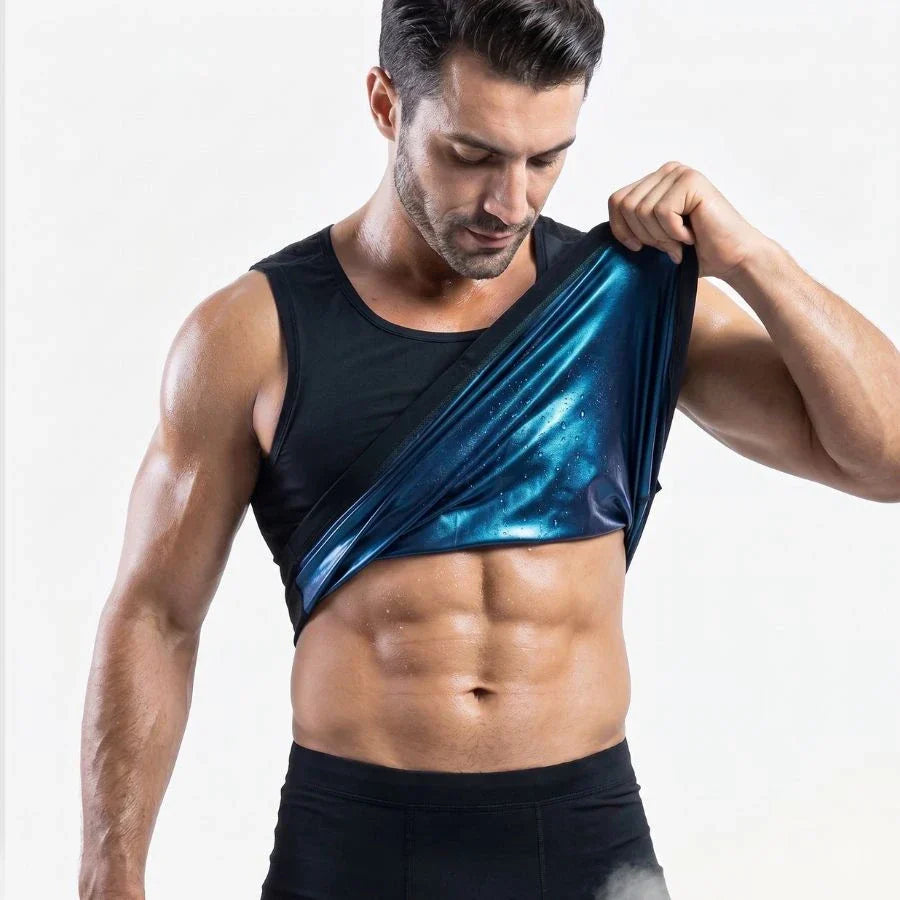
The premium men's sweat vest
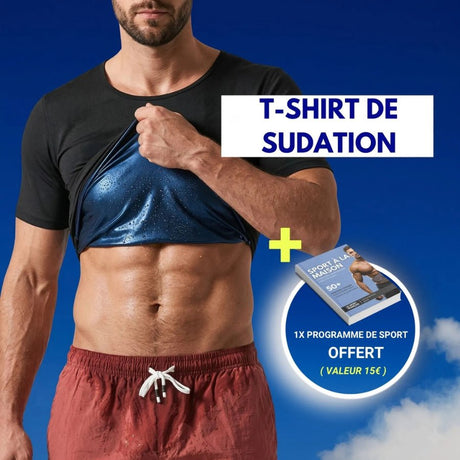
The premium men's sweat vest, sauna-effect sculpting vest (€65.99) combines a compressive effect on the abdominal area with a sauna effect during exercise. It is worn under a t-shirt during cardio sessions from weeks 5 to 12, in your usual size, without hindering breathing.
The men's sweat t-shirt
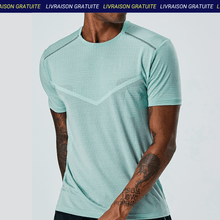
The men's slimming sweat t-shirt (€39.99, neoprene, S to 2XL) is the entry-level option. Same usage: during cardio sessions only.
The sweat belt and jacket-pants set
The men's sweat belt (€64, S to XXL, adjustable straps) provides warmth and lumbar support to the abdominal area during strength training, without a localized effect on fat.
The men's sauna sweat jacket and pants set (€65) is suitable for brisk outdoor walks in cool weather.
Strength training tools
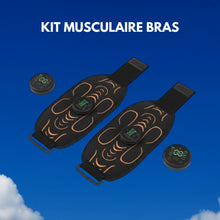
The EMS muscle abdominal belt (€59.99) complements non-workout days. The silent non-slip ab roller (€39.90) remains the most effective tool for core strengthening, to be introduced gradually starting from week 9.
Frequently asked questions
Why is belly fat more dangerous in men?
Because it is primarily visceral, around the organs, rather than under the skin. It promotes insulin resistance, higher triglycerides, and cardiovascular risk.
What waist circumference should a man aim for?
WHO and Assurance Maladie guidelines place the first threshold at 94 cm and the second, with significantly increased risk, at 102 cm. The realistic goal is to get back under 94 cm, in increments of 3 to 4 cm per quarter, rather than aiming for a specific weight figure.
How long to lose abdominal fat?
Initial changes in waist measurement appear after 3 to 4 weeks of a regular framework. A 12-week plan provides a visible and measurable result for most men. Fat that has been present for years often requires 6 months or more.
Does beer make your belly grow?
Like all alcohol, it provides calories without satisfying hunger and pauses fat burning during digestion. A 50 cl beer is worth 200 to 250 kcal. It is not the beer itself that targets the belly, but the regular caloric excess in a man who already stores fat on the abdomen.
Does the sweat vest replace cardio?
No. It only works when worn during effort, and its effect measured in the Haney et al. (2017) trial remains a modest supplement compared to the training itself. Without moderate to high-intensity cardio, it changes nothing.
Key takeaways
- In men, abdominal fat is primarily visceral: it is a health issue before it is an aesthetic one.
- Waist measurement benchmarks: 94 cm (increased risk) and 102 cm (significantly increased risk).
- Moderate to high-intensity exercise reduces visceral fat, even without a strict diet (Vissers et al., 2013).
- Alcohol, stress, short sleep, and a sedentary lifestyle are the four male levers to address as a priority.
- The 12-week plan combines a moderate deficit, 3 strength training sessions, 150 to 200 minutes of cardio, and 7 hours of sleep.
- Sweating intensifies a session without targeting the belly; EMS tones without burning fat.
Conclusion
Eliminating abdominal fat in men for the long term does not depend on a secret exercise or a piece of clothing. It depends on twelve weeks of a simple framework: less alcohol, structured meals, three strength training sessions, cardio that gets your heart rate up, and full nights of sleep. Accessories come afterward, and in their proper place: the premium sweat vest to make your cardio sessions more demanding, the EMS belt for toning on non-workout days. Measure your waist this weekend and start on Monday.
Sources
- Vissers D., Hens W., Taeymans J., Baeyens J.-P., Poortmans J., Van Gaal L. (2013). The Effect of Exercise on Visceral Adipose Tissue in Overweight Adults: A Systematic Review and Meta-Analysis. PLoS ONE, 8(2), e56415. journals.plos.org
- World Health Organization (2011). Waist circumference and waist-hip ratio: report of a WHO expert consultation, Geneva, 8-11 December 2008. who.int ; Assurance Maladie, Adult overweight and obesity: BMI calculation, waist measurement, and medical assessment. ameli.fr
- Haney M. et al. (2017). Health-Related Benefits of Exercise Training with a Sauna Suit: A Randomized, Controlled Trial. International Journal of Research in Exercise Physiology, 13(1). ijrep.org
- Porcari J. P. et al. (2005). Effects of electrical muscle stimulation on body composition, muscle strength, and physical appearance. Journal of Sports Science and Medicine, 4(1), 66-75. pubmed.ncbi.nlm.nih.gov