




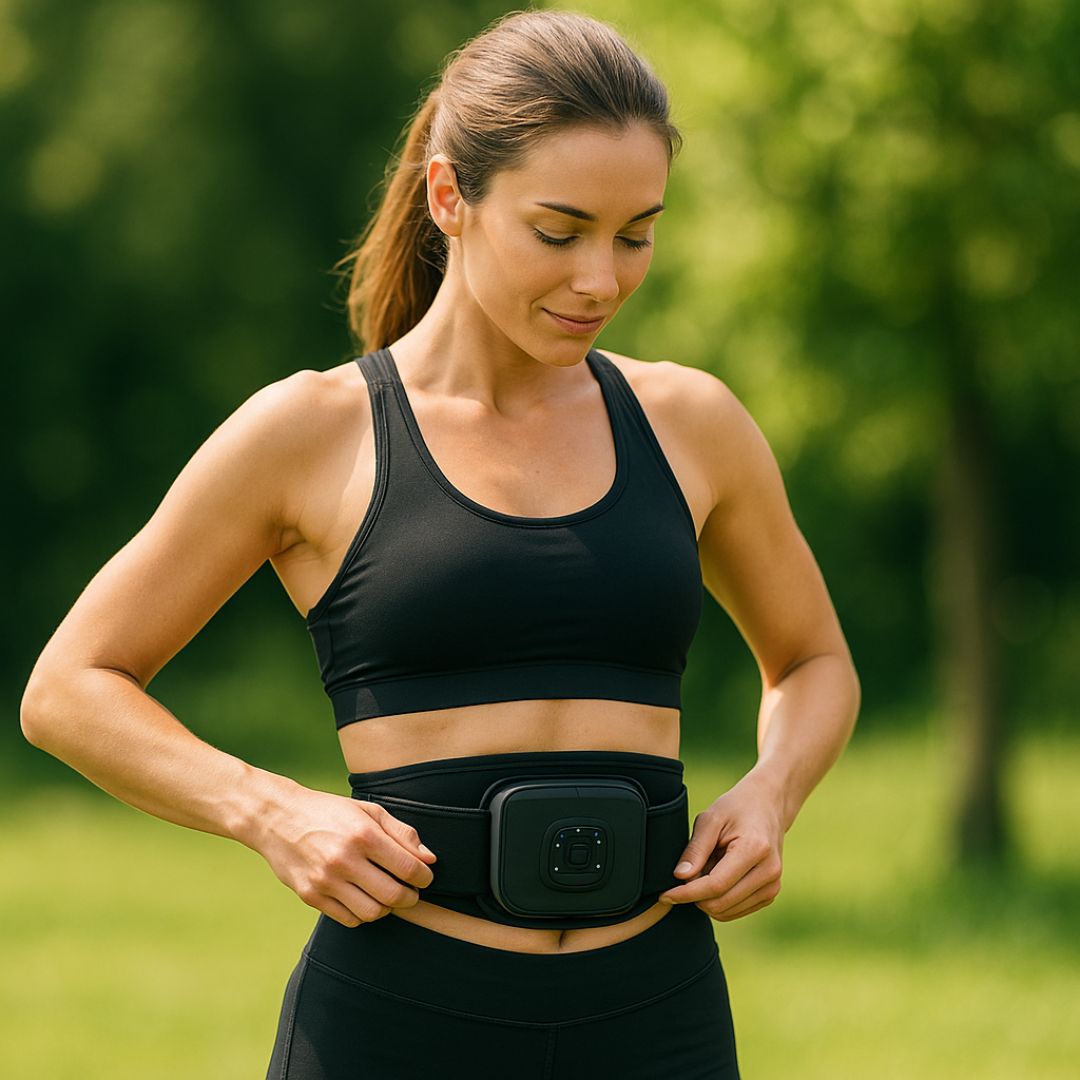
Ab crunch bench, ab-cruncher, motorized roller, vibrating platform, or electrostimulation belt: the "abs" aisle has never been so well-stocked, nor so confusing. Are you hesitating between an abdominal belt or an electric or mechanical ab device? This comparison scrutinizes every category: operating principles, actual scientific evidence, price, footprint, safety, and user profile, with a clear recommendation at the end.
We are not detailing the physiology of EMS or its full efficacy here: our pillar guide on the electrostimulation abdominal belt handles that. Here, the goal is to help you choose.
What exactly are we talking about?
The term "electric ab device" covers very different items. To compare like with like, we distinguish between three families.
The EMS belt
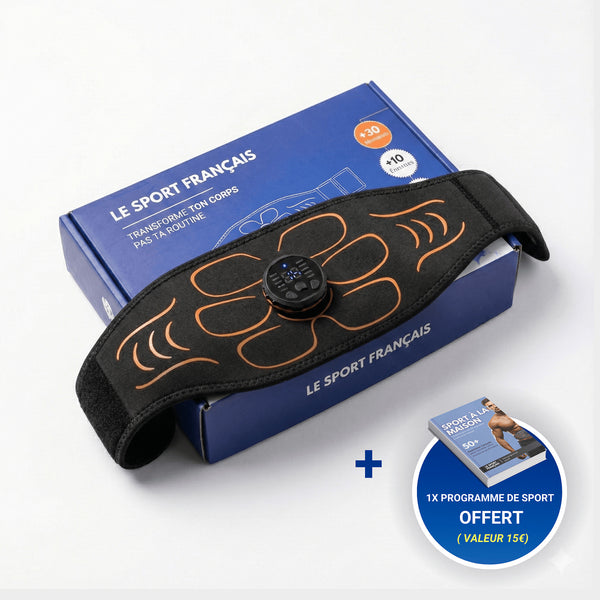
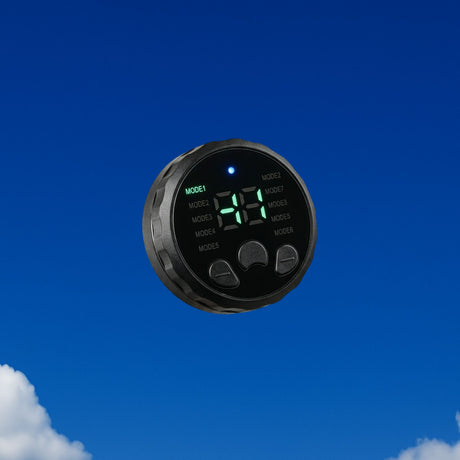
A flexible belt equipped with electrodes, connected to a small control unit. It sends electrical impulses that cause involuntary contractions of the rectus abdominis and obliques. It is worn for 15 to 30 minutes, sitting or standing, without movement. The EMS muscle abdominal belt is the typical example: USB rechargeable unit, multiple modes, and intensity levels.
Mechanical devices
Incline ab bench, ab-cruncher (a hoop that guides the torso), ab wheel, suspension straps. No electronics: you produce the contraction yourself, the device imposes a trajectory or adds resistance. It is classic strength training, with a guide.
Motorized and vibrating devices
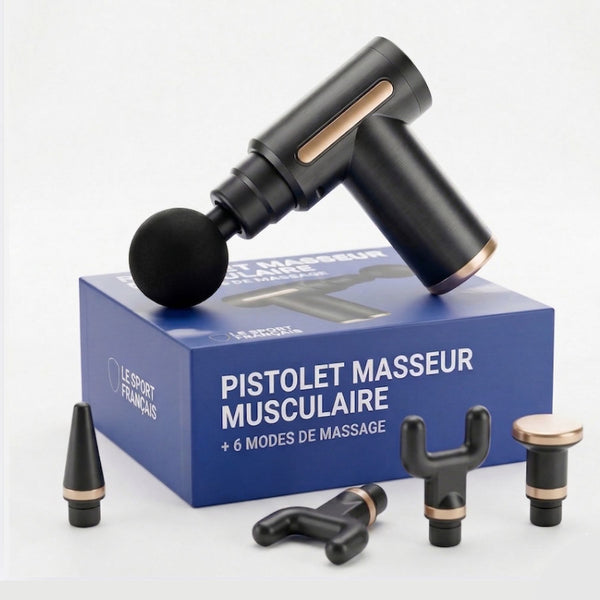
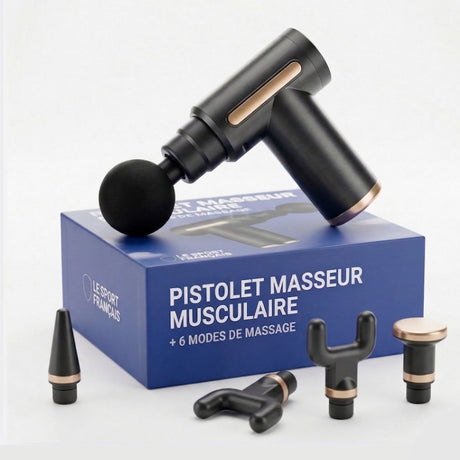
"Firming" motorized massage rollers, vibrating belts, oscillation platforms. A motor shakes the abdominal area; you remain passive. These products are often sold with the same promises as EMS, even though the mechanism is completely different.
How does each solution act on the muscle?
A muscle progresses when subjected to sufficient tension, repeatedly and progressively. Three pathways exist to create this tension.
EMS stimulates the motor nerve through the skin: the contraction is real, measurable, but involuntary. The muscle works without brain participation, which explains both the appeal (no effort) and the limit (no learning of the movement, no cardiovascular effect).
Mechanical devices rely on voluntary contraction against resistance (the weight of the torso, an incline, a rolling wheel). This is the best-documented mechanism in strength training. The quality of the result depends entirely on the exercise the device allows.
Passive vibration, meanwhile, does not create significant muscle tension in the abdominals at rest. It produces a sensation of work, warmth, and sometimes a temporary draining effect, without a strengthening stimulus comparable to the previous two.
What does science say: proven efficacy or not?
EMS: measured strength gains
The benchmark study is by Porcari et al. (2005, Journal of Sports Science and Medicine). After 8 weeks of abdominal stimulation, five times a week, participants gained approximately 58% in abdominal strength and 100% in endurance, with an average waist reduction of 3.6 cm. No fat loss was measured: EMS tones; it does not cause weight loss. The review by Maffiuletti (2010, European Journal of Applied Physiology) confirms that gains depend primarily on the tolerated intensity and that combining it with voluntary exercise yields the best results.
Mechanical devices: it all depends on the movement
Two electromyographic (EMG) studies shed light on this. Sternlicht et al. (2005, Journal of Strength and Conditioning Research) compared six commercial portable devices to the traditional crunch in 46 adults: only the device adding real resistance outperformed the crunch for the rectus abdominis; the others performed as well, or worse. Their conclusion: an ab device is only useful if it reproduces the mechanics of the crunch and adds a load.
Escamilla et al. (2006, Physical Therapy) measured the activation of thirteen exercises, with and without equipment. Variations using the ab wheel (Power Wheel) and hanging knee raises produced the highest activation of the rectus abdominis and obliques, far ahead of the crunch and several guided devices. However, the authors note that these exercises heavily stress the rectus femoris, which can be problematic for people with lower back pain.
Vibration and motorized rollers: lack of evidence
To our knowledge, no controlled study published in a peer-reviewed journal shows that a vibrating belt or motorized roller strengthens the abdominal core or reduces waist size. In the absence of data, we classify them as comfort accessories, not training tools.
Summary: EMS and well-designed mechanical devices (wheel, bench with resistance) have evidence of efficacy for strengthening. Vibrating devices do not. To explore the question "does it work," read do abdominal belts really work.
Price and footprint: what to expect?
A decent-quality EMS belt costs between €40 and €90; it fits in a drawer and recharges via USB. Expect to replace the gel pads every few months.
An ab bench takes up 1.2 to 1.5 m on the floor, even when folded, for €60 to €250. An ab-cruncher folds but remains bulky. The ab wheel is the exception: €20 to €40, one square meter on the floor, stored under a bed.
Vibrating devices and motorized rollers range from €50 to €300, must be plugged in, and take up the space of a small kitchen appliance. Given the lack of evidence, this is the least favorable benefit-to-price ratio of the three families.
Which solution is the safest?
EMS is contraindicated for wearers of pacemakers or defibrillators, people with epilepsy, during pregnancy, on broken skin, or untreated hernias. Beyond these cases, the risk is limited to skin irritation if the electrodes are poorly placed or the intensity is too high.
Mechanical devices put the lower back at risk: repeated flexions on a bench that is too inclined, uncontrolled lumbar extension on the wheel. The EMG studies cited remind us that the most activating exercises are also those that most stress the hip flexors. Technique matters more than the device.
Vibrating devices are generally safe, but their safety for pregnant women, those with prosthetics, or vascular conditions is poorly documented. Again, doubt should lead you to your doctor.
Which profile for which solution?
You are short on time or getting back into sports
The EMS belt is the easiest to incorporate: 20 minutes, without sweating, in front of a screen. It is suitable for beginners, people returning after a long break, and those who struggle to "feel" their abdominals. It does not replace physical activity, but it initiates movement.
You are already active and want to progress
The ab wheel or a bench with adjustable resistance will help you progress more than a belt alone, because you can load the movement. Combining a belt + wheel is logical: the first tones and improves activation, the second develops functional strength. Our article on the ab device for home strength training details the options.
You have a fragile back
Avoid incline benches and large-range-of-motion movements. EMS at moderate intensity, combined with static core work, is a gentler option, subject to the advice of a healthcare professional. Many effective exercises can be done without equipment: see strengthening abs without equipment.
You are mainly looking for a flat stomach
None of these devices reduce abdominal fat locally. A flat stomach depends on energy balance, overall activity, and core tone. A device can help with the third point; the first two are matters of diet and cardio.
Concrete 8-week program: EMS belt and ab wheel
This program combines the two solutions with evidence of efficacy. Adapt the loads to your level and stop in case of lower back pain.
- Weeks 1-2: EMS belt 3 x 15 min per week, intensity just above visible contraction; front core work 3 x 20 s, 2 times per week. No wheel yet.
- Weeks 3-4: Belt 4 x 20 min; wheel on knees, short range, 3 sets of 6 to 8 reps, 2 times per week; core work 3 x 30 s.
- Weeks 5-6: Belt 4 x 25 min with voluntary contraction during pulses; wheel on knees, full range, 3 x 8 to 10, 2 to 3 times per week.
- Weeks 7-8: Belt 5 x 25 to 30 min; wheel 4 x 10 to 12, with one set in isometrics for 10 s in the low position; side core work 3 x 30 s per side.
- Throughout: 2 to 3 sessions of brisk walking or 30-minute cardio, and a diet consistent with your goal.
To see what to expect visually, consult our summary EMS belt: results before / after 8 weeks.
Limits, mistakes to avoid, and contraindications
First mistake: buying a device based on the promise of a flat stomach without effort. Neither the belt, nor the bench, nor the vibrating roller burns fat locally. Second mistake: choosing a vibrating device thinking you are buying EMS; check for the presence of electrodes and intensity settings. Third mistake: neglecting technique on a mechanical device and injuring your back by the second week.
Limits specific to EMS: no cardiovascular effect, rapid muscle fatigue, results that plateau without voluntary exercise. Limits of mechanical devices: bulk, technical learning curve, lumbar strain. Limits of vibrating devices: lack of evidence.
Common contraindications: pregnancy, recent abdominal surgery, hernia, acute lower back pain. Specific contraindications for EMS: pacemaker, defibrillator, epilepsy, skin lesions. If in doubt, seek advice from your doctor before starting.
Our recommendation and our solution
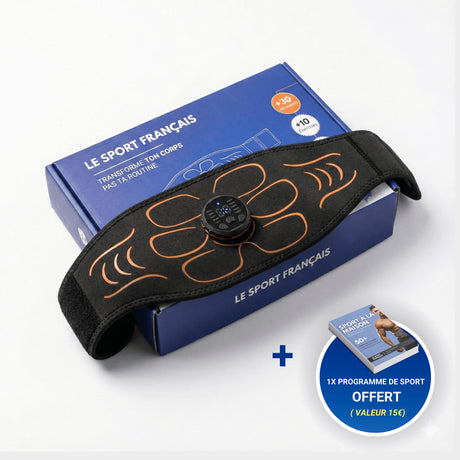
For the majority of people training at home, the EMS belt is the most rational first purchase: evidence of efficacy for strength and endurance, affordable price, no footprint, no technique to learn. The Le Sport Français EMS muscle abdominal belt (€59.99) offers multiple stimulation modes, dozens of intensity levels, and a USB rechargeable unit, for 15 to 20-minute sessions.
If you want to add voluntary contraction against resistance, the silent non-slip ab wheel (€39.90) is the mechanical device best supported by EMG studies: wide tread, silent, usable on both hardwood and rugs. It advantageously replaces a bench for a fraction of the price and space.
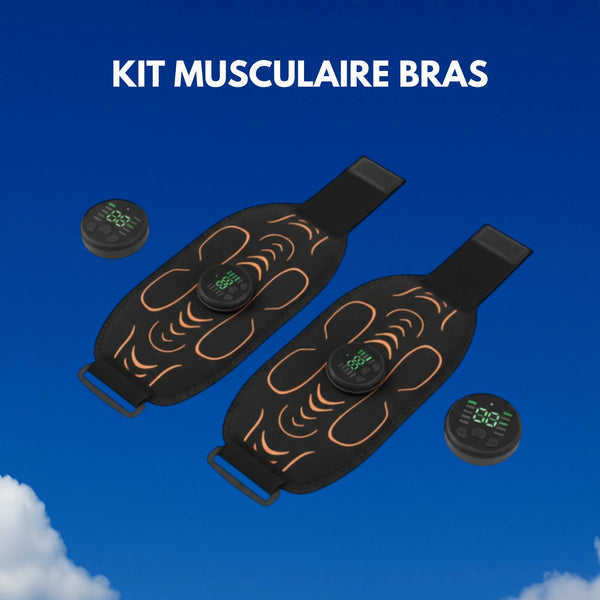
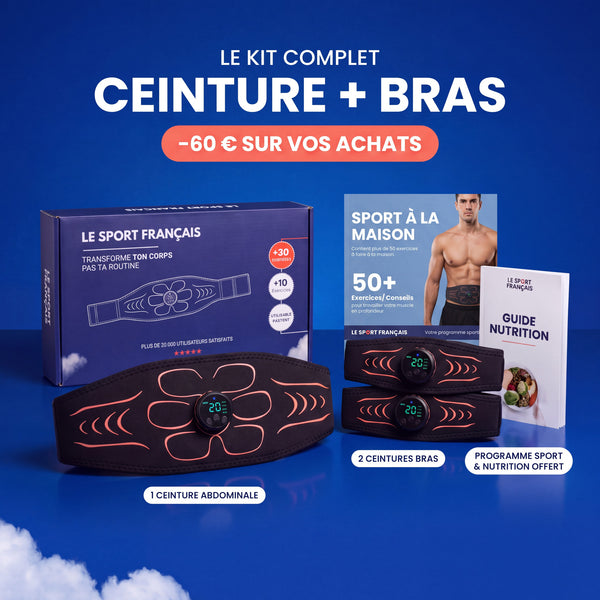
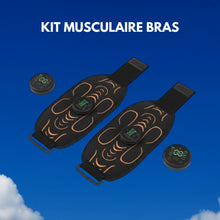
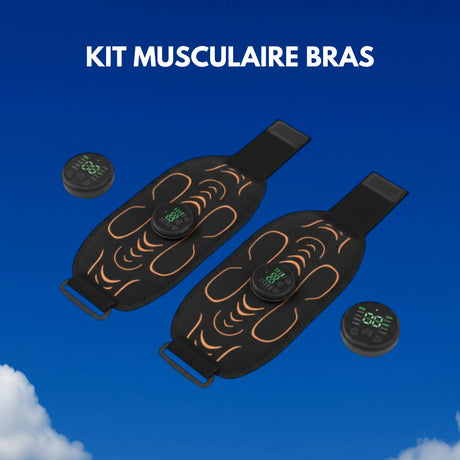
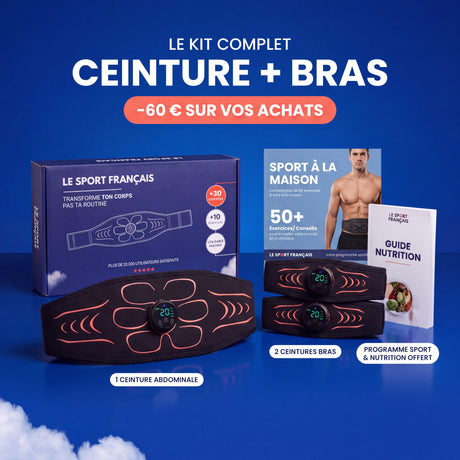
To also work the arms with the same unit, the belt + arm cuff sports kit (€89.99) brings together an EMS belt and cuffs. Finally, if you prefer discreet stimulation under clothing, the abdominal EMS patch (€40.99) applies the same principle over a smaller surface area.
Vibrating devices and motorized rollers do not appear in our recommendation: we do not sell what the literature does not support.
Frequently asked questions
EMS belt or ab bench: which builds more muscle?
A bench with resistance allows you to load the movement, thus progressing further in strength. The belt provides real gains without voluntary effort or technique, but plateaus sooner. Both complement each other: the belt for activation and regularity, the mechanical device for progression.
Do vibrating belts help you lose belly fat?
No controlled study shows this. Passive vibration creates neither significant contraction nor notable energy expenditure. If the goal is waist size, focus on overall physical activity, diet, and a strengthening tool whose efficacy is documented.
Can I use the EMS belt and the wheel on the same day?
Yes. Do the wheel first, when you are fresh and your technique is reliable, then the belt. Doing it the other way fatigues the abdominals before the technical exercise and increases the risk of lumbar compensation. Allow at least one day of rest between two wheel sessions.
Is an ab device useful if I already do core work?
Core work (planks) is excellent for endurance and the transverse abdominis. A device adds either dynamic resistance (wheel) or additional stimulation (EMS). If your core work is plateauing or if you want to vary, yes. If you are still progressing, it is not essential.
What is the minimum budget for an effective device?
Count on €40 to €60 for an adjustable EMS belt or €30 to €40 for a good wheel. Below €20, belts often lack intensity and wheels slip or squeak. Beyond €150, you are paying for comfort and bulk, rarely for additional efficacy.
Key takeaways
- "Electric ab device" refers to three very different families: EMS, mechanical, vibrating.
- EMS has evidence of strength and endurance gains over 8 weeks, without fat loss.
- Mechanical devices are only as good as the movement they allow; the wheel is among the most activating.
- Vibrating devices and motorized rollers have no published evidence of efficacy.
- The EMS belt wins on price, footprint, and simplicity; the wheel wins on strength progression.
- No device causes localized fat loss.
- Respect contraindications and prioritize technique on mechanical devices.
Conclusion
Between an abdominal belt and an electric ab device, the choice is made based on evidence, not promises. If you must buy only one tool, the EMS muscle abdominal belt offers the best compromise of efficacy, price, and simplicity; add an ab wheel when you want to load the movement. And keep in mind that the abdominal core is most visible when the rest of your lifestyle habits are on track.
Sources
- Porcari J.P. et al. (2005). The effects of neuromuscular electrical stimulation training on abdominal strength, endurance, and selected anthropometric measures. Journal of Sports Science and Medicine, 4(1), 66-75. pubmed.ncbi.nlm.nih.gov
- Maffiuletti N.A. (2010). Physiological and methodological considerations for the use of neuromuscular electrical stimulation. European Journal of Applied Physiology, 110, 223-234. link.springer.com
- Sternlicht E., Rugg S.G., Bernstein M.D., Armstrong S.D. (2005). Electromyographical analysis and comparison of selected abdominal training devices with a traditional crunch. Journal of Strength and Conditioning Research, 19(1), 157-162. pubmed.ncbi.nlm.nih.gov
- Escamilla R.F. et al. (2006). Electromyographic analysis of traditional and nontraditional abdominal exercises: implications for rehabilitation and training. Physical Therapy, 86(5), 656-671. academic.oup.com