







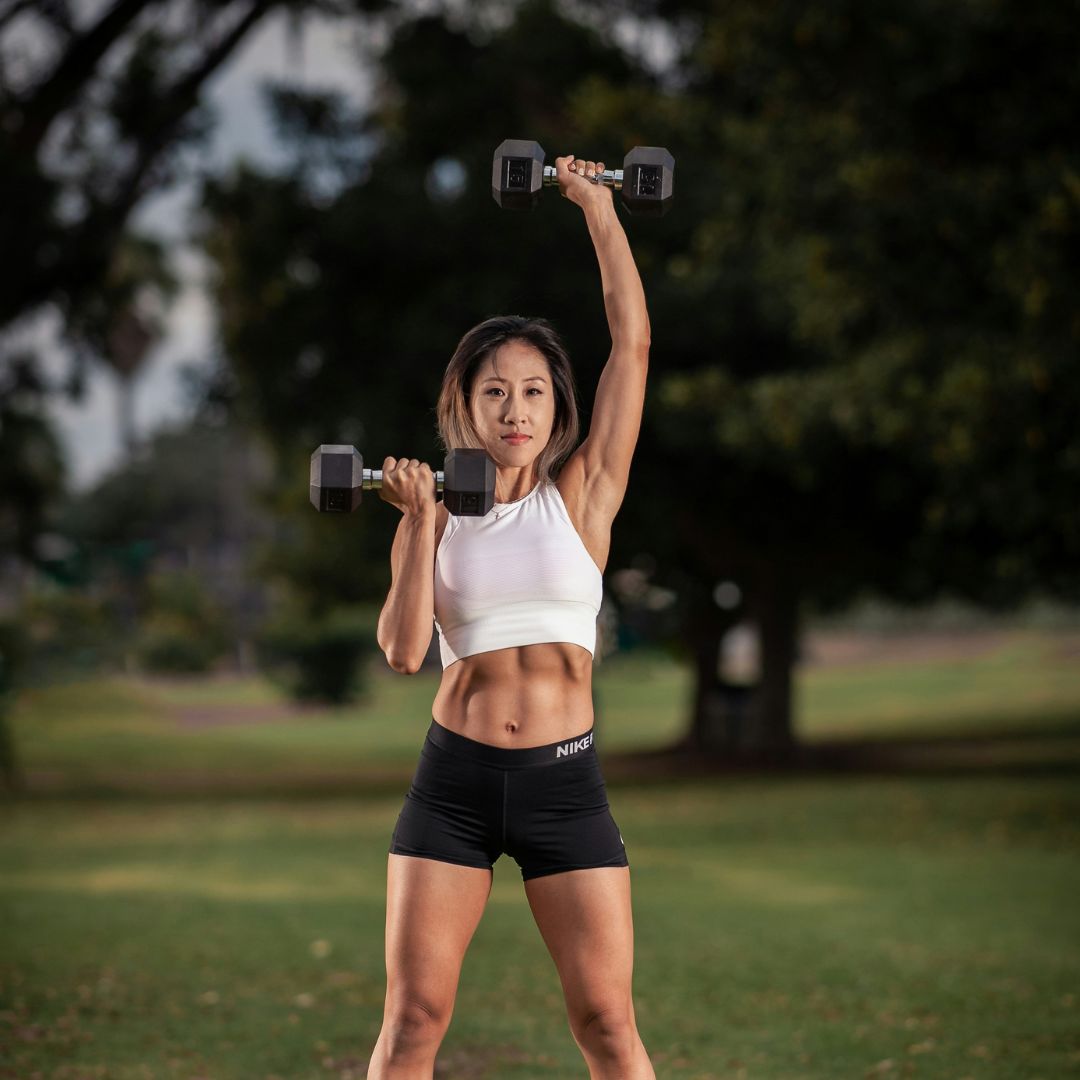
Getting a flat stomach and toned abs at home, without equipment, group classes, or a gym: it is entirely possible. This guide is specifically designed for women, as female physiology creates particular constraints — hormonal cycles, pregnancies, menopause — that directly influence optimal abdominal training. You will find here a 4-week progressive program, the most effective exercises by level, and the physiological explanations that will allow you to understand why each exercise works.
Flat stomach goal: realistic and sustainable
Before starting, you must define what a realistic flat stomach is for a woman. Unlike men, women naturally have a higher body fat percentage, particularly in the lower abdominal area — this is a biological adaptation linked to reproduction. A flat stomach does not mean a completely fat-free abdomen, but a firm, well-supported belly with an abdominal wall visible under a normal layer of fat. The realistic goal after 4 to 8 weeks of the program: a firmer feeling stomach, improved posture, a reduction in the sensation of bloating, and depending on your starting point, a slight decrease in waist size.
Quick anatomy: which muscles to target?
Transversus abdominis
This is the deepest, most important, and most neglected muscle. It acts as a natural muscular belt that compresses the abdomen and keeps it flat. In women, it is often weakened by pregnancies and a sedentary lifestyle. All effective flat stomach exercises engage the transversus — directly or indirectly.
Obliques (internal and external)
The obliques wrap around the sides and allow for torso rotation. In women, they directly influence the feel of the waistline and the curve of the silhouette. Strong obliques give that defined waist impression, even without significant weight loss.
Rectus abdominis
This is the muscle that forms the visible abs. It flexes the trunk. It is important for overall abdominal strength but does not provide a flat stomach on its own — it is the transversus that pulls the stomach in.
Special home program for women: 4 weeks to tone your abs
Week 1: gentle activation and awareness
Objective: relearn how to use the transversus and activate the abdominal wall correctly. Frequency: 4 sessions per week, 20 minutes per session. The program begins with active abdominal breathing for 3 minutes: lying on your back, knees bent, inhale while letting the stomach expand, exhale while pulling the navel toward the spine. This isn't just breathing — it's muscular training of the transversus with every exhale. Continue with the front plank, 3 sets of 15-20 seconds with 30 seconds of rest. Add the dead bug, 3 sets of 8 repetitions on each side. Finish with side planks, 2 sets of 15 seconds on each side.
Week 2: Core strengthening and introduction of movement
Objective: increase the duration of isometric exercises and introduce dynamic exercises. Frequency: 4 sessions per week, 25 minutes per session. The front plank increases to 3 sets of 25-30 seconds. Mountain climbers are introduced: 3 sets of 20 repetitions at a moderate speed. The stomach vacuum is incorporated: 3 sets of 5 contractions of 10 seconds. Side planks increase to 3 sets of 20-25 seconds on each side. Finish with bird-dogs, 3 sets of 10 repetitions on each side.
Week 3: Progressive intensification
Objective: increase difficulty and work each muscle group more specifically. Frequency: 5 sessions per week, 30 minutes per session. The front plank reaches 3 sets of 40-45 seconds. Plank shoulder taps are added: 3 sets of 10 taps on each side, hips still. Mountain climbers increase to 30 repetitions per set. The hollow body hold is introduced: 3 sets of 15-20 seconds. Side planks reach 35-40 seconds. Complete with leg raises: 3 sets of 10 repetitions, legs straight, lower back pressed against the floor.
Week 4: Complete circuit
Objective: combine all exercises into a circuit for an intense and complete workout. Frequency: 5 sessions per week, 35 minutes per session. A complete circuit includes: 45 seconds of plank, 20 mountain climbers, 30 seconds of hollow body hold, 8 bird-dogs on each side, 40 seconds of side planks on each side, 10 leg raises, and 5 stomach vacuums of 10 seconds. Repeat this circuit 2 to 3 times depending on your level.
Tips for sustainable results
Diet, the fundamental lever
According to ANSES recommendations on nutrition and body composition, diet is responsible for approximately 70% of results in terms of body composition. A deficit of 300 to 400 kcal below your daily maintenance is sufficient for progressive and sustainable fat loss. Prioritize proteins (eggs, Greek yogurt, legumes, fish) and reduce refined sugars and ultra-processed foods.
Sleep and stress
INSERM research on stress and metabolism confirms that cortisol (the stress hormone) promotes the storage of visceral abdominal fat. Women who sleep less than 7 hours per night have, on average, a 37% higher cortisol level at the end of the day. Sleep and stress management are not secondary factors: they directly condition your body's ability to burn abdominal fat.
Move every day
Outside of abdominal strengthening sessions, unstructured daily physical activity — walking, taking the stairs, cycling — plays a decisive role in overall calorie expenditure. 30 minutes of brisk walking burns about 150-200 kcal, which is potentially more than one kilogram of fat per month if maintained regularly.
Can you lose belly fat only with ab exercises?
No, and it is essential to understand this. Spot reduction is a myth refuted by science. Abdominal exercises develop and strengthen the abdominal muscles but do not target the fat covering them. This is why the combination of abdominal exercises + adapted diet + moderate cardiovascular activity is the only effective strategy for a lasting flat stomach.
Using an abdominal belt to complement your program
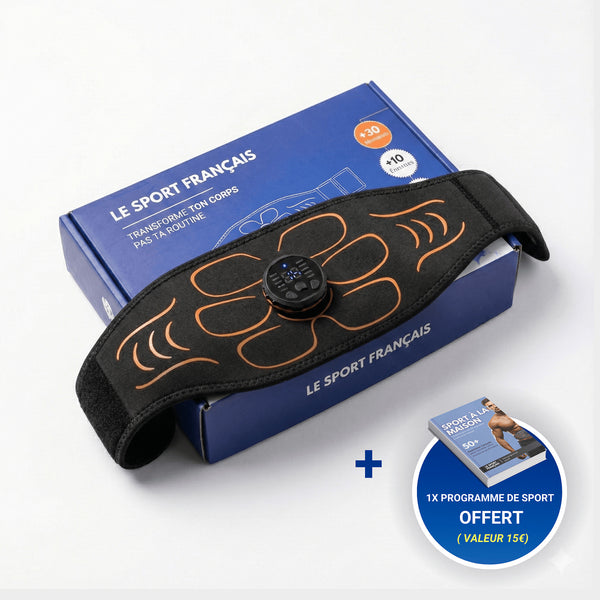
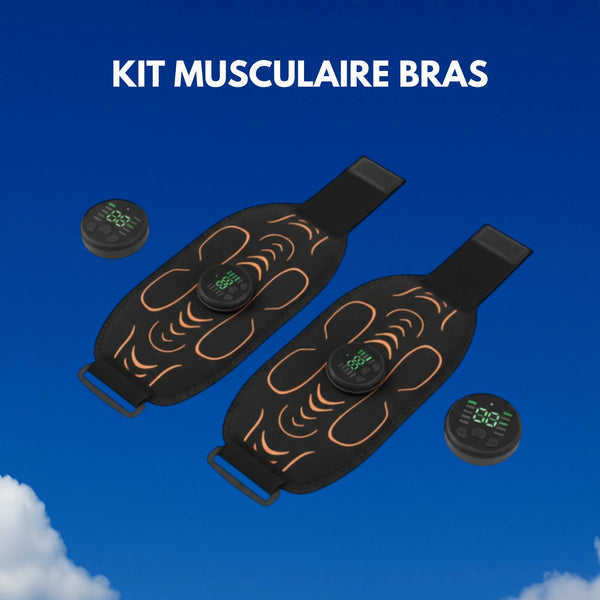
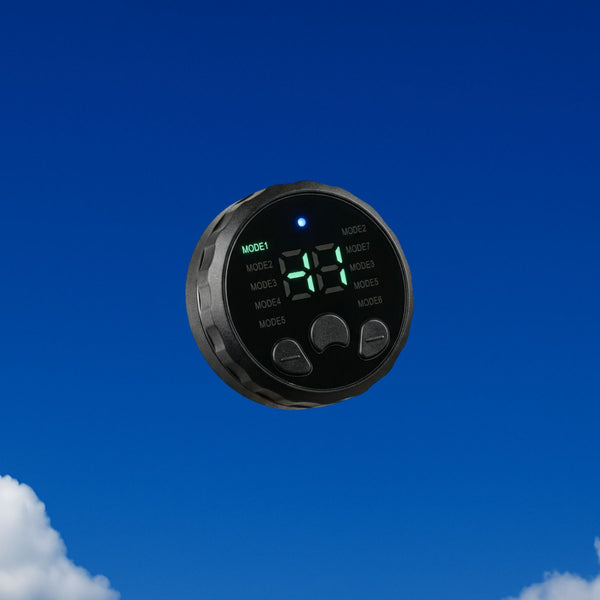
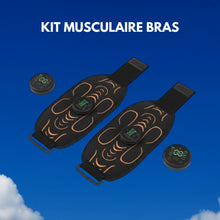
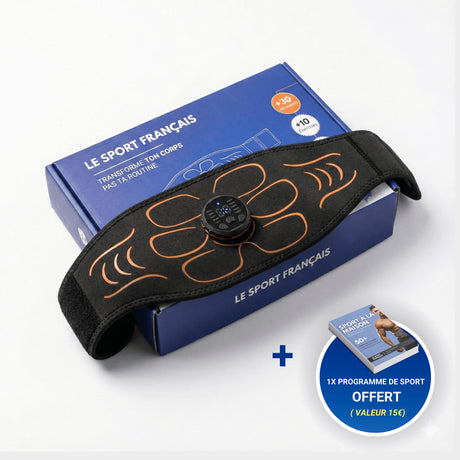
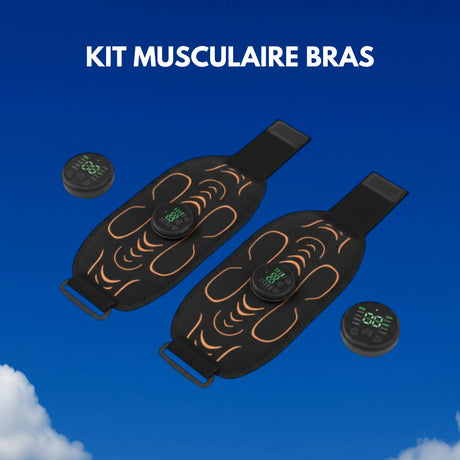
The Le Sport Français EMS abdominal belt is an excellent complement to this program. By directly targeting the transversus and deep muscles through electrostimulation for 20 to 30 minutes, it amplifies the effects of voluntary training sessions and helps maintain muscular stimulation on rest days. The combination of an exercise program + EMS produces results up to two times faster than either of these approaches used in isolation.
What to avoid to flatten your stomach effectively
Doing only crunches
Crunches only work the upper part of the rectus abdominis. Replace them with the isometric and functional exercises described in this program for a complete workout of the entire abdominal wall.
Neglecting the transversus
The transversus is THE flat-stomach muscle for women. If your program does not activate it directly (vacuum, abdominal breathing, planks), you will miss the main driver of results.
Working with poor posture
Each exercise must be preceded by a voluntary activation of the transversus. Pull the navel toward the spine before assuming the position. This transforms every exercise into active and targeted work.
Forgetting recovery
The deep abdominal muscles need recovery like all other muscles. Alternate intense training days with active recovery days (walking, stretching, yoga).
Case study: Émilie, 41 years old – Flat stomach goal after weight loss
Émilie lost 12 kg in 6 months thanks to a balanced diet and daily walking. However, her stomach remained soft despite the weight loss because her abdominal wall was weak. She followed this program 4 days per week for 8 weeks, adding 20 minutes of the EMS belt in the mornings. At the end of the 8th week, her stomach was significantly firmer and her waist size had decreased by 3 cm at a stable weight.
Ab exercises for women: adapted to all levels
This program is designed to evolve with you. If you are a beginner, start with week 1 and take 2 extra weeks for each phase if necessary. If you are an experienced athlete, start directly with week 3 and add difficult variations.
Which exercise to lose lower belly fat for women?
The lower belly is the most difficult area to work for women, as this is where estrogen prioritizes fat storage. The most effective exercises for this area: the stomach vacuum (lower transversus), leg raises (lower rectus), and hypopressive breathing (pelvic floor and lower abdomen). These exercises do not burn fat locally, but they develop muscles that give a flatter and firmer appearance to this area.
Psoas stretches
The psoas is a deep muscle that connects the lumbar spine to the femur. When it is too tight, it pulls on the lower abdomen and the lumbar region. Stretching it regularly (low lunge held for 30 seconds on each side) improves lumbar posture and helps flatten the lower abdomen even without fat loss.
Pelvic mobility
Pelvic retroversion activates the lower transversus and reduces lumbar lordosis. Practicing this activation 10 times before each session prepares the deep muscles to work correctly.
Abdominal and diaphragmatic breathing
Abdominal-diaphragmatic breathing activates the diaphragm and, through neuro-muscular reflex, the transversus. Practicing this breathing daily is one of the most powerful tools for strengthening the abdominal wall without apparent effort.
What is the most effective ab exercise for women?
If we had to choose only one: the front plank with prior activation of the transversus. It simultaneously engages the transversus, obliques, rectus, and back stabilizing muscles. It is isometric, progressive, and adaptable. It is the exercise that should never be removed from an effective female abdominal program.
Which ab exercises to choose for a flat stomach?
For a lasting flat stomach for women, the winning trio is: stomach vacuum (transversus), front plank (full wall), and leg raises or hollow body hold (lower belly). These three exercises, practiced 4 times per week with regular progression, produce measurable results in 6 to 8 weeks.
How to get abs quickly as a woman?
Speed depends on your current body fat percentage. Women with a body fat percentage of 20-25% can achieve visible abdominal definition in 8 to 12 weeks with this program and an adapted diet. Those with a higher body fat percentage will first need to reduce overall body fat before the muscles become visible.
Strengthening your abdominal wall: targeted exercises and key postures for women
Yoga, Pilates, and hypopressive exercises are practices particularly well-suited for women to strengthen the abdominal wall. Yoga develops body awareness. Pilates focuses on the core and offers very precise exercises for deep muscle awareness. Hypopressive exercises are the most direct method for working the transversus and pelvic floor simultaneously.
Gently stimulating deep muscles
For women returning from pregnancy, suffering from pelvic pain, or having abdominal diastasis, the progressive stimulation of deep muscles should be supervised by a physical therapist. The Haute Autorité de Santé (HAS) recommends systematic pelvic floor rehabilitation before any postpartum abdominal strengthening program.
When to change exercises?
When an exercise becomes easy (you can hold it 50% longer than the target), it is time to progress to a more difficult variation. For the plank, move to a plank on exercise balls or with a limb lift. For mountain climbers, speed up the rhythm or add a twist for the obliques.
Testimonials from women who have tested this program
Sophie, 29 years old – Remote employee
Sophie worked 8 hours a day sitting and had chronic lower back pain. After 6 weeks of this program (4 sessions/week), her pain had significantly decreased and her stomach was firmer. After 3 months, she had lost 4 cm from her waist.
Inès, 38 years old – Mom of 3 children
After three pregnancies, Inès had mild abdominal diastasis and an almost non-existent transversus. She followed week 1 for 3 extra weeks before progressing, adding the EMS belt to the program. After 10 weeks, her physical therapist noted a significant improvement in abdominal toning.
Why do women find it harder to lose belly fat?
Women naturally store more fat in the lower abdominal area and hips, under the influence of estrogen. This fat, known as protective fat, is biologically resistant to lipolysis. It responds less quickly to a caloric deficit than visceral fat. This is why women often see results in terms of muscular firmness long before seeing results in terms of visible abdominal fat loss.
How to contract abs correctly?
Correct abdominal contraction starts with a full exhale, followed by pulling the navel in without holding your breath. The goal is to feel the muscles activate from the inside, not to hold your air.
Which complementary sports for a flat stomach?
Swimming (crawl and breaststroke massively engage the abs), Vinyasa yoga, Pilates, elliptical (which engages the obliques in the arm movement), and dance. These activities keep the abdominal wall active continuously during the session.
Weekly checklist: your anti-flabby stomach routine
Four sessions of this program, 20 minutes of stomach vacuum or hypopressive breathing per day, 30 minutes of gentle cardio 5 days out of 7, protein-based diet, 7 to 8 hours of sleep per night, and a stretching or yoga session on the weekend.
To go further:
Consult our articles on the transversus program for a flat stomach, on how to re-tone your abdominal wall, and on abdominal belts for women: complete guide.
FAQ: At-home ab program for women
How many times per week should I do abs? 4 to 5 times per week for progressive strengthening, with at least 1 to 2 days of active recovery.
How long to see results? Muscular firmness perceptible in 2 to 3 weeks, visual changes in 6 to 8 weeks with an adapted diet.
Is this program suitable after pregnancy? The beginning of the program (abdominal breathing, gentle vacuum) can be practiced once medically approved. Avoid leg-lift exercises and dynamic planks during the first 8 to 12 weeks postpartum.
Do I need to go on a diet? No strict diet, but a balanced, high-protein, low-sugar diet is necessary for muscle results to become visible.