









The abdominal core is much more than just a matter of aesthetics. It is your body's central pillar, the muscular structure that supports your spine, stabilizes your pelvis, protects your internal organs, and conditions every one of your daily movements. When it is weak or poorly engaged, the consequences are felt everywhere: chronic lower back pain, poor posture, a flabby belly, and flagging athletic performance. When it is toned and strengthened, everything changes. This comprehensive guide provides you with the methods that really work, practical tips for rapid progress, and, most importantly, the mistakes that cost you months of useless effort.
Why strengthening your abdominal core is essential
The abdominal core is not a single muscle but a set of four interdependent muscle groups. The transversus abdominis forms the deepest layer—it is the true corset, the muscle that cinches and holds. Over it, the internal and external obliques allow for rotation and lateral flexion of the trunk. Finally, the rectus abdominis is the best known because it is the most visible: it is what forms the famous "six-pack" abs when body fat levels are low enough.
The problem is that modern sedentary life systematically weakens these muscles. Hours spent sitting at a desk, slouching in front of screens, and a lack of regular physical activity: all of this gradually deactivates the transversus and the stabilizing muscles. The result: your back compensates, your lower back suffers, and your belly loses its tone, even in people who are not overweight.
According to epidemiological data published by INSERM, about 80% of French people will suffer from lower back pain at some point in their lives, and a weak core is one of the most well-documented risk factors. Strengthening your core is therefore a direct investment in your long-term health.
The best methods to rebuild your abdominal core
There are several complementary approaches to effectively strengthening the core. The most effective ones are not always the best known.
Muscle Electrostimulation (EMS)
Muscle electrostimulation, or EMS, consists of sending low-frequency electrical impulses directly into muscle fibers via electrodes placed on the skin. These impulses trigger involuntary muscle contractions—the same as those generated by the nervous system during voluntary exercise, but targeting muscle layers that are difficult to reach with standard movements.
Research available through INSERM shows that EMS can activate up to 90% of muscle fibers during a contraction, compared to 40-60% for a standard maximum voluntary effort. For the abdominal core, this means deep stimulation of the transversus and obliques, muscles that habitual exercises struggle to target effectively.
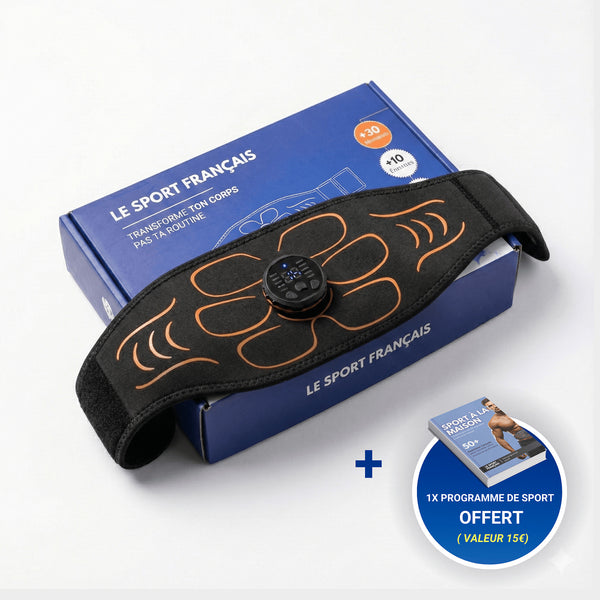
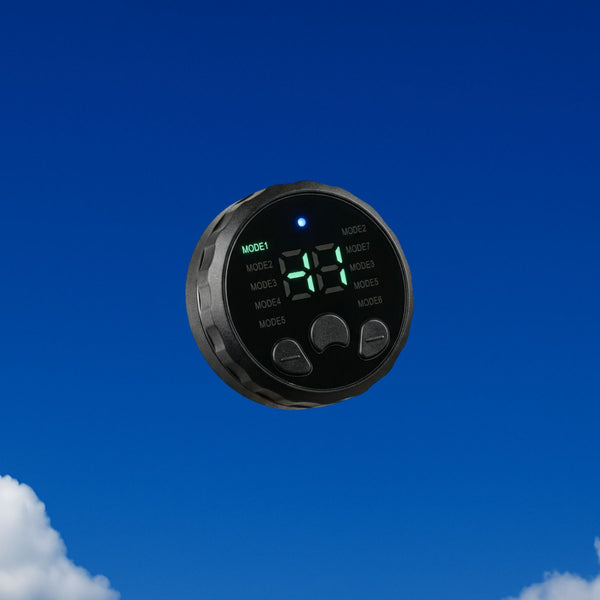
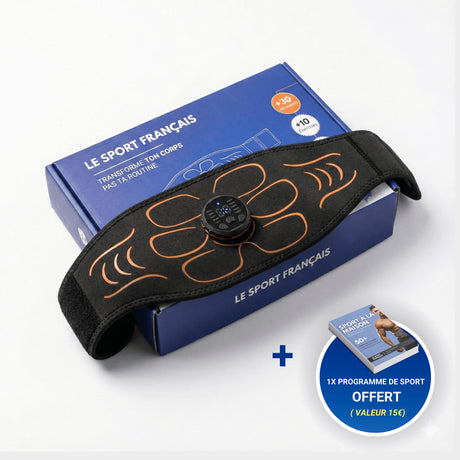
The major advantage of the Le Sport Français EMS abdominal belt is its convenience: 20 to 30 minutes per session, without intense physical effort, while you go about your daily activities. It is particularly suitable for people starting a muscle-building program or returning after a long period of inactivity, as it allows for the gradual reactivation of atrophied muscles without joint risk.
Hypopressive exercises
Hypopressive exercises are little-known to the general public but have been recognized by physical therapists since the 1980s. Originally developed for the rehabilitation of the perineum and abdominal wall after childbirth, they have proven to be beneficial for everyone today. The principle is based on diaphragmatic aspiration: by holding one's breath after a full exhalation, the diaphragm rises and creates negative pressure in the abdomen. This suction-like depression intensely activates the transversus and pelvic floor muscles without putting pressure on the viscera.
The French National Authority for Health (HAS) recommends this type of approach in postpartum rehabilitation protocols. Practicing 3 sets of 3 hypopressive breaths 3 times a week produces visible results on the core in 6 to 8 weeks.
Core stability (Planking)
Planking is the essential reference for strengthening the core isometrically. The front plank, side plank, hollow body hold, and dead bug: these exercises simultaneously engage all abdominal muscles by keeping them under tension without flexion-extension movement. It is precisely this isometric tension that develops the core's endurance and solidity, unlike crunches, which only work the rectus abdominis incompletely.
The most common mistake when planking is to let the shoulders and traps take the load. Effective planking begins by voluntarily contracting the transversus—imagine drawing your navel toward your spine—even before holding the position. This prior voluntary activation is what distinguishes an effective core exercise from a simple, uncomfortable posture.
Functional movements
Squats, lunges, light deadlifts, kettlebell swings: these multi-joint movements massively recruit the abdominal core as a stabilizer. During a well-executed squat, the transversus contracts automatically to protect the spine under the load. This is why people who regularly practice functional movements often have a highly developed core without ever doing a single crunch.
Tips for maximizing results
Rebuilding your core follows precise biological rules. Ignoring them is to doom yourself to slow and disappointing results. First, progression must be gradual: the deep abdominal muscles are postural muscles designed for endurance. Start with 20-second planks, increasing by 5 seconds each week until you reach 60-90 seconds. Second, frequency is more important than intensity: short but daily sessions (10-15 minutes) produce better results for the core than long sessions twice a week. Third, the quality of the contraction matters more than the number of repetitions: before each exercise, take 3 seconds to locate and activate your transversus. Fourth, diet plays a decisive role: a moderate caloric deficit (300-500 kcal/day below your maintenance level) combined with a protein-rich diet (1.6 to 2g per kilo of body weight) is the combination that allows for both strengthening muscles and reducing abdominal fat.
Common mistakes to avoid
Doing only crunches
This is mistake number one. The classic crunch only engages the rectus abdominis, leaving out the transversus and obliques. Worse, incorrect execution (pulling on the neck, arched back) can aggravate neck and lower back pain. People who do 200 crunches a day without visible results are proof of this: quantity does not replace diversity in exercises.
Working abs every day without recovery
Like all muscles, the abdominals need recovery to rebuild and strengthen. The destruction of muscle fibers during exercise, followed by their reconstruction during rest: this is the process that creates muscle growth. Working abs at high intensity 7 days a week does not leave time for this process to complete. Ideally, alternate two days of intense stimulation with one day of active recovery (stretching, yoga, walking).
Neglecting back strengthening
The abdominal core and the erector spinae muscles work as a pair. Strengthening one without the other creates a muscular imbalance that can cause pain and injury. A balanced program systematically includes back-strengthening exercises (superman, bird-dog) for every core training session.
Thinking that abs are enough to lose belly fat
Localized lipolysis—the idea of losing fat in a specific area by working that area—is a scientifically debunked myth. Fat loss is systemic: it occurs proportionally throughout the body according to your genetics. The abdominal core is visible when overall body fat is low enough, not just because you have done crunches.
Which abdominal belt to choose?
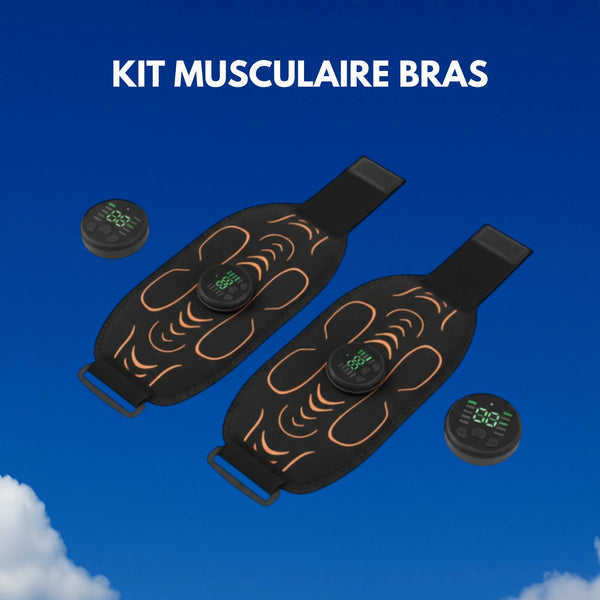
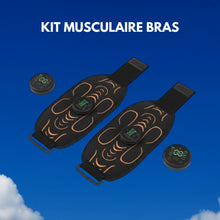
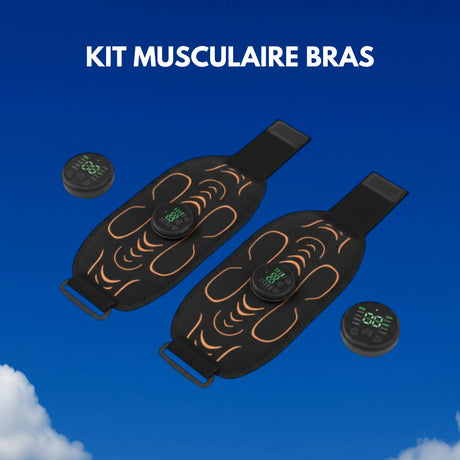
The Le Sport Français EMS Abdominal Belt meets these criteria with several programs and progressive intensity levels, an ergonomic design suited to all body types, and a self-contained rechargeable battery. As a bonus, it includes electrodes for the arms, allowing the benefits of electrostimulation to be extended to other muscle groups.
FAQ: Everything you need to know to properly rebuild your core
How long does it take to rebuild your core? The first improvements in muscle tone are noticeable between 4 and 6 weeks with regular practice. Significant visual changes generally require 8 to 12 weeks, depending on your starting point and diet.
Does the EMS belt replace exercises? No, the EMS belt is a complementary tool. It accelerates muscle rebuilding and allows for targeting deep muscles, but the best results are obtained by combining EMS with planking and functional exercises.
Can you rebuild your core without going to a gym? Absolutely. Planking, hypopressive exercises, and at-home EMS are perfectly effective approaches. The minimum equipment needed is limited to a floor mat and possibly an EMS belt.
Does the core loosen after stopping training? Yes, like any muscle, the core gradually weakens without stimulation. This is why long-term regularity is more important than intensity over short periods.
To go further, check out our articles on the EMS belt: gadget or real solution and the effective use of an abdominal belt.