









Building muscle at home without any equipment: it's possible, effective, and completely free. This 30-day program is designed for people who don't have access to a gym, have no equipment, and want real results without getting lost in complex plans. It progresses week by week, adapts to all fitness levels, and covers all the body's muscle groups.
Why training without equipment works
Body weight is a perfectly sufficient form of resistance for building muscle mass, especially for people who are just starting out or returning after a break. A bodyweight squat engages the exact same muscles as a barbell squat—it is simply less heavily loaded. But for the glutes, quadriceps, hamstrings, pectorals, and especially the core, body weight provides enough resistance to create the micro-tears in the muscles necessary for muscle growth.
The key to progress without equipment: progressivity. This program systematically increases the volume (number of repetitions and sets) and the difficulty of the exercises (switching from easy variants to harder ones) each week. It is this continuous progression that forces the body to adapt by strengthening the muscles.
The principles of this 30-day program
This program is based on 4 fundamental principles. The first is frequency: 5 sessions per week (rest on days 6 and 7), to maintain regular muscle stimulation. The second is the full-body approach: each session works the entire body to maximize calorie burn and overall muscle development. The third is progression: the volume increases by 10 to 15% from one week to the next. The fourth is recovery: the 2 rest days are active (walking, stretching) and not sedentary.
Week 1: Activation and foundations (D1-D7)
Goal: learn the basic movements, activate dormant muscles, and start building a routine. Typical session: 20-25 minutes.
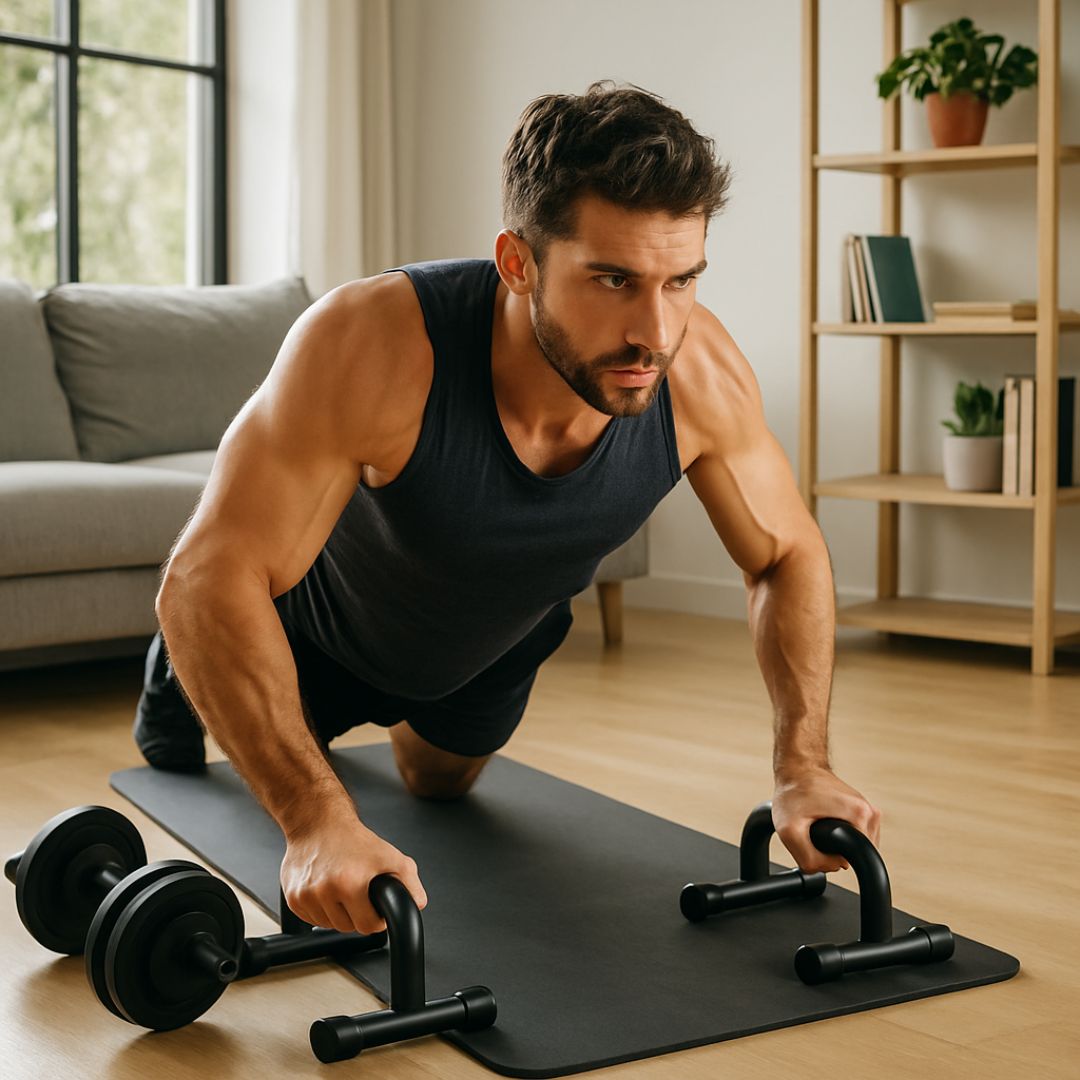
The week 1 program includes 15 bodyweight squats (3 sets), 10 push-ups (on the knees if necessary, 3 sets), 30 seconds of plank (3 sets), 10 alternating lunges on each side (3 sets), 20 mountain climbers (3 sets), and 20 seconds of side planks on each side (2 sets). Rest for 45 to 60 seconds between each set. Do not aim for performance in week 1: aim for quality of execution and understanding each movement.
Week 2: Increasing volume (D8-D14)
Goal: increase work volume and start feeling the muscle effort. Typical session: 25-30 minutes.
Week 2 increases squats to 20 repetitions (3 sets), push-ups to 12-15 repetitions (feet on the floor if possible, 3 sets), plank to 40-45 seconds (3 sets), lunges to 12 on each side (3 sets), mountain climbers to 30 repetitions (3 sets), side planks to 30 seconds on each side (3 sets). We add one exercise: 10 dips between two chairs (3 sets), which target the triceps and lower pectorals. Rest between sets drops to a maximum of 45 seconds.
Week 3: Intensification (D15-D21)
Goal: increase exercise difficulty, add more demanding variants. Typical session: 30-35 minutes.
In week 3, squats turn into jump squats (20 repetitions, 3 sets), which add an explosive and cardiovascular component. Push-ups are widened (wide push-ups for the pectorals) or narrowed (diamond push-ups for the triceps), 15 repetitions, 4 sets. The plank reaches 60 seconds (3 sets) or introduces the plank with shoulder taps. Lunges become jump lunges, 10 on each side, 3 sets. The hollow body hold replaces mountain climbers during 2 out of 5 sessions (30 seconds, 3 sets). We add burpees: 10 repetitions, 3 sets (full-body + cardiovascular exercise). Rest between sets drops to 30 seconds.
Week 4: Consolidation and performance (D22-D30)
Goal: maximum performance on all exercises, circuit training for an intense session. Typical session: 35-40 minutes.
Week 4 works in a circuit (no rest between exercises, 90 seconds of rest between circuits). A full circuit includes: 25 jump squats, 15 push-ups, 60 seconds of plank, 12 jump lunges on each side, 10 burpees, 30 seconds of hollow body hold, 10 dips, and 45 seconds of side plank on each side. Repeat this circuit 3 times. The last 2 sessions of week 4 include a performance test: record your maximum number of consecutive push-ups, your maximum plank, and your maximum number of squats in 60 seconds. Compare these with your first-day numbers.
Nutrition to support the program
A fitness program without nutritional support provides only half the potential results. According to ANSES recommendations, the protein requirements for a person training 5 times a week are between 1.4 and 1.8 g of protein per kilo of body weight per day. For a 70 kg person, this represents 98 to 126 g of protein per day. The best accessible and affordable sources: eggs (6 g each), cottage cheese (11 g/100g), chicken (25 g/100g), legumes (8 g/100g cooked), canned tuna (25 g/100g). Hydration must be maintained at a minimum of 2 liters of water per day during this program.
Integrating EMS to accelerate abdominal results
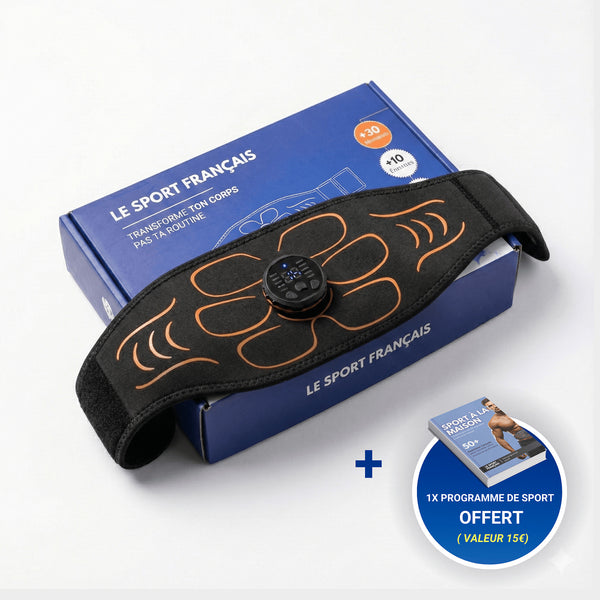
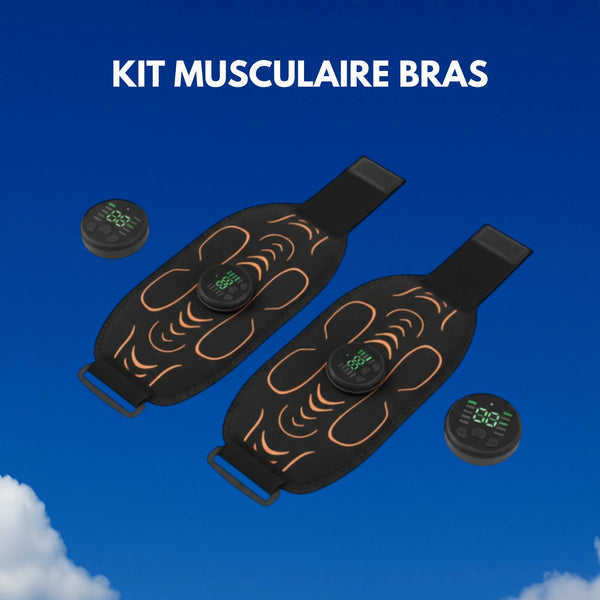
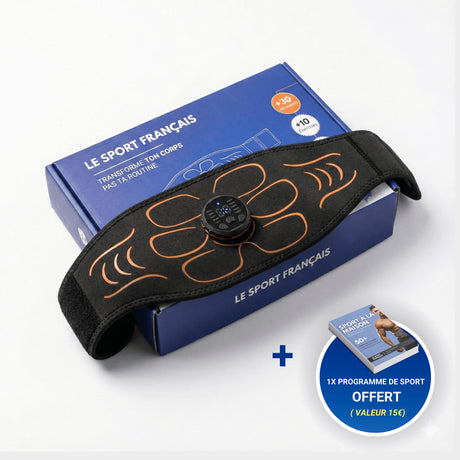
If your main goal is to tone your stomach, the Le Sport Français EMS abdominal belt is a powerful supplement to this 30-day program. Wear it for 20 to 30 minutes a day during your daily activities (work, watching TV, walking) in addition to your exercise sessions. This dual stimulation—voluntary through exercises in the evening, involuntary through EMS during the day—produces an increase in abdominal muscle recruitment 40 to 60% higher than either method alone.
Realistic results after 30 days
What you can reasonably expect at the end of the 30 days, depending on your starting point: a significant increase in the number of push-ups and squats you can perform (typically +40 to +80% compared to the start), a clear improvement in muscle tone, especially in the arms, legs, and core, a reduction in shortness of breath during daily efforts, and moderate fat loss (0.5 to 2 kg depending on your diet) combined with visible muscle gain. Visual changes (more defined muscles, flatter stomach) depend heavily on your diet and initial body fat percentage.
Frequent mistakes in a no-equipment program
The first mistake is neglecting recovery. High-intensity daily sessions 7 days a week lead to chronic fatigue and overuse injuries. Respect the 2 rest days in this program. The second mistake is not progressing: staying at the same difficulty from one week to the next produces no gains after the first week. The third mistake is poor exercise execution: a squat with knees caving inward, push-ups with an arched back, or a plank with hips too high are not only less effective but potentially dangerous for your joints. The fourth mistake is compensating for athletic effort with overly hearty meals. Caloric balance remains the determining factor for body composition.
After 30 days, what's next?
This program is a foundation. After 30 days, you have the level to move on to more difficult variants: fist push-ups, declined push-ups (feet on the couch), Bulgarian split squats, pistol squats, one-arm planks. You can also increase the frequency to 6 sessions per week and integrate specific sessions by muscle group (abs session, leg session, upper body session). Goal at 3 months: 30 consecutive push-ups, 5-minute plank, 50 squats in 2 minutes.
To supplement your program, check out our articles on building abs without equipment and on using the EMS belt effectively.