







You type eight hours a day, your wrist aches in the evening, your fingers tingle at night, and you're wondering whether a wrist massager can ease early carpal tunnel symptoms. It's a fair question: EMS devices and heated wrist braces with infrared LEDs are everywhere, sometimes with very sweeping claims. This article sorts fact from hype: what doctors actually recommend, what electrical stimulation and heat can (and can't) do, a practical 15-minute daily protocol, the exercises to pair with it, the contraindications and the warning signs that mean you should see a doctor.
Carpal tunnel or tired wrist: how can you tell the difference?
The carpal tunnel is a narrow passage on the palm side of the wrist, closed off by a thick ligament. The median nerve runs through it, squeezed in alongside nine flexor tendons. When this passage narrows or the tendons swell, the nerve gets compressed: that's carpal tunnel syndrome. Its signs are distinctive: tingling and numbness in the thumb, index finger, middle finger and half of the ring finger (never the little finger), often at night or on waking, with that urge to shake your hand out. Over time, clumsiness, dropping things and a weaker thumb-index pinch grip can follow.
Wrist pain from keyboard work isn't necessarily carpal tunnel. It may be fatigue in the forearm flexors, extensor tendinitis, De Quervain's tenosynovitis (pain on the thumb side) or stiffness after holding a static position for too long. In that case the pain is mechanical and localised, without night-time tingling in the first three fingers. This distinction matters, because a wrist massager doesn't act the same way on muscle tension as it does on nerve compression. Only a doctor can make the diagnosis, confirmed if needed by an electromyogram (EMG).
What do doctors recommend as first-line treatment?
Before talking about devices, it helps to know the standard care pathway. France's national health insurance, the Assurance Maladie, points out that treatment starts by removing the contributing factors: repetitive movements, prolonged static postures and forceful work. Without warning signs, conservative treatment relies on a resting splint worn at night, usually for about three months, simple painkillers, then possibly one or two corticosteroid injections spaced three to six months apart. Surgery, which cuts the carpal tunnel ligament, is reserved for cases where medical treatment fails or for forms that are severe from the outset.
It's worth knowing that even the splint, recommended everywhere, doesn't look spectacularly effective on paper. The 2023 Cochrane review on splinting (29 randomised trials, 1,937 adults) concludes that splinting brings little or no benefit for symptoms in the short term, that night-time wear might increase the likelihood of overall improvement (a single study of 80 participants, low certainty), and that the evidence is insufficient to settle the question. The authors nonetheless consider that its low cost and lack of risk justify trying it. Keep this framework in mind: if a reference treatment shows only a modest effect, no consumer gadget can promise to “cure” carpal tunnel. It can, however, improve day-to-day comfort, and that is already useful.
Can an EMS massager relieve carpal tunnel?
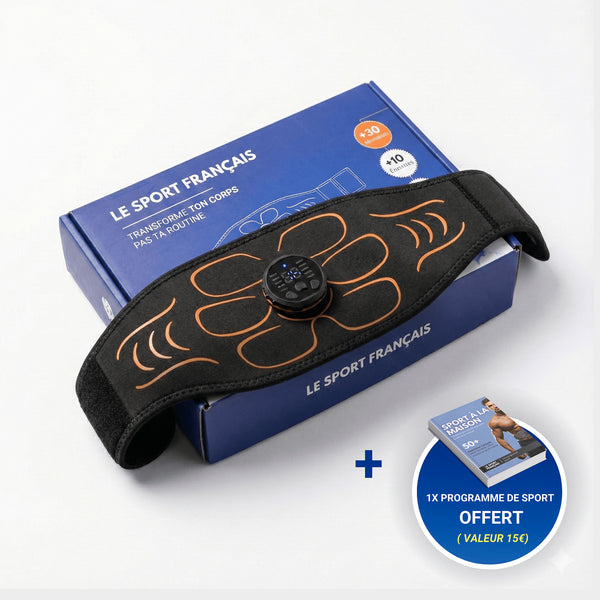
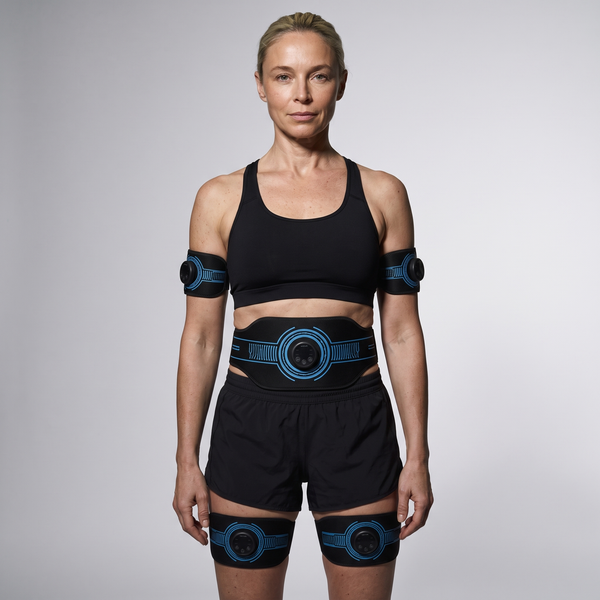
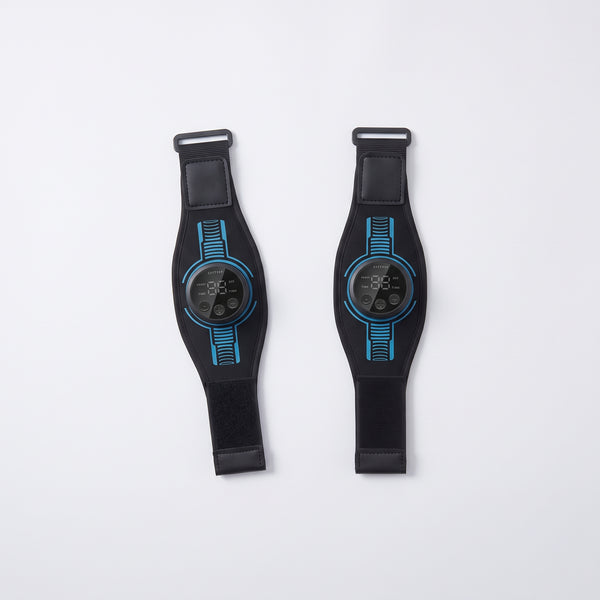
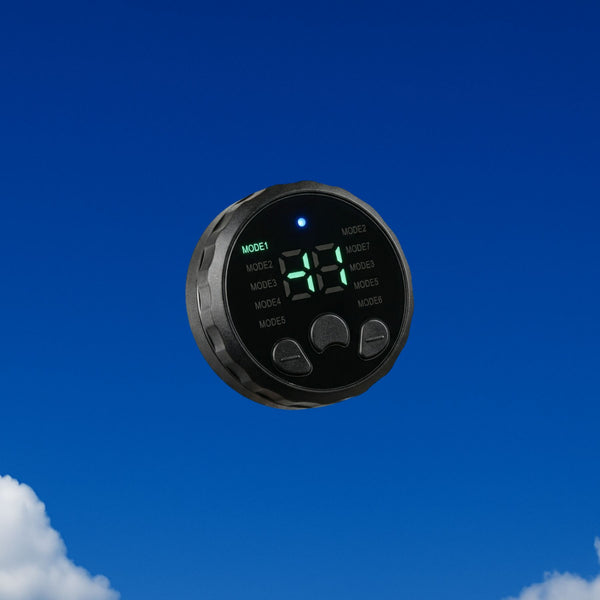
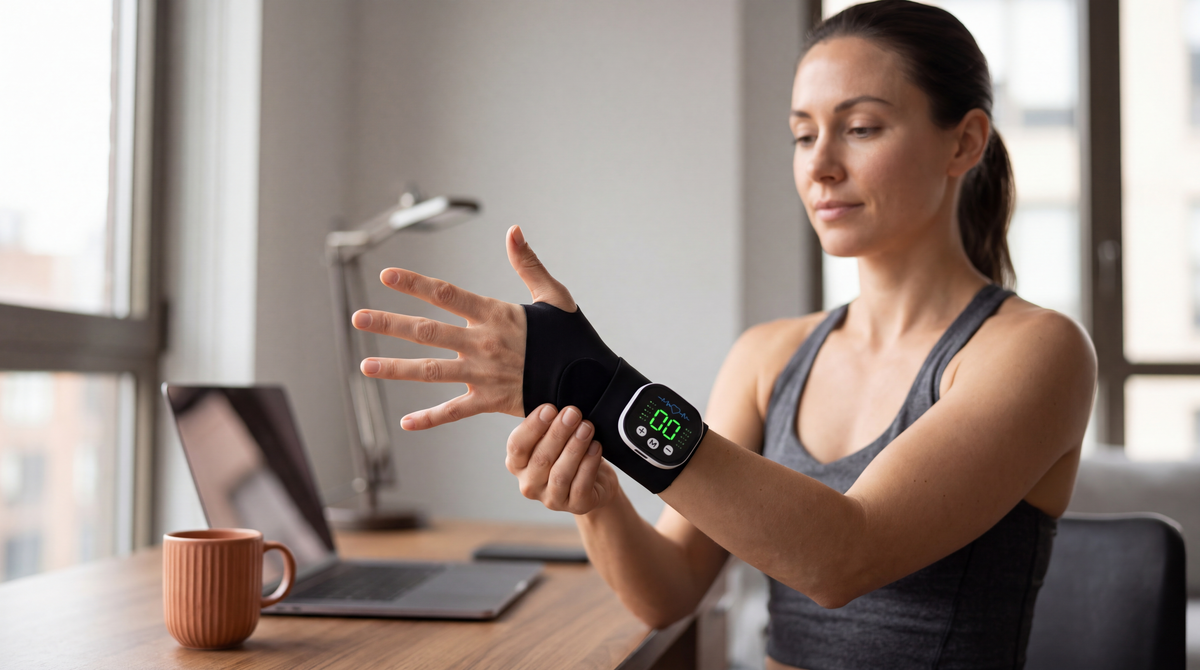
Electrical muscle stimulation (EMS) sends small electrical pulses through the skin. On a wrist massager such as the Le Sport Français cordless EMS wrist massager, it is combined with vibration, with ten modes and twenty-nine intensity levels, for a fifteen-minute session. Three plausible mechanisms explain the relief people feel. The first is the gate control theory: stimulating the touch fibres temporarily scrambles the transmission of pain signals, the same principle as the TENS used in physiotherapy. The second is relaxation of the forearm flexors, which are often tight in people who work at a screen. The third is a boost to local circulation, which helps clear that end-of-day heaviness.
It needs to be said just as clearly: EMS does not decompress the median nerve. It doesn't widen the tunnel, doesn't reduce tendon swelling and doesn't replace the splint, an injection or surgery when these are indicated. The few clinical trials that have tested electrotherapy for carpal tunnel are small, with inconsistent protocols and mixed results; electrical stimulation does not appear in any official French guideline for this condition. An EMS massager is therefore a tool for muscle comfort and recovery, useful for loosening an overworked wrist and easing moderate discomfort, not a medical device. That is exactly how it is presented on our product page.
Does infrared heat really help the wrist?
Heat is one of the oldest remedies for joint pain, with a solid physiological basis: it dilates blood vessels, makes tissues more supple, lowers muscle tone and reduces pain perception. On a wrist that's stiff in the morning or tight after a day on the mouse, fifteen to twenty minutes of gentle heat brings real, immediate comfort. Modern heated braces add infrared LEDs, often at 660 and 850 nanometres. This red and near-infrared light is studied under the name photobiomodulation; a meta-analysis published in 2024, for example, looked at high-intensity laser therapy for carpal tunnel. A word of caution, though: these studies involve clinical lasers, which bear no comparison with the LEDs in a consumer accessory, and their results are still debated.
In practice, heat makes sense for chronic stiffness, end-of-day discomfort or before mobility exercises. Avoid it on a wrist that's hot, swollen or red, in other words during the acute inflammatory phase, when cold makes more sense. And it should never redden or burn the skin: a pleasant warmth is enough. Our infrared LED heated wrist brace offers three heat levels and gentle vibration; in the vast majority of cases, the lowest setting is the right one.
A practical protocol: 15 minutes a day for 4 weeks
Here is a sensible framework for a wrist strained by screen work, with moderate discomfort and no warning signs. These are editorial guidelines, not a medical protocol: your doctor's or physiotherapist's instructions always come first.
Before the session: prepare your wrist
Take off your watch and bracelets, and check that your skin is clean, dry and free of cuts. Fit the strap using the thumb loop, with the unit centred on the inner side of the wrist, snug but not leaving marks on the skin. Sit down with your forearm resting on a table or armrest, palm facing up: your wrist should stay in line, neither bent up nor down.
The standard 15-minute session
- Minutes 0 to 3: vibration-only mode or a gentle EMS mode, low intensity (levels 3 to 6 out of 29). You should feel a clear but comfortable tingling.
- Minutes 3 to 10: go up one or two levels at a time until you get a slight, visible contraction of the flexors, never a clench. The rule is simple: if you have to grit your teeth, it's too strong.
- Minutes 10 to 15: drop back two or three levels and finish on a relaxation mode. Slowly open and close your hand during the stimulation.
After the session: move without forcing
Follow up with two or three minutes of gentle exercises (next section), then get back to what you were doing. If you also use a heated brace, apply the heat before the EMS session and the exercises to prepare the tissues. At night, it's the rigid resting splint recommended by your doctor that belongs on your wrist, not the device.
Week by week
- Week 1: one session a day at low intensity, to learn how the device works and check how your skin tolerates it.
- Week 2: one session a day at medium intensity, ideally in the evening after work.
- Weeks 3 and 4: one or two sessions a day (one at lunchtime, one in the evening), always fifteen minutes maximum per session, at least four hours apart.
- Review at 4 weeks: if the discomfort has eased, carry on with four to five sessions a week. If nothing has changed, or if the night-time tingling persists, see a doctor: the device is not the right answer to your problem.
5 exercises to pair with your wrist massager
No device replaces movement. These five exercises, staples of hand physiotherapy, can be done at your desk, with no equipment, in three to four minutes. Stop if an exercise triggers sharp pain or an electric-shock sensation in your fingers.
1. Median nerve glide
Arm stretched out to the side at shoulder height, palm facing forward, fingers pointing up. Gently tilt your head to the opposite side for two seconds, then come back. Ten slow, pain-free repetitions: the nerve slides through its tunnel instead of being stretched.
2. Flexor tendon glides
Fingers straight, then “hook” (only the last two finger joints bend), then a full fist, then “tabletop” (fingers bent at a right angle at the knuckles), then a flat fist. Hold each position for three seconds. Five full cycles.
3. Forearm flexor stretch
Arm stretched out in front of you, palm up, gently pull your fingers down with your other hand until you feel the stretch in your forearm. Twenty seconds, three times. This is the most useful exercise after an EMS session, when the muscles are already relaxed.
4. Extensor stretch
Same position, this time palm down, and gently push the back of your hand towards you. Twenty seconds, three times. Useful if the pain is mainly on the top of the wrist.
5. Open, close and spread your fingers
Open your hand wide and spread your fingers for two seconds, then close it without squeezing. Twenty repetitions, as a micro-break every forty-five minutes at the keyboard. For upper-body posture, which has a big influence on forearm tension, see also our article back pain and posture: 5 exercises for relief.
Limits, contraindications and warning signs
An EMS wrist massager is a wellness device. It must not be used if you have a pacemaker, defibrillator or electronic implant, during pregnancy, if you have epilepsy, thrombosis or phlebitis, on broken or recently operated skin, or on a fractured wrist. Take care too if you have diabetes with loss of sensation (you may not feel when the intensity is too high) or are on anticoagulant treatment. The same precautions apply to infrared heat, plus impaired heat sensitivity and any acutely inflamed area.
The most common mistakes: turning up the intensity too fast, going beyond fifteen to twenty minutes per session, stacking sessions without a break, masking pain so you can keep pushing at the keyboard, or skipping the night splint when it has been prescribed. Finally, some signs call for a prompt medical appointment: permanent numbness in the fingers, loss of strength (dropping things, difficulty buttoning a shirt), wasting of the muscle at the base of the thumb, repeated night-time waking for more than a month, or pain that spreads up towards the elbow. These signs point to established nerve compression, which is a matter for a doctor, not an accessory.
Frequently asked questions
Can a wrist massager cure carpal tunnel?
No. No electrical stimulation or heat device removes the compression of the median nerve. It can reduce discomfort and relax the forearm in mild cases; treating the syndrome itself (splint, injection, surgery) is a job for your doctor.
How long should you use an EMS wrist massager each day?
Fifteen minutes per session, once or twice a day, several hours apart. Beyond that, you don't get more benefit, just more muscle fatigue and skin irritation.
Heat or cold for a painful wrist?
Cold on a wrist that's hot, swollen or painful after unusual effort (acute phase). Heat for chronic stiffness, in the morning or at the end of the day, and before mobility exercises. If in doubt, start with cold for twenty-four to forty-eight hours.
Can you use an EMS massager alongside a night splint?
Yes, it's actually the most logical combination: a rigid splint at night, as recommended by the Assurance Maladie, and EMS sessions plus exercises during the day. Never use the device while you sleep.
Conclusion: EMS massager or heated brace, and when to see a doctor
For end-of-day discomfort, a heavy forearm and flexors tightened by keyboard work, the EMS wrist massager is the most relevant choice: it works on the muscle and on pain perception in fifteen minutes, hands-free. For morning stiffness or pain that feels more joint-related, the infrared heated brace is the most comfortable option. Many users combine the two: gentle heat, then EMS, then exercises. Keep in mind what these devices are, tools for comfort and recovery, and what they are not, a treatment for carpal tunnel syndrome. If you have repeated night-time tingling, loss of strength or numbness that no longer goes away, see your doctor before anything else.
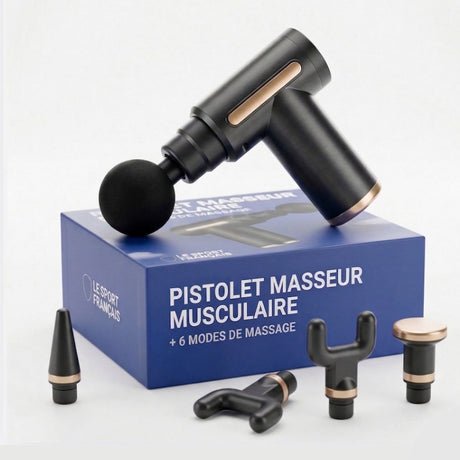
If you'd like to try wrist electrical stimulation within this framework, discover our cordless EMS wrist massager, with its removable magnetic unit and washable strap. To go further with recovery at home, read our comparison of the 7 muscle recovery methods ranked by level of evidence, our massage gun user guide and, for heavy legs from working from home, our 2026 foot massager comparison.
Sources: Assurance Maladie (ameli.fr), “Syndrome du canal carpien : le traitement”; Karjalainen TV et al., “Splinting for carpal tunnel syndrome”, Cochrane Database of Systematic Reviews, 2023, CD010003; meta-analysis “Effect of High-Intensity Laser Therapy on Carpal Tunnel Syndrome Patients”, 2024, PubMed 38207201. This article is for information only and does not replace medical advice.