




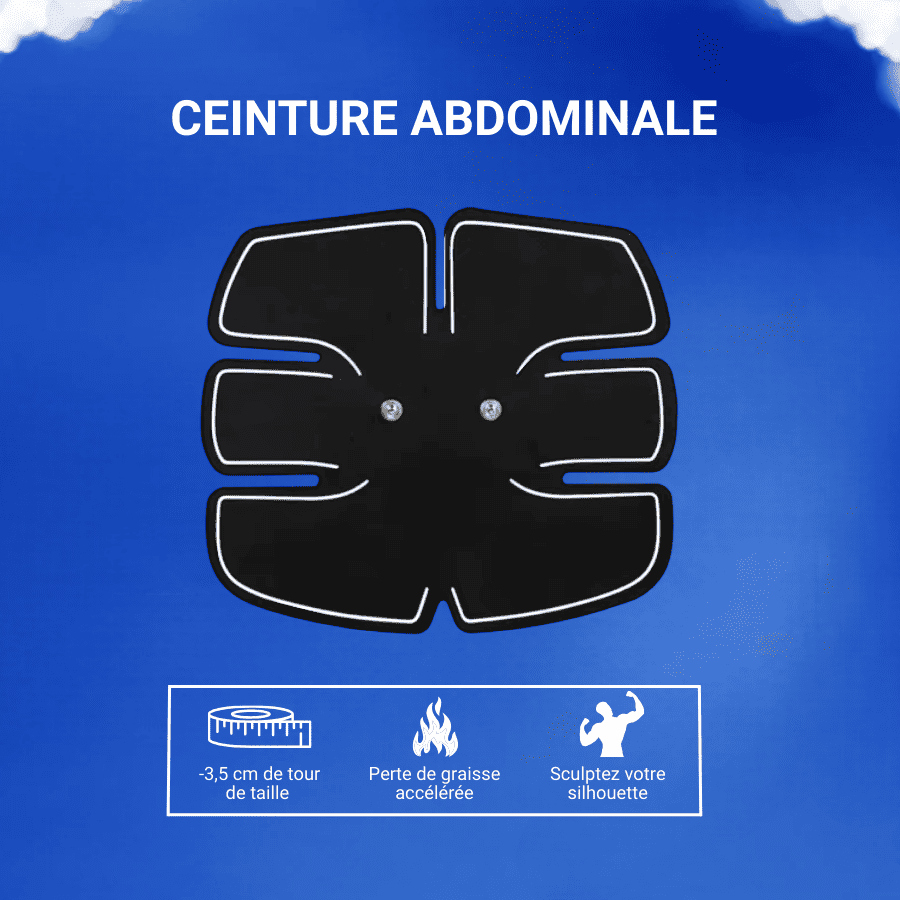
EMS patch or EMS belt: both use the same technology, neuromuscular electrical stimulation, but they do not serve the same needs. The patch is discreet, lightweight, and sticks anywhere you like; the belt covers the entire abdominal area, is intensity-adjustable, and can be reused indefinitely. If you are hesitating, this comparison provides the real differences (stimulated area, intensity, comfort, cost of use), what science says about abdominal electrostimulation, and a clear choice depending on your goal.
How does electrostimulation (EMS) work?
Neuromuscular electrical stimulation, or EMS (Electrical Muscle Stimulation), sends brief electrical pulses through the skin to the motor nerves. These pulses trigger an involuntary muscle contraction, comparable to the one your brain commands during exercise. The device cycles through contraction phases of a few seconds and rest phases, at frequencies generally between 30 and 80 Hz for strengthening.
Patch and belt share this principle. What changes is how the current is delivered: the size and number of electrodes, the power of the control unit, and the distribution over the muscle. These parameters make the difference in results. To understand the mechanism in detail, read how an EMS electrostimulation belt works.
What is an EMS patch?
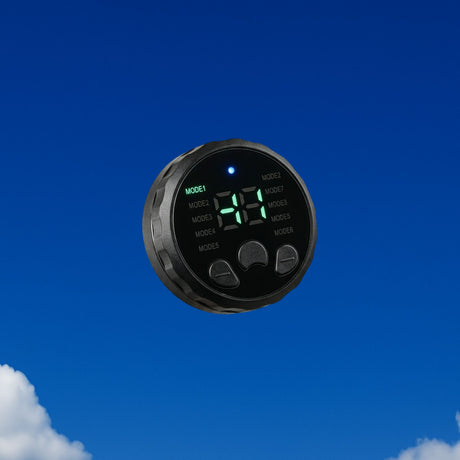
An EMS patch is a thin adhesive electrode, often butterfly or band-shaped, that sticks directly to the skin. A small control unit clipped onto it generates the pulses; it operates on batteries or a rechargeable power source and generally offers 6 to 10 modes and 10 to 20 intensity levels.
Its advantages: discretion (it can be worn under a t-shirt), weight (a few dozen grams), freedom of placement (abdominals, but also arms, thighs, glutes), and entry price. Its limitations: a reduced contact surface, which stimulates part of the muscle rather than the whole; power capped by the size of the unit; and adhesive gel that loses its stickiness after 20 to 30 uses and must be replaced. The Le Sport Français abdominal strengthening patch (€40.99) is representative of this category: lightweight, silent, designed for use in the office or on the go.
What is an EMS belt?
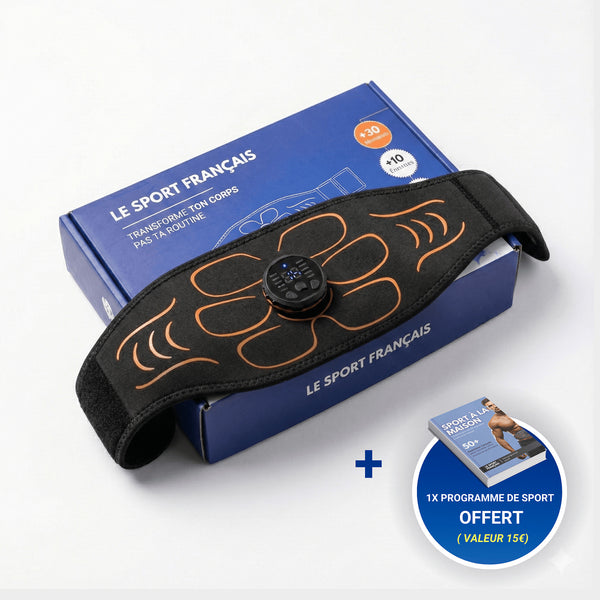
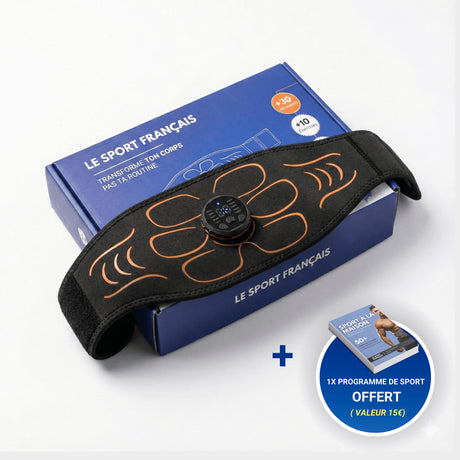
An EMS belt is an elastic band that closes around the waist and incorporates several reusable conductive silicone electrodes, distributed over the rectus abdominis and obliques. The control unit is attached to the belt or remote, with more programs and a wider intensity range.
Its advantages: coverage of the entire abdominal area in one session, higher intensity that allows for recruiting more muscle fibers, the absence of consumables (you moisten the electrodes or change the gel occasionally), and a stay-in-place fit that allows you to move, walk, or do chores during the session. Its limitations: it is bulkier, less discreet under fitted clothing, and higher in purchase price. The Le Sport Français EMS muscle abdominal belt (€59.99) is the reference model in the range, compatible with arm accessories via the central unit.
Patch EMS vs EMS belt: the point-by-point comparison
Stimulated area
A patch covers 10 to 30 cm² depending on the model, i.e., a portion of the rectus abdominis. A belt covers the entire abdominal area, including the obliques. For a complete workout of the abdominals, the advantage clearly goes to the belt.
Intensity and depth of contraction
Patch units, limited by their size, deliver perceptible but superficial contractions. Belts accept significantly higher intensity levels, which matters: in studies, it is protocols with progressive and sustained intensity that produce measurable strength gains.
Comfort and discretion
The patch wins: invisible under clothing, with no feeling of tightness. The belt is better worn at home, while sitting, standing, or walking.
Cost of use
The patch costs less to buy but requires purchasing replacement gels or adhesive patches every one to two months. Over a year at a rate of 4 sessions per week, a belt with reusable electrodes is cheaper than a patch with its consumables.
Versatility
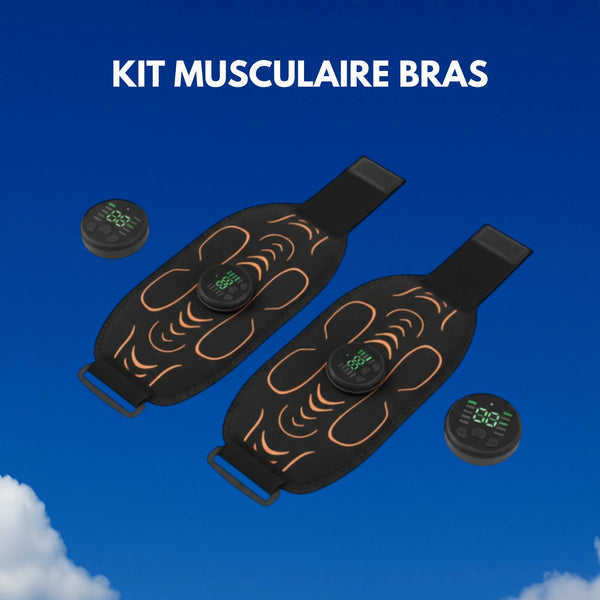
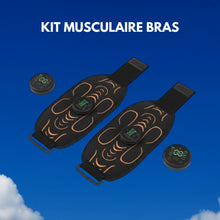
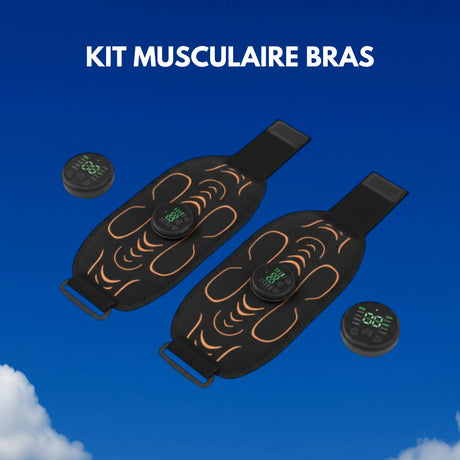
The patch can be moved to any muscle. The belt is dedicated to the abdominals, but the Le Sport Français range allows for connecting bicep and tricep armbands to the same central unit, making the set as versatile as a set of patches, with better power.
What does science say about abdominal EMS?
The question to ask is not "patch or belt," but first "does abdominal electrostimulation work?" The answer from studies is nuanced and useful.
The reference study is that of Porcari et al. (2005, Journal of Sports Science and Medicine): 24 adults used an abdominal EMS belt 5 times a week, 20 to 40 minutes, for 8 weeks, compared to 16 control subjects. Results: abdominal strength +58%, abdominal endurance +100%, waist circumference -3.6 cm in the EMS group, with no change in the control group. All participants reported firmer abdominals, and 54% reported better posture. However, neither weight nor skinfolds (subcutaneous fat) changed.
The conclusion is clear: EMS strengthens and tones the abdominals, tightens the waist by firming the muscle, but does not cause fat loss. Subsequent studies confirm this, with two clarifications: the intensity must be high enough to achieve these gains, and they diminish when stopped (Hwang and Kwon, 2023). EMS is therefore a training supplement, not a substitute for physical activity or nutrition. Our article do abdominal belts really work details this evidence.
This point indirectly settles the patch vs. belt debate: the measured results were obtained with belts featuring large electrodes and progressive intensity. A low-power patch produces a contraction, but there is no proof it achieves the same level of stimulation.
When to choose the EMS patch?
The patch is the right choice if you want discreet stimulation during the day, at the office, or while teleworking; if you are looking to target a specific small muscle (arm, calf, shoulder); if you travel often and want a device that fits in a pocket; or if you are starting out with a small budget and want to test the feeling of electrostimulation before investing. Keep in mind that results on the abdominals will be slower than with a belt, and plan for gel replacement.
When to choose the EMS belt?
The belt is a must if your main goal is the abdominal area (toning, core stability, waist circumference); if you want to follow a structured protocol like those in studies, 4 to 5 sessions of 20 to 30 minutes per week; if you prefer not to buy consumables; or if you are looking for enough intensity to make progress over several months. It is also suitable for people who cannot do traditional crunches (recovery after a period of inactivity, fragile back, with medical advice) and want to reactivate muscles gently. For the session-by-session protocol, see abdominal belt: effective use.
Can you combine patch and belt?
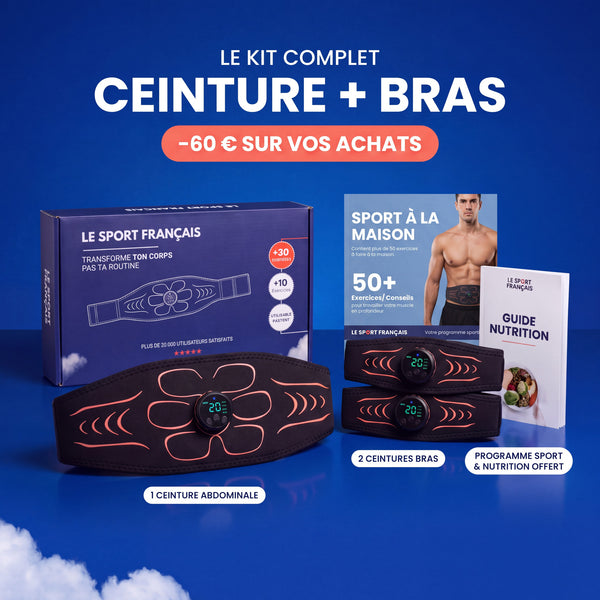
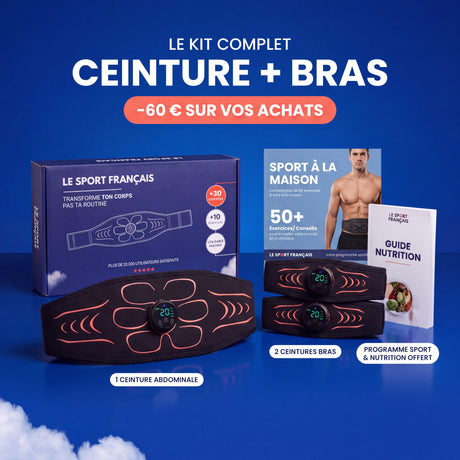
Yes, and this is often the best setup: the belt for the abdominals, patches or armbands for the arms, thighs, or glutes. Le Sport Français offers this ready-to-use combination with the belt + arm toning kit (€89.99) and the belt + arm patch kit (€59), both controlled by a single central unit. You stimulate abs and arms in the same 15 to 20-minute session without multiplying units or chargers.
Two rules for combining without overdoing it: do not stimulate the same zone twice in one day, and keep at least one rest day per week, as with traditional training.
Precautions and contraindications
Patch or belt, the contraindications are the same: pacemaker or any electronic implant, pregnancy, epilepsy, heart conditions, abdominal hernia or recent abdominal surgery, wounds or skin infections under the electrodes, and cancer currently being treated. Never place electrodes on the neck, the chest near the heart, the head, or an area with reduced sensitivity.
Common mistakes: increasing intensity too quickly (start low, increase by one level per session), using the device on dry skin without gel or moisture (stimulation becomes unpleasant and less effective), exceeding 30 minutes per zone, and expecting fat loss that will not come without a caloric deficit and physical activity.
Our recommendation based on your goal
Goal: toned abdominals and waist circumference: the EMS abdominal belt, 5 sessions of 20 to 30 minutes per week for 8 weeks, as in the Porcari protocol. Goal: discretion and small muscles: the EMS patch. Goal: full body at home: the belt + arm sports kit. In any case, combine EMS with daily walking and controlled nutrition: it is this trio that transforms muscle tone into a truly flatter stomach, as we explain in EMS belt: real results over 8 weeks.
Frequently Asked Questions
Is the EMS patch as effective as the belt?
For toning a small area or maintenance, yes. For strengthening the entire abdominal area with measurable results, the belt is more effective thanks to its electrode surface and higher intensity, which are those used in studies.
How much time per day?
20 to 30 minutes per zone, 4 to 5 days per week. Beyond that, the muscle does not progress further and the skin may become irritated. Count on 6 to 8 weeks to feel a clear difference in tone.
Does EMS help lose belly fat?
It firms the abdominals and can reduce the waist circumference by a few centimeters by toning the muscle, but it does not burn abdominal fat. Fat loss depends on caloric deficit and physical activity.
Can EMS be used every day?
On different areas, yes. On the same area, allow 24 hours of recovery between two intense sessions and plan for one full rest day per week.
Is gel required?
Adhesive patches incorporate gel that wears out and must be replaced. Silicone electrode belts only require lightly moistening the skin or electrodes before the session.
What to remember
- Patch and belt use the same electrostimulation; the difference lies in surface, intensity, and consumables.
- The belt covers the entire abdominal area with higher intensity; the patch targets a small area discreetly.
- Studies show that abdominal EMS increases strength (+58%) and endurance (+100%) and reduces waist circumference, without fat loss.
- Over a year, the reusable electrode belt is cheaper than the patch and its gels.
- The best setup combines the belt for the abs and armbands or patches for the arms.
- 20 to 30 minutes per zone, 4 to 5 times per week, progressive intensity, 8 weeks for a clear result.
- Identical contraindications: pacemaker, pregnancy, epilepsy, heart conditions, recent abdominal surgery.
Conclusion
The EMS patch is a discreet, portable toning tool; the EMS belt is the abdominal strengthening tool, the one whose effectiveness has been measured. If you only choose one for your abdominals, take the Le Sport Français EMS abdominal belt and follow the 8-week protocol. If you want to work the whole body, the sports kit combines belt and armbands on a single unit. And to learn more about the effectiveness of electrostimulation, our complete guide to the abdominal electrostimulation belt answers all questions.
Sources
- Porcari J. P., Miller J., Cornwell K., Foster C., Gibson M., McLean K., Kernozek T. (2005). The effects of neuromuscular electrical stimulation training on abdominal strength, endurance, and selected anthropometric measures. Journal of Sports Science and Medicine, 4(1), 66-75. PubMed
- Hwang U.-J., Kwon O.-Y. (2023). Effect of electrical stimulation training and detraining on abdominal muscle function. Journal of Back and Musculoskeletal Rehabilitation, 36(3). journals.sagepub.com
- Porcari J. P. et al. (2018). The Effects of High Intensity Neuromuscular Electrical Stimulation on Abdominal Strength and Endurance, Core Strength, Abdominal Girth, and Perceived Body Shape and Satisfaction. International Journal of Kinesiology and Sports Science, 6(1). journals.aiac.org.au