






Can you really build muscle with an electrical stimulation belt? This question arises for almost every new EMS user, and online answers range from one extreme to the other. The truth is more nuanced: electrical stimulation does indeed make the muscle contract, and it is documented to improve abdominal strength and endurance, but it does not create a six-pack on its own. This guide focuses on a single question: muscle gain.
You will find the physiology of fiber recruitment through EMS, what studies comparing electrical stimulation with voluntary training actually show, and an 8- to 12-week protocol for gaining tone and strength with a belt like the EMS muscle abdominal belt. For step-by-step usage and general effectiveness, we refer you to our complete guide to the electrical stimulation abdominal belt.
How does a muscle really grow?
Hypertrophy is the increase in the diameter of muscle fibers. It relies on three well-identified levers: sufficient mechanical tension (the muscle must produce force close to its limits), metabolic stress (accumulation of fatigue and metabolites during exercise), and proper recovery with adequate protein intake.
One must also distinguish between strength and volume. In the first few weeks of a program, most strength gains come from neural adaptations: the brain learns to recruit more motor units, faster and in a more synchronized way. The muscle only grows noticeably afterward, generally after 6 to 8 weeks of regular stimulation.
How does EMS recruit muscle fibers?
During a voluntary contraction, the nervous system recruits motor units according to the "size principle": small slow-twitch fibers (type I), which are fatigue-resistant, are activated first; large fast-twitch fibers (type II) are only added when the effort becomes intense. Electrical stimulation bypasses this mechanism. The current delivered by the electrodes directly depolarizes the nerve branches located under the skin, without going through the brain.
Non-selective and spatially fixed recruitment
Standard literature on neuromuscular stimulation (Maffiuletti, 2010, European Journal of Applied Physiology) describes two essential characteristics. First, recruitment is non-selective: fast and slow fibers are activated without any particular order, as soon as the current reaches their excitation threshold. Second, it is spatially fixed: it is always the same motor units, those located under the electrodes, that work. Hence, there is rapid fatigue and the importance of electrode placement.
Why intensity is the key parameter
The same author insists on a point that all users should remember: the amount of muscle actually recruited depends on the intensity of the current, that is to say, the force evoked by the contraction. A "comfortable" session at low intensity produces a tingling sensation and a superficial contraction; a session at high but tolerable intensity produces a firm contraction that brings EMS closer to actual strengthening work. For the detailed mechanics of currents, read how an electrical stimulation belt works.
What science says: EMS versus voluntary training
Three types of data allow for a serious answer. First, a study specific to the abdominal belt. Porcari et al. (2005, Journal of Sports Science and Medicine) followed adults using an EMS abdominal belt 5 days a week for 8 weeks. The stimulated group gained an average of 58% in abdominal strength and 100% in abdominal endurance, with a reduction in waist circumference of about 3.6 cm. The control group did not progress. Key point: no loss of fat mass was measured. The results are therefore muscular, not "slimming."
Second, a systematic review in healthy adults. Mukherjee et al. (2023, Journal of Strength and Conditioning Research) analyzed 10 studies (174 participants): all report significant strength gains after an electrical stimulation program. The authors point out, however, that the protocols (duration, intensity, frequency, pulse width) are too heterogeneous to define an optimal threshold, and that the strength gained does not always translate into measurable functional improvement.
Third, the question of combination. A meta-analysis of 13 randomized trials (Narvaez et al., 2025, European Journal of Applied Physiology) compared weight training alone to weight training with superimposed electrical stimulation. The addition of EMS produces a modest but significant additional effect on strength (standardized mean difference 0.31) and muscle mass (0.26). In other words, EMS improves the results of voluntary training; it does not replace it.
Can you build muscle with an EMS belt alone?
Honest answer: you mainly gain strength, endurance, and tone. Measurable hypertrophy of the abdominal wall with EMS alone is possible in untrained individuals, but it remains limited and has not been demonstrated on a large scale with consumer-grade belts. The spectacular volume gains advertised by some commercials are not based on any study we could verify.
This observation does not diminish the value of the tool. A stronger and more enduring abdominal wall holds better, supports the lower back better, and contracts more effectively during exercises. This is exactly what users describe as a "more toned" stomach. We detail these concrete results in EMS belt: before/after results over 8 weeks.
Strength, tone, hypertrophy: what differences to expect?
To avoid disappointment, you need to know which objective is realistic with which tool.
- Strength: ability to produce a maximal contraction. This is the most consistent gain with EMS, visible from 4 to 6 weeks.
- Endurance and tone: ability to maintain contraction over time and resting muscle tone. This is the most noticeable result with an abdominal belt (stomach firmer to the touch, better posture).
- Hypertrophy: increase in muscle volume. It requires high and repeated mechanical tension; exercises with weights or resistance remain the most effective method, with EMS acting as a supplement.
- Visibility of abdominals: it depends primarily on the thickness of adipose tissue, therefore on diet and overall activity, not the belt.
8- to 12-week protocol for gaining strength and tone
This protocol is inspired by the frequency used by Porcari et al. (5 weekly sessions) and general recommendations on intensity progression. Always adapt the intensity to your tolerance: the contraction must be clear but never painful.
Weeks 1 to 2: adaptation
3 to 4 sessions per week, 15 to 20 minutes, "activation" or "toning" program of the belt. Low to moderate intensity: you should feel the muscle contract without facial tension. Objective: to accustom the skin and the nervous system, to find the right placement for the electrodes (navel centered, belt well placed).
Weeks 3 to 6: strengthening
5 sessions per week, 20 to 25 minutes, strengthening program. Increase the intensity by one level every 2 to 3 days as long as the contraction remains comfortable. During contraction phases, voluntarily contract the abdominals at the same time as the belt: this is the principle of superimposed stimulation, the one that yields the best results in the meta-analysis cited above.
Weeks 7 to 12: consolidation
5 sessions per week, 25 to 30 minutes. Alternate one day of strength program (long contractions, high intensity) and one day of endurance program (shorter contractions, moderate intensity). Perform a simple test every 4 weeks: number of controlled crunches in 1 minute, or duration of planking on the forearms.
How to combine EMS belt and exercises?
The combination is the key to real progress. It can be done in two ways: the belt at the same time as the exercise (superimposed) or the belt on rest days, as additional work volume. Here is a typical week.
Typical ab session with belt (3 times per week)
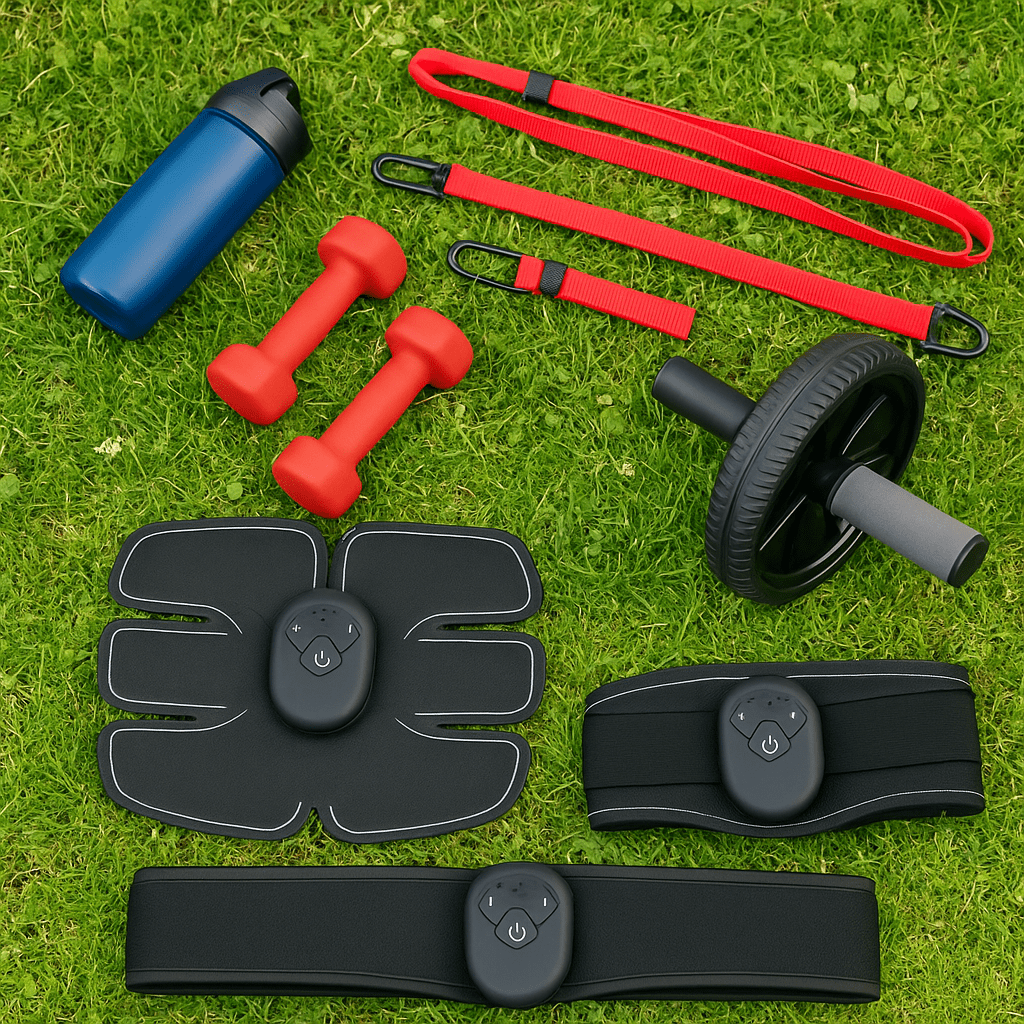
Belt worn during strengthening program, then 3 rounds of: 10 to 15 pelvic tilts, 30 to 45 seconds of front plank, 10 to 12 slow "dead bugs" per side, 8 to 10 rolls with the silent abdominal wheel (short range at the beginning). Rest 60 seconds between rounds. Contract voluntarily during stimulation phases.
EMS-only sessions and upper body (2 times per week)
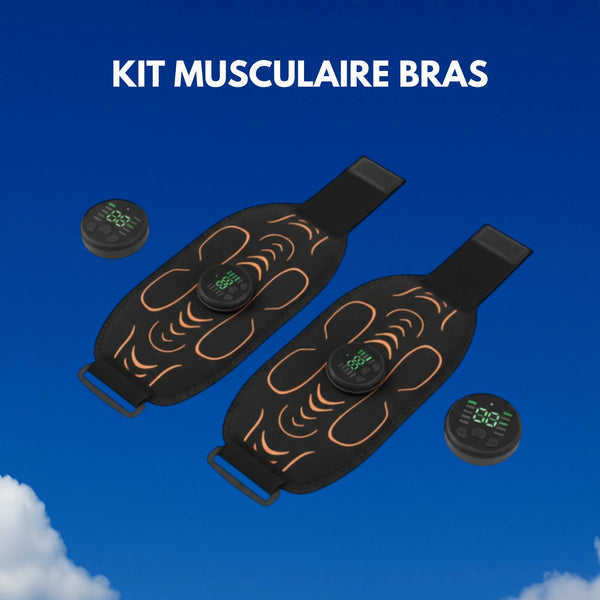
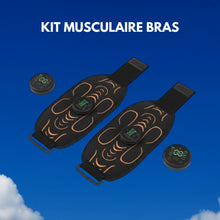
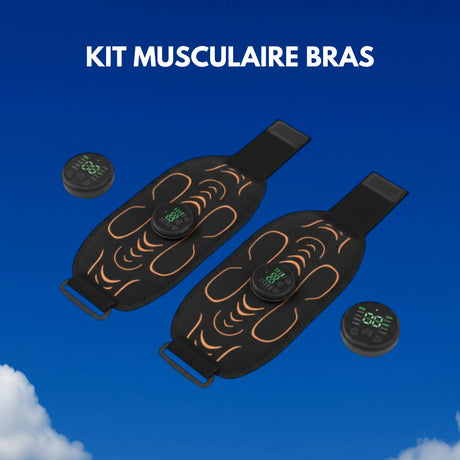
The other two days, wear the belt for 20 to 30 minutes during quiet activity (office, walking). If you want to work your arms using the same logic, the bicep/tricep armbands from the EMS muscle arm kit work on the same principle of evoked contraction. For voluntary exercises without equipment, our article building abs without equipment offers a complete progression.
Which EMS belt to choose for progress?
For an 8- to 12-week protocol, the criteria that count are the stability of the electrode contact, an intensity range sufficient to continue progressing after the first week, several programs (activation, strengthening, endurance), and battery life compatible with 5 weekly sessions.
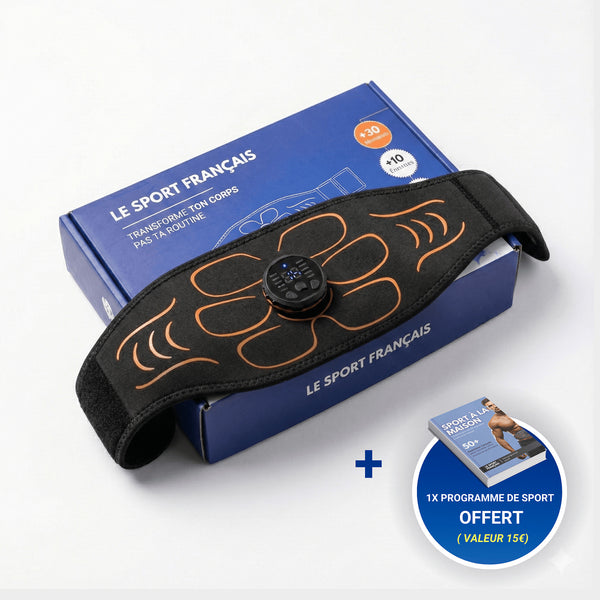
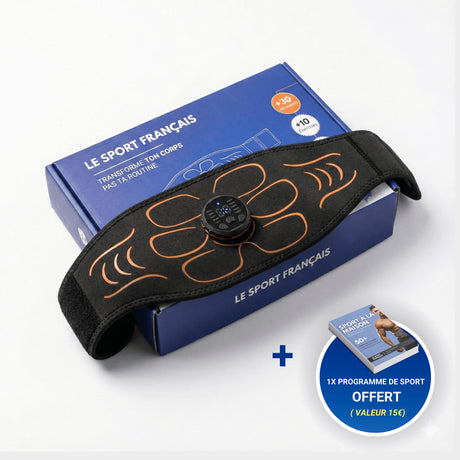
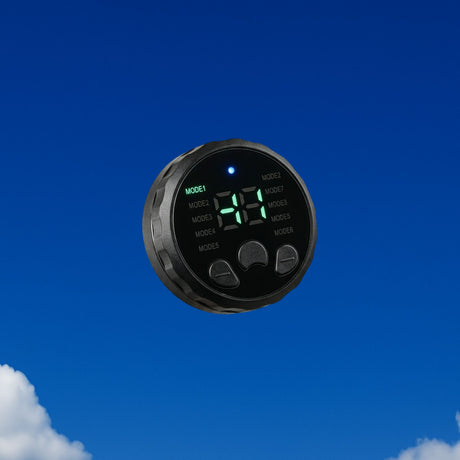
The EMS muscle abdominal belt from Le Sport Français (€59.99) is our reference model: abdominal electrodes covering the rectus abdominis and obliques, USB-rechargeable central unit, several programs and intensity levels, adjustable belt that remains in place during exercises.
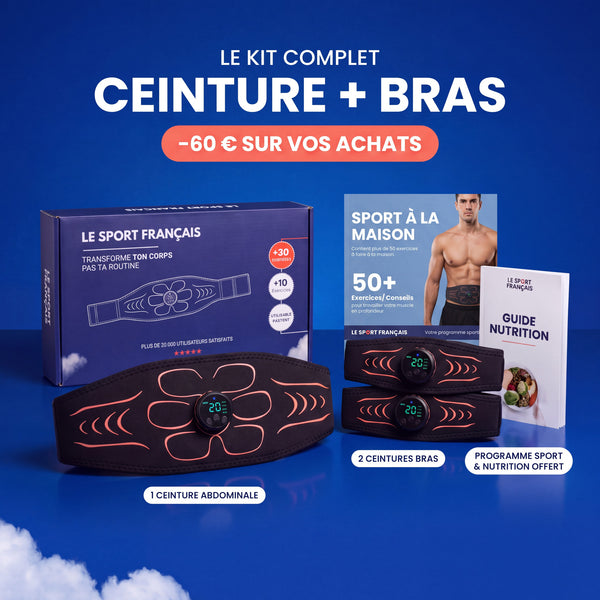
If you want to work abdominals and arms using the same logic, the belt + armbands sports kit (€89.99) includes the belt and two armbands for biceps and triceps. To compare men's models, consult do abdominal belts really work, which covers the available evidence product by product.
Limits, errors to avoid and contraindications
First limit: EMS does not cause weight loss. No reliable study shows localized fat loss with a belt, and Porcari et al. measured no variation in fat mass. The belt acts on the muscle, not on the layer that covers it.
Second limit: rapid fatigue. Since the same motor units work in a loop, an intensity that is too high from the start causes soreness and abandonment. Progress in stages. Third common error: wearing the belt passively at low intensity for hours hoping for a result. Better 20 minutes at clear intensity than two hours of tingling.
Contraindications: electrical stimulation is not recommended for users of pacemakers or implanted electronic devices, during pregnancy, on damaged skin, in case of epilepsy, unstable heart conditions, or recent abdominal hernia. In case of doubt, seek the advice of your doctor or physiotherapist before starting.
Frequently asked questions
How long does it take to see results?
The first changes in strength and tone generally appear after 4 to 6 weeks of regular use (5 weekly sessions). The Porcari et al. study reports its results at 8 weeks. Count on 12 weeks to consolidate gains, and then continue with 2 to 3 sessions per week to maintain them.
Does EMS replace classic abdominal exercises?
No. The meta-analysis by Narvaez et al. (2025) shows that electrical stimulation adds a benefit to weight training, but no data shows that it surpasses it for hypertrophy. Use the belt as a supplement: during exercises in superimposed contraction, or on days without a session to increase work volume.
Do I need to eat more protein with EMS?
A contraction evoked by electrical stimulation stresses the muscle just like an exercise: recovery follows the same rules. Regular protein intake, spread throughout the day, helps repair fibers. Simply make sure to include a source of protein at each meal and sleep enough.
Can I use the belt every day?
Five sessions per week, as in the studied protocols, are a good pace. Keep at least one to two days of rest per week, especially if you combine with voluntary exercises. If soreness persists for more than 48 hours, reduce the intensity or space out the sessions rather than insisting.
Why are my abs not visible despite the belt?
Because visibility depends on the thickness of adipose tissue, not the strength of the muscle. A toned rectus abdominis can remain hidden under a few centimeters of fat. The belt strengthens the muscle; diet and overall activity determine what is visible. Instead, measure your progress in strength and endurance.
What to remember
- EMS really contracts the muscle by recruiting fibers in a non-selective and spatially fixed manner, under the electrodes.
- Over 8 weeks, an EMS abdominal belt produced +58% strength and +100% abdominal endurance, with no fat loss (Porcari et al., 2005).
- All studies in healthy adults report strength gains; hypertrophy with EMS alone remains limited.
- Combined with voluntary exercises, EMS provides an additional gain in strength and muscle mass (Narvaez et al., 2025).
- The decisive parameter is intensity: a clear contraction is better than a long session at a low level.
- Count on 5 sessions of 20 to 30 minutes per week for 8 to 12 weeks, with gradual progression.
- Respect contraindications (pacemaker, pregnancy, epilepsy, damaged skin).
Conclusion
Yes, an electrical stimulation belt makes the muscle work and measurably improves its strength and endurance. No, it does not replace weight training or a good diet for building volume or making abdominals appear. The best use is as a supplement: a few weekly sessions at clear intensity, ideally combined with planking exercises, over at least 8 weeks.
If you wish to apply this protocol, the EMS muscle abdominal belt is designed for this type of progression. For an overview of the EMS principle, our pillar guide remains the best starting point.
Sources
- Porcari J.P., Miller J., Cornwell K., Foster C., Gibson M., McLean K., Kernozek T. (2005). The effects of neuromuscular electrical stimulation training on abdominal strength, endurance, and selected anthropometric measures. Journal of Sports Science and Medicine, 4(1), 66-75. pubmed.ncbi.nlm.nih.gov/24431963
- Mukherjee S., Fok J.R., van Mechelen W. (2023). Electrical Stimulation and Muscle Strength Gains in Healthy Adults: A Systematic Review. Journal of Strength and Conditioning Research, 37(4), 938-950. journals.lww.com
- Narvaez G., Apaflo J., Wagler A., McAinch A., Bajpeyi S. (2025). The additive effect of neuromuscular electrical stimulation and resistance training on muscle mass and strength. European Journal of Applied Physiology. link.springer.com
- Maffiuletti N.A. (2010). Physiological and methodological considerations for the use of neuromuscular electrical stimulation. European Journal of Applied Physiology, 110, 223-234. pubmed.ncbi.nlm.nih.gov/20473619