







How long should you wear compression clothing for it to actually be useful? This question comes up for every athlete who discovers compression tops, tights, or socks: should you keep them on during the entire session, put them on only afterwards, or wear them at night? Answers online range from "as long as possible" to "never more than two hours." In this guide, we provide you with concrete durations for effort, recovery, and sleep, supported by available meta-analyses.
Why wearing time changes everything
Compression garments exert graduated or uniform pressure on tissues. This pressure has two measurable effects: it reduces muscle oscillation related to impact and promotes venous return, meaning the flow of blood back to the heart. Neither of these effects builds up "by accumulation." The pressure works as long as the garment is worn and stops as soon as it is removed. Therefore, wearing your compression gear for three hours does not prepare a benefit for the next day if you take it off afterwards.
The right question is therefore not "how long in total," but "at what time, for how long, and for what goal." You must distinguish between three situations: during, after, and at night. If you are a beginner, our article on the real benefits of compression socks in running lays the foundation; here, we focus on timing.
How long to wear compression clothing during exercise?
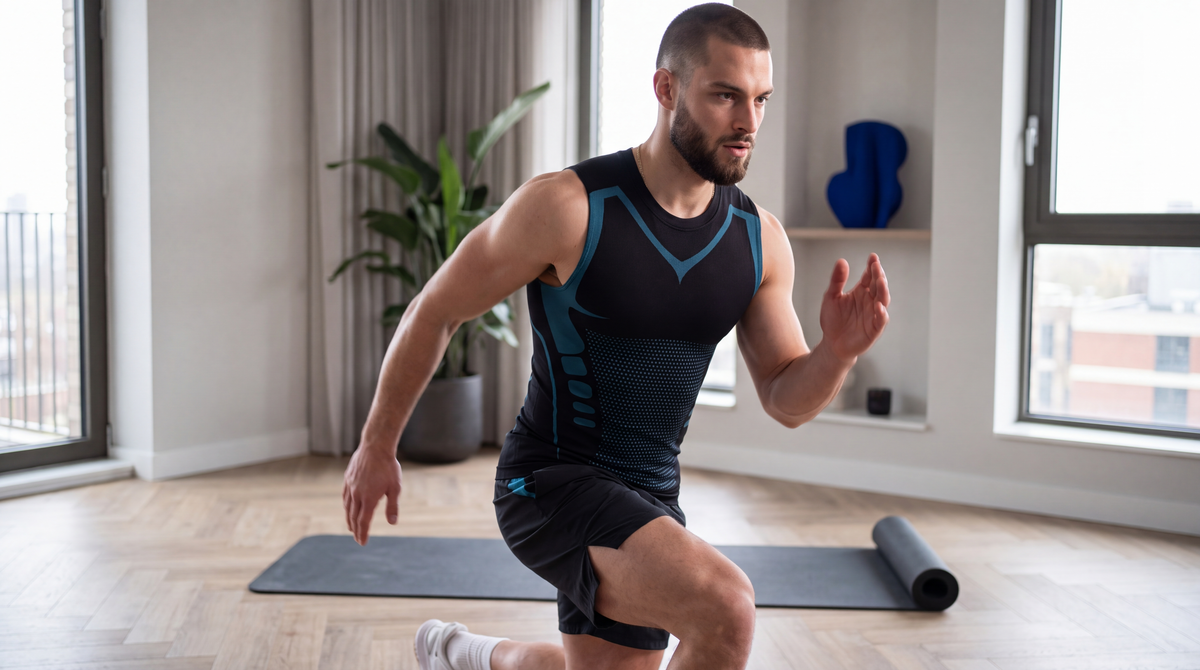
During training, the answer is simple: the entire duration of the session, including warm-up, if the garment is designed for exercise. A compression top or sports tights should be worn from the first to the last minute of a 45-minute to 2-hour session; no data shows that a 90-minute session in compression causes any problems for a healthy person.
What you should honestly know is that the effect on performance during exercise is modest. The meta-analysis by Brown and his colleagues published in 2017 in Sports Medicine, which compiled 23 studies, did not find a marked gain in endurance running or highly metabolic exercises. The clearest benefits concerned recovery of strength instead. In short: wearing a compression top during your weight training session will primarily provide support, a feeling of core stability, and a reduction in muscle vibration, not a boost in power.
However, this support has value: many practitioners report better postural awareness and lower perceived fatigue during long sessions. If this is the case for you, keep the garment on for the entire session; otherwise, there is no hidden benefit to insisting.
Reference durations during exercise
- Home weight training session (45 to 75 minutes): continuous wear, from start to finish.
- Running or cardio session (30 to 90 minutes): continuous wear, ensuring seams do not chafe beyond 60 minutes.
- Very long session (over 2 hours, long outing, sports hiking): possible, but watch for numbness or deep marks that signal a size that is too small.
After the session: how many hours to recover?
This is where compression has best proven itself, and it is also where the duration becomes decisive. Two reference meta-analyses serve as a compass. The first, by Hill and his colleagues in the British Journal of Sports Medicine in 2014, grouped 12 studies and observed moderate effects on delayed onset muscle soreness (DOMS), strength, power, and a blood marker of muscle damage (creatine kinase) between 24 and 72 hours after intense effort. The second, by Brown et al. in 2017, confirmed a small but very likely overall benefit, with greater effects on strength recovery between 2 and 8 hours after exercise, then beyond 24 hours, particularly after a weight training session.
In practice, the garment should be worn during the window when muscle damage is expressed: the first few hours and the day that follows. The studied protocols generally involved wearing compression from a few hours up to 24 hours after exercise, sometimes up to 48 hours for the most traumatic efforts. No serious study shows that wearing them for 30 minutes after a shower provides anything measurable.
Our recommendation, consistent with these data: put on a clean, dry piece of compression gear within 30 minutes after the session, then keep it on for at least 2 to 4 hours. After a particularly heavy session (legs, high intensity, long outing), extending until bedtime, or 8 to 12 hours, is reasonable. A men's compression top wears very well under a sweatshirt at the end of the day, which makes this duration easy to maintain.
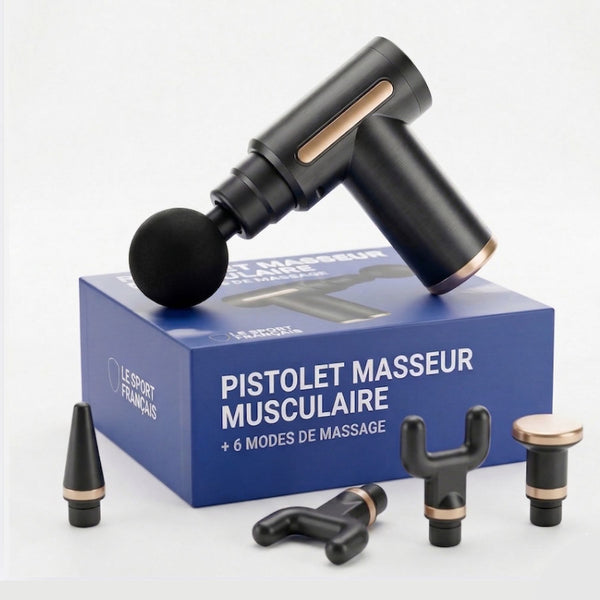
A point of honesty: the scale of these benefits remains moderate. Compression reduces soreness a little and helps strength return faster; it does not replace sleep, protein, or reasonable progression. To complete your routine, combine it with the protocol described in our article massage gun: how long per zone.
Can you sleep with compression clothing?
This is the most frequent question, and the answer deserves nuance. In a healthy person, sleeping for one night with a sports compression top or socks is not dangerous in itself. But the benefit is minimal, for a mechanical reason: while lying down, your legs are at heart level, gravity no longer opposes venous return, and the main argument for compression disappears. Physiotherapists interviewed on the subject agree that wearing them at night provides less benefit than wearing them during the day or during exercise.
Recommendations for prescribed compression stockings, such as those from the French National Health Insurance (Assurance Maladie), point in the same direction: put them on in the morning, as soon as possible after getting up, and wear them during the day. Even if these medical stockings are not sports clothing, the circulatory principle is identical.
There is a reasonable exception. After a very traumatic effort, some studies have required wearing compression for 24 to 48 hours, including overnight. If you want to test this approach after a competition, do it with a light piece, in the right size, without seams that leave marks, and remove it at the slightest sensation of numbness. Never do this with clothing that is too tight or a high-pressure model designed for exercise. And if you have a history of circulatory issues, diabetes, or neuropathy, the question should be addressed with your doctor, not on a blog.
4-week concrete protocol
To help you integrate compression without questioning it at every session, here is a progressive protocol designed for 3 sessions per week at home. It alternates wearing it during effort and during recovery, increasing durations only if comfort allows.
Week 1: discovery and sizing
- Wear your top or tights only during sessions (45 to 60 minutes).
- After each session, check the skin: light marks that disappear in 15 minutes are normal, deep or painful marks indicate a size that is too small.
- Do not wear compression during recovery yet: the goal of the week is to validate size and comfort.
Week 2: introduction to recovery
- Session in compression like in week 1.
- After the hardest session of the week, put on a clean piece of compression gear within 30 minutes and keep it on for 2 hours.
- Note your level of soreness the next day on a scale of 0 to 10, to compare with yourself.
Week 3: post-session extension
- Wear during effort for all 3 sessions.
- Wear during recovery for 4 hours after 2 out of 3 sessions.
- If you alternate upper and lower body, target the zone worked: tights or socks after a leg session, top after an upper-body session.
Week 4: complete protocol
- Systematic wear during effort.
- Wear during recovery until bedtime (8 to 12 hours) after the heaviest session, 2 to 4 hours after the others.
- Compare your soreness notes from weeks 2 to 4: if the difference is zero, compression may not be your best recovery lever, and you can lighten the protocol without guilt.
This protocol fits naturally into a structured training plan, such as our 4-week running plan for beginners or our program to get back into home weight training.
Limitations, errors to avoid, and contraindications
The first, and most widespread, error is choosing the size based on your usual clothing size. Compression sizing should be based on chest, waist, thigh, or calf measurements depending on the piece. If too large, the garment does not compress; if too small, it cuts off circulation. Take five minutes with a tape measure before ordering.
The second error is confusing exercise gear with recovery gear. Clothing designed for training prioritizes support and freedom of movement; using a high-pressure exercise model during 12 hours of recovery is the royal road to discomfort.
The third concerns maintenance. Elastic fibers degrade with heat: washing at over 30°C, tumble drying, and fabric softener reduce the actual pressure in a few weeks. A garment that has lost its elasticity is just a fitted t-shirt, regardless of how long it is worn. The advice from the health authorities for compression stockings can be transposed: gentle washing, drying flat, renewal every 4 to 6 months for daily use.
Finally, certain situations require medical advice before any prolonged wear: peripheral artery disease, heart failure, diabetes with nerve damage, skin infection, unhealed wounds, or allergy to synthetic fibers. Remove the garment immediately in case of pain, numbness, skin discoloration, or persistent tingling.
Which piece for what use?
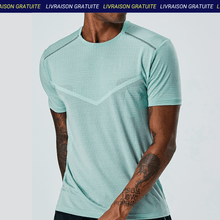
The wearing duration also depends on the piece. A top is easily tolerated for several hours because the pressure on the torso is less perceptible than on the legs. The Le Sport Français Men's Compression Top is thus the easiest piece to keep on during recovery until the evening after an upper-body or full-body session.
For the legs, the Men's 3/4 Compression Tights are worn during leg sessions and running, then 2 to 4 hours during recovery. The 20-30 mmHg High Compression Socks are the recovery piece par excellence for calves: graduated pressure, discreet under jeans, they can be worn effortlessly until bedtime after a long outing.
Only one rule to remember: during effort, the piece covers the zone that is working; after effort, the zone that will suffer the next day.
Frequently asked questions
Can you wear compression clothing all day?
Yes, in a healthy person, a sports compression piece in the right size can be worn 8 to 12 hours in a row. However, this only provides a measurable benefit in the hours following intense effort. The rest of the time, it is mostly about comfort and support.
Should you wear compression during the warm-up?
Yes, put it on from the warm-up: this avoids changing during the session, and the garment is already in place when the intensity increases.
How long after the session should you put it on?
As soon as possible, ideally within the 30 minutes following, after a quick shower and on dry skin. Recovery studies began wear right after exercise, and the benefits on strength were observed as early as 2 to 8 hours later.
Is it dangerous to wear compression for too long?
The risk does not come from the duration but from a size that is too small or pressure that is too strong for prolonged wear. Deep marks, numbness, tingling, or skin color changes are warning signs: remove the garment and check the size.
Do compression clothes help you lose weight or fat?
No. Compression has no effect on fat mass. It acts on muscle support and recovery, not on energy expenditure. Beware of products that promise the opposite.
Conclusion: the right duration, at the right time
How long should you wear compression clothing? During the entire session if you appreciate the support, 2 to 4 hours after an ordinary session, until bedtime after a heavy session, and not at night except in special cases. It is not the longest compression that works; it is compression worn in the right window, in the right size, with a garment whose elasticity is intact.
If you wish to test this protocol, the Le Sport Français Men's Compression Top is the most versatile piece to start with: comfortable during effort, discreet under a sweatshirt during recovery. To learn more, read our guide on the real benefits of compression socks in running and our massage gun: how long per zone protocol.