










Starting running as a beginner often boils down to putting on sneakers, heading out too fast, getting shin pain after ten days, and putting the shoes away. This 4-week training plan is built to avoid exactly that scenario: walk-run intervals, a gentle progression validated by research on novice runner injuries, short 20 to 35-minute sessions, and a realistic goal at the end—running for 20 to 25 minutes without stopping. You will also find the gear that is actually useful, the rules for progression, the strength training that protects the knees, and the recovery techniques that help you stay the course.
Why the walk-run method is the right way to start
A beginner has a heart and lungs that progress quickly, but tendons, bones, and joints that adapt slowly. This discrepancy causes injuries: after three weeks, you feel capable of running 5 km, but your shins and knees aren't ready yet. A follow-up study on 874 novice runners equipped with GPS (Nielsen et al., 2014, Journal of Orthopaedic and Sports Physical Therapy) showed that those who increased their weekly distance by more than 30% got injured significantly more than those who stayed under 10%. Other studies estimate that 20 to 30% of beginner runners get injured in their first few months.
The walk-run method solves this problem: the walking intervals limit the total impact per session, allow you to maintain an easy pace, and give your tissues time to strengthen. You progress by increasing the running portion, not the speed or the total distance.
The truly essential gear before running
Shoes
This is the only area where you should not skimp: a recent pair of running shoes with cushioning adapted to your weight, tried on at the end of the day when your feet are slightly swollen, with a centimeter of room in front of your toes. Tennis or fitness shoes are not designed for the repeated impact of the running stride.
Compression socks or sleeves
Often overlooked, they are actually one of the most useful accessories for a beginner. The graduated compression on the calf limits muscle vibration with every impact and improves venous return, which reduces the feeling of heavy legs after a run and speeds up recovery. Mid-calf running compression socks during your session, or 20-30 mmHg high compression socks in the hours that follow, make a real difference for sensitive shins. We detail the evidence in our article on the benefits of compression socks for running.
Clothing
A breathable technical top that wicks away sweat (no cotton, which stays wet and causes chafing), comfortable shorts or leggings, and a thin extra layer in cool weather. Compression shorts worn under your shorts prevent thigh chafing, the number one reason for session abandonment among overweight beginners.
The rest
A watch or app to time your intervals, a water bottle if the run lasts longer than 40 minutes or if it is hot, and that's it. No heart rate monitor or special insoles for the first four weeks.
The 5 rules for the beginner runner
1. Run slowly. At a pace where you can hold a conversation. If you are too out of breath to talk, you are running too fast: slow down or walk.
2. Three sessions per week, never two days in a row. The rest day is the day your tissues strengthen.
3. Increase the running, not the distance. The total duration of the sessions remains stable; it is the proportion of running that increases, following the progression of under 10 to 20% per week validated by studies.
4. Warm up and finish by walking. 5 minutes of brisk walking before, 5 minutes after, systematically.
5. Listen to pain. Muscle discomfort that disappears during the warm-up is normal. Pain localized to a bone or tendon that persists or worsens during the run requires 2 to 3 days of rest, then a resumption at a slightly lower intensity.
The 4-week training plan
Each session begins with 5 minutes of brisk walking and ends with 5 minutes of slow walking. The durations indicated refer to the central part. The days can be shifted, provided you keep one rest day between two sessions.
Week 1: discovery
Session 1: 8 × (1 minute running, 2 minutes walking), i.e., 24 minutes. Session 2: identical. Session 3: 8 × (1 minute 30 running, 1 minute 30 walking). Goal for the week: run without being out of breath, find your conversation pace, and feel how your body reacts the next day.
Week 2: lengthening
Session 1: 7 × (2 minutes running, 1 minute 30 walking). Session 2: 6 × (2 minutes 30 running, 1 minute 30 walking). Session 3: 5 × (3 minutes running, 1 minute 30 walking). Total running per session: 14 to 15 minutes. If week 1 was difficult, repeat it before moving on to this one.
Week 3: consolidation
Session 1: 4 × (4 minutes running, 1 minute 30 walking). Session 2: 3 × (6 minutes running, 2 minutes walking). Session 3: 2 × (8 minutes running, 2 minutes walking). This is the week when shins might flare up: wear your compression socks during and after, and don't hesitate to replace session 3 with session 2 if discomfort appears.
Week 4: continuous goal
Session 1: 10 minutes running, 2 minutes walking, 8 minutes running. Session 2: 12 minutes running, 2 minutes walking, 10 minutes running. Session 3: 20 to 25 minutes continuous running at a conversation pace. You have just run a little over 3 km without stopping. For the future, add 2 to 3 minutes of continuous running per week up to 30 minutes, then work on regularity before thinking about speed.
Strength training to protect your knees and shins
Two 15-minute sessions per week, on non-running days, are enough to significantly reduce the risk of injury. They target the muscles that absorb impact and stabilize the pelvis.
Calves: 3 × 15 calf raises, slowly, on a step. Glutes: 3 × 12 glute bridges, then 2 × 10 reverse lunges per leg. Hips: 2 × 15 side-lying leg lifts. Core: 3 × 30 seconds of planks, as in our 10 effective core exercises to do at home. Feet: 2 × 20 towel scrunches with your toes.
If you want a complete bodyweight program to combine with running, our 30-day program with no equipment fits well into rest days, provided you keep one day completely free per week.
Recovery: what makes the difference between progressing and giving up
Just after the session
5 minutes of walking, then some gentle stretches for your calves, hamstrings, and quadriceps, 20 to 30 seconds each, without forcing it. Put on compression socks for the 2 to 3 hours that follow if your legs feel heavy.
In the evening and the next day
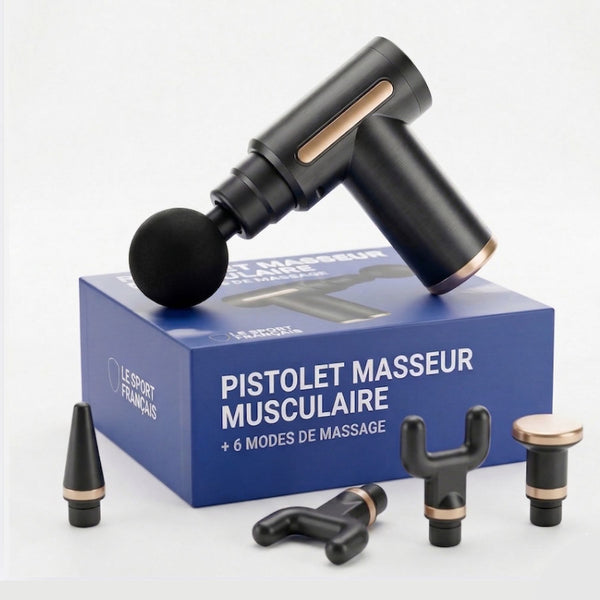
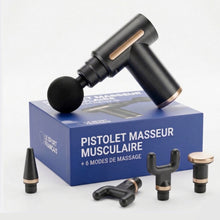
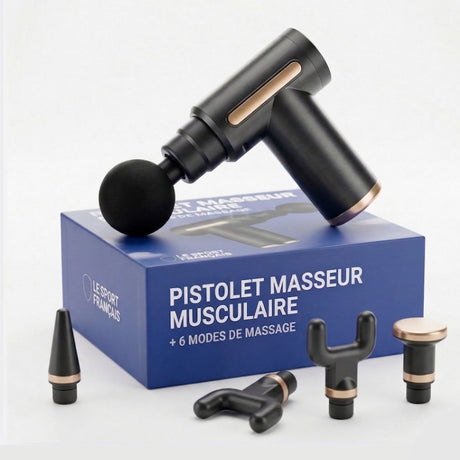
Soreness in the first few weeks is normal. A massage gun used for 60 seconds on each calf and thigh at low speed reduces the next day's pain; our massage gun user guide provides the precise protocol. Sleep 7 to 8 hours: it is during sleep that tissues repair themselves.
Warning signs
Pain on the inside of the shin that increases with every outing (periostitis), pain under the heel upon waking (plantar fasciitis), pain on the outside of the knee after 15 minutes of running: these three typical beginner pains require a week of running rest, some strength training, and medical advice if they persist beyond two weeks.
Nutrition and hydration for the beginner runner
No special diet is needed for 25 minutes of running: a normal meal 2 to 3 hours before, or a banana 45 minutes before if you run in the morning. Drink normally throughout the day; a water bottle during the session is only useful in hot weather. After the session, a meal containing protein and carbohydrates within two hours is enough for recovery. If you are also running to lose weight, running creates an expenditure of 250 to 400 kcal per session depending on your size: it is your food intake that will make the difference, as we explain in how to lose belly fat in 30 days.
Errors to absolutely avoid
Running every day "to progress faster"; starting too fast and finishing out of breath; skipping weeks 1 and 2 because they seem easy; running in old sports shoes; ignoring bone pain; not eating after the session; comparing your pace to others. The beginner who runs 3 times a week for 3 months at a slow pace always outperforms the one who runs 5 times a week for 3 weeks and gets injured.
Frequently asked questions
How many times a week should I run as a beginner?
Three times, never two consecutive days. This is the pace that improves the cardiovascular system while leaving 48 hours for tendons and bones to adapt. Twice is an acceptable minimum; four times can wait until the end of the second month.
At what speed should I run?
At a conversational pace, often 7 to 9 minutes per kilometer for a beginner. Speed is of no importance during the first 4 weeks: only the duration of continuous running counts.
Are compression socks necessary for beginners?
They are not mandatory, but they are the most useful accessory after shoes: less muscle vibration, fewer heavy legs, better recovery, and real comfort for the sensitive shins of the first few weeks.
What if I didn't succeed in a week?
Do it again. The plan is not a race against the calendar: repeating a week until you finish it comfortably is the best guarantee of not getting injured during the next one.
Can you run to lose weight?
Yes, provided you combine running with a controlled diet: 25 minutes of running burns 250 to 400 kcal, which a single lapse in diet can offset. Running primarily provides the physical fitness and regularity that make weight loss sustainable.
Key takeaways
- The walk-run method protects tendons and bones, which adapt more slowly than the heart.
- Increasing your distance by more than 30% per week multiplies the risk of injury; stay under 10 to 20%.
- 3 sessions per week, conversational pace, never two days in a row.
- 4-week goal: 20 to 25 minutes of continuous running.
- Recent running shoes and compression socks: the two useful purchases.
- Two 15-minute strength training sessions (calves, glutes, core) protect the knees.
- Persistent bone or tendon pain = rest and medical advice.
Conclusion
Starting running is simple provided you accept going slowly: three sessions per week, intervals that gradually lengthen, strength training on rest days, and serious recovery. In four weeks, you will be running for 20 to 25 minutes without stopping, with legs that hold up. To make these first few weeks more comfortable, equip yourself with running compression socks from your first outing: your shins and calves will thank you starting in week 3.
Sources
- Nielsen R. Ø., Parner E. T., Nohr E. A., Sørensen H., Lind M., Rasmussen S. (2014). Excessive Progression in Weekly Running Distance and Risk of Running-Related Injuries: An Association Which Varies According to Type of Injury. Journal of Orthopaedic and Sports Physical Therapy, 44(10), 739-747. jospt.org
- Kluitenberg B. et al. (2016). The NLstart2run study: Training-related factors associated with running-related injuries in novice runners. Journal of Science and Medicine in Sport, 19(8). sciencedirect.com
- World Health Organization (2020). WHO guidelines on physical activity and sedentary behaviour. who.int