







One of the most common mistakes in abdominal training is working your abs without protecting your back. Lumbar injuries linked to poorly executed abdominal exercises are among the most frequent in amateur fitness. This guide offers 8 safe exercises, validated by sports medicine specialists, to effectively strengthen your abdominal wall without compromising your spine.
Why classic exercises can injure the back
The classic crunch—the most practiced abdominal exercise in the world—is paradoxically one of the riskiest for the spine. During a crunch, the repeated flexion of the lumbar spine under strain creates significant pressure on the intervertebral discs. Biomechanics researchers have calculated that intradiscal pressure during a crunch can reach 3,000 to 3,500 newtons, which is several times body weight. For individuals with weakened discs or back problems, this is a recipe for a herniated disc.
Full sit-ups are even more problematic: in addition to lumbar flexion, they heavily recruit the hip flexors (psoas), which pull directly on the lumbar vertebrae. This is not an abdominal exercise—it is a hip flexor exercise with secondary abdominal involvement. Straight leg raises from the floor, very popular on social media, create an extreme lever arm that puts the lower back into hyperextension if the transverse abdominis is not strong enough to keep the sacrum glued to the floor.
Principles of abdominal safety
The French National Authority for Health and physical therapy guides recommend several safety principles for any abdominal training. The first: prior activation of the transverse abdominis before each exercise (draw the navel toward the spine without holding your breath). The second: avoid all repeated flexion of the lumbar spine under load (crunches, sit-ups). The third: keep the spine in a neutral position (neither arched nor flattened) during all core stability exercises. The fourth: never sacrifice posture to increase the duration or number of repetitions.
The 8 safe and effective exercises
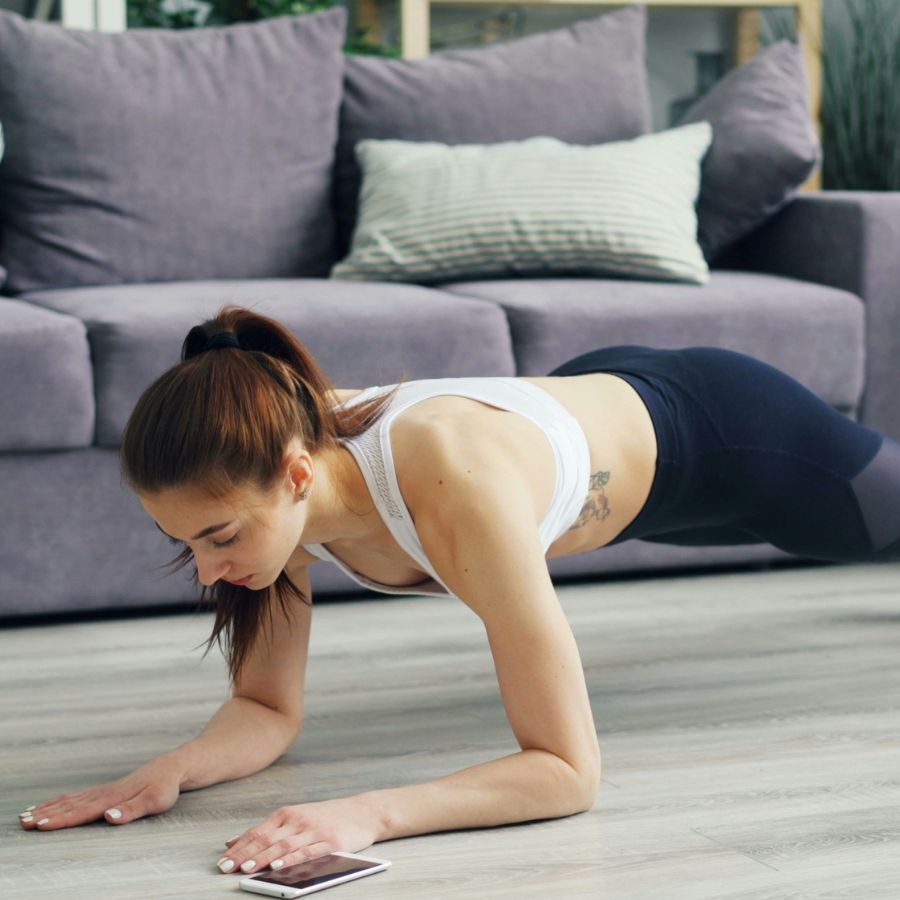
1. The isometric front plank
The reference exercise for the complete abdominal wall without lumbar flexion. Resting on your forearms and toes, maintain a perfect line from head to heels. Safety: activate the transverse (navel to spine) before assuming the position, align the neck with the spine (look at the floor, not forward), and never let the hips rise or drop. Target duration: 30 to 90 seconds depending on level.
2. The dead bug
Considered by many physical therapists to be the safest and most effective abdominal exercise. Lie on your back, arms extended toward the ceiling, legs at 90 degrees. Simultaneously lower your right arm backward and your left leg toward the floor, keeping your lower back pressed to the floor at all times. The biomechanical pressure on the lumbar spine is almost zero in this exercise because the back is fully supported by the floor.
3. The bird-dog
On all fours, lift your right hand and left knee simultaneously to extend your arm and leg in the opposite direction. The spine remains neutral, the back perfectly horizontal. This exercise develops lumbar stability while building abdominal strength, making it particularly interesting for people suffering from chronic lower back pain.
4. The side plank
In the side plank position, the body forms a straight line from head to heels, supported by the forearm and the edge of the foot. This exercise targets the obliques without any lumbar flexion. To make the exercise safe: keep your hip level (neither too high nor too low) and your head in line with your spine.
5. The hollow body hold
Lying on your back, lift your shoulders and legs slightly off the ground while keeping your lower back pressed to the floor. The safety difference compared to sit-ups: the lower back remains on the floor (no lumbar flexion), and it is the entire abdominal wall that maintains the position, not just the rectus abdominis in flexion.
6. The glute bridge
Lying on your back, knees bent, feet flat, lift your pelvis until you form a straight line between your knees, hips, and shoulders. Squeeze your glutes and activate the transverse. This exercise is a gentle lumbar extension that strengthens back stabilizers and glutes while stretching the abdomen in an extended position—exactly the opposite movement of a crunch, and therefore an excellent corrector for imbalances created by excessive hip flexor strain.
7. The bear crawl
On all fours, with knees lifted 5 cm off the ground, move forward by crossing right hand-left knee, then left hand-right knee. Activation of the transverse is mandatory to keep the back horizontal. This functional exercise is extremely effective for developing overall core stability without any lumbar flexion.
8. The Pallof press (elastic or towel version)
The ultimate anti-rotation exercise. In a standing or half-kneeling position, attach an elastic band to a fixed point to your side, then extend your arms in front of you and return. The lateral resistance of the band forces the transverse and obliques to resist trunk rotation—a functional movement highly representative of core stabilization in daily life. Without an elastic band, simulate resistance by placing both hands together and pushing one hand against the other during the movement.
4-week progressive protocol
Week 1 (discovery): plank (3x20 sec), dead bug (3x5 each side), bird-dog (3x6 each side), glute bridge (3x10), 4 sessions/week. Week 2 (progression): plank (3x35 sec), dead bug (3x8), side plank (2x20 sec each side), bird-dog (3x10), hollow body (3x15 sec), 4 sessions/week. Week 3 (intensification): plank (3x50 sec), dead bug (3x10), side plank (3x30 sec), hollow body (3x25 sec), crawling (5 back-and-forths), 5 sessions/week. Week 4 (circuit): all exercises in a circuit, 60 seconds rest between circuits, 3 circuits per session, 5 sessions/week.
What to strictly avoid
Stop immediately if you feel sharp pain in your lower back during an exercise: it is not effort, it is a warning signal. Avoid full sit-ups with feet held down (they recruit the hip flexors more than the abdominals). Avoid straight leg raises from a lying position if your transverse is not strong enough to keep your sacrum on the floor. Avoid working your abs if you suffer from an acute herniated disc without prior medical advice.
EMS for a safe complement
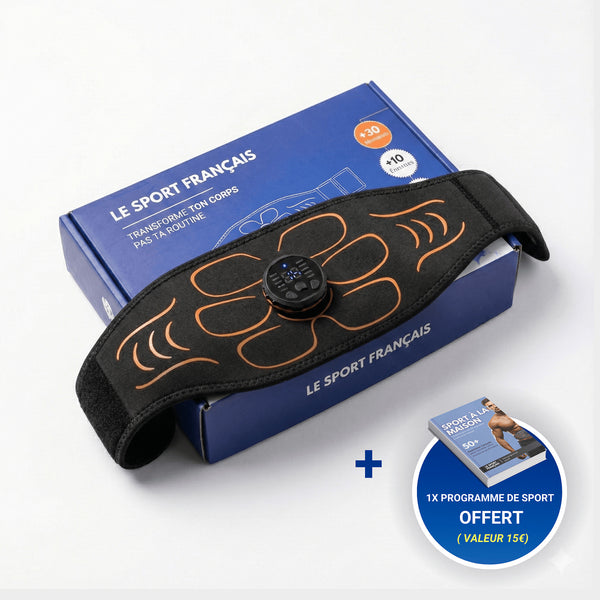
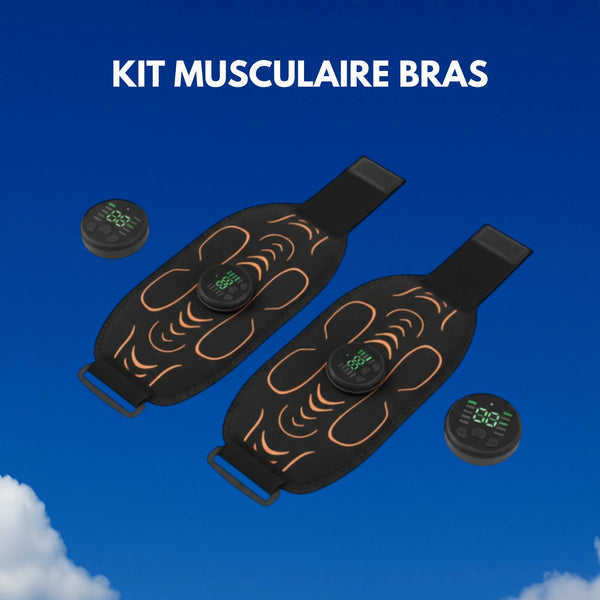
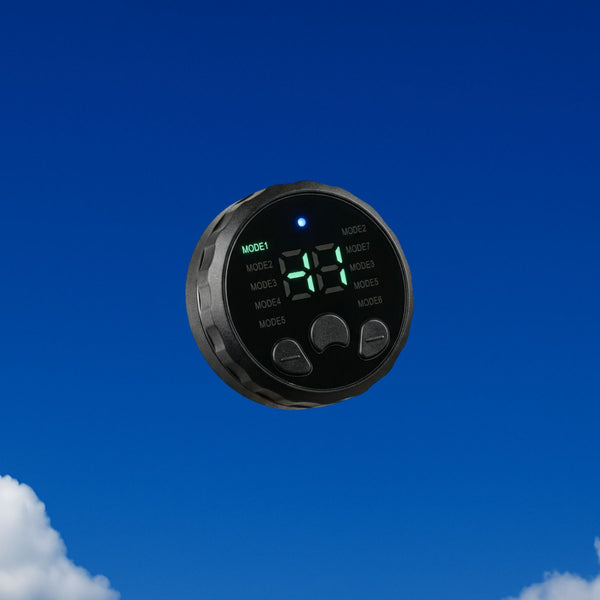
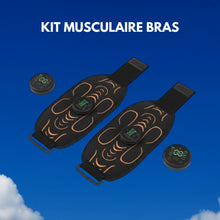
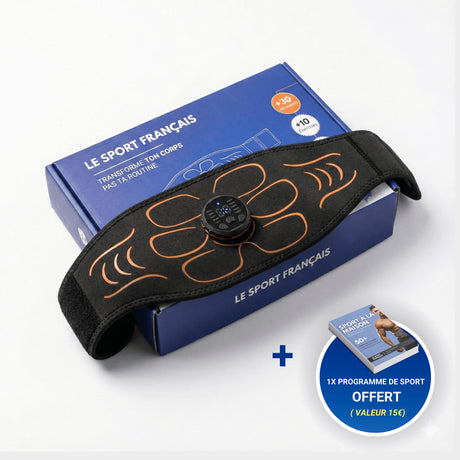
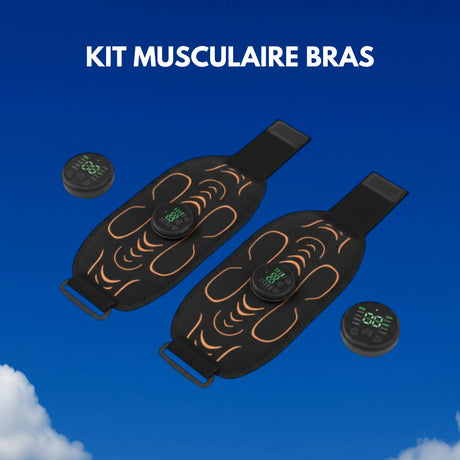
The Le Sport Français EMS abdominal belt is an ideal complement for those with sensitive backs. Electrical stimulation activates the abdominal muscles without requiring lumbar flexion or extension, making it particularly safe for users with a history of lumbar issues. Consult your doctor before use if you have serious back problems.
To go further, check out our articles on the transverse program for a flat stomach and on strengthening your abs without equipment.