






Choosing a posture corrector is not a trivial matter. An ill-suited device can be uncomfortable, ineffective, or even counterproductive. This guide was developed taking into account the recommendations of physiotherapists specializing in the spine and user feedback on the criteria that truly make a difference.
The opinion of physiotherapists on posture correctors
Physiotherapists specializing in spinal pathologies have a generally positive but nuanced opinion on posture correctors. Positive: these devices can accelerate postural correction by providing immediate proprioceptive feedback, reducing interscapular and cervical pain linked to poor posture, and effectively complementing a strengthening exercise program. Nuanced: they should not be worn continuously (risk of weakening postural muscles), they do not resolve root causes without complementary exercises, and they are contraindicated for certain pathologies.
The Haute Autorité de Santé (French National Authority for Health) classifies posture correctors in the category of technical aids for functional rehabilitation, acknowledging their value in postural correction protocols when used correctly.
Criterion 1: Design and target area
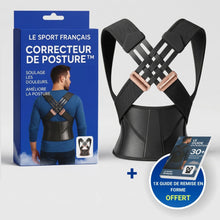
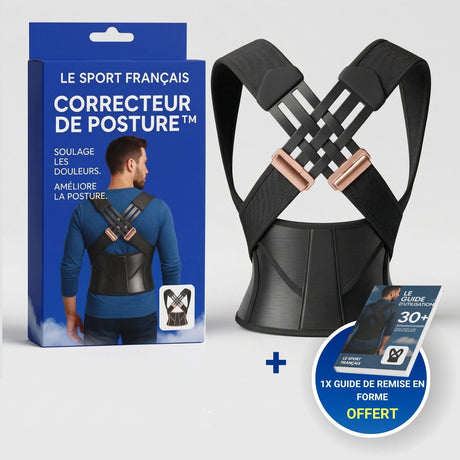
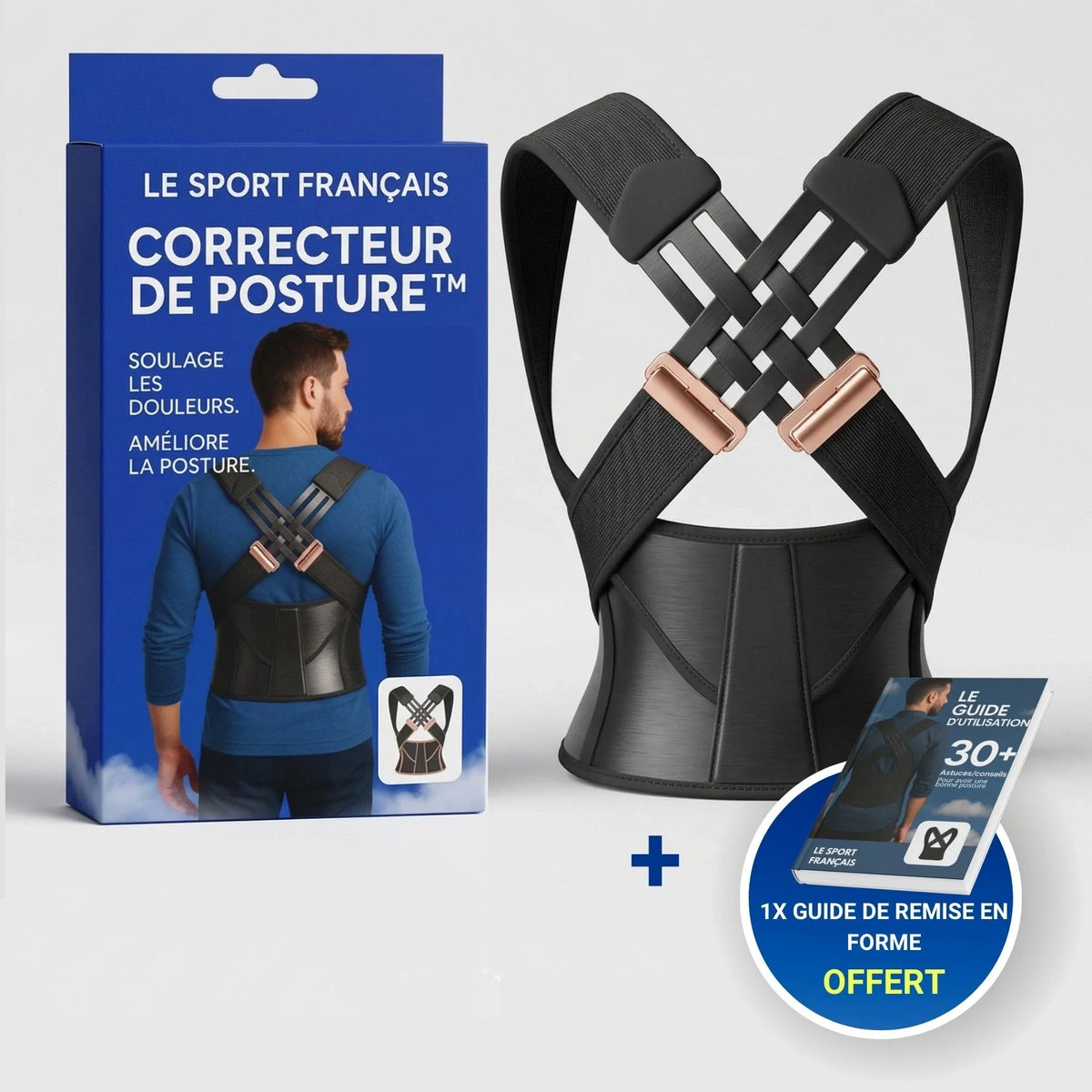
Posture correctors come in different formats adapted to specific areas. Crossed back straps: ideal for interscapular pain and thoracic kyphosis correction. They pull the shoulders backward and open the chest. Lumbar belts: for the lower back and lower back pain. They support the lumbar vertebrae and reduce arching. Cervical orthoses: for neck pain and tension headaches. Shoulder+back combinations: for global upper body posture correction. Choose the format based on your main pain area.
Criterion 2: Materials and comfort
A corrector that you won't wear due to lack of comfort is useless. Prefer breathable materials (mesh, technical cotton) over plastic or thick neoprene materials, especially for prolonged daily wear. Check that the edges and seams do not create painful pressure points on the shoulders or armpits. A good corrector should be forgotten after 10-15 minutes of wear — if you constantly feel uncomfortable, it is a sign that it is not suited to your body type.
Criterion 3: Adjustability
A non-adjustable corrector is a corrector that only fits a specific body type. Look for velcro adjustment systems or adjustable straps that allow you to modify the tension and position. The tension should be sufficient to guide the shoulders back, but not so tight that it compresses the armpits or hinders breathing. Test: take a deep breath at the optimal adjustment. If you cannot take a full breath, loosen it.
Criterion 4: Discretion
For use in the office or professional environments, discretion is important. The best posture correctors are invisible under a standard shirt or sweater. Avoid models with rigid elements or outlines visible under clothing.
Criterion 5: Durability
A posture corrector is used daily over several months. The quality of the seams, the strength of the velcro fasteners, and the resistance of the elastic bands determine its lifespan. Check that the velcro holds firmly and does not wear out after a few weeks, and that the fasteners do not distort with repeated wear. A quality corrector should last a minimum of 12 months of regular use.
Mistakes to avoid when purchasing
The first mistake is buying one that is too rigid. A very rigid corrector creates complete passive correction: the muscles no longer work at all and weaken. A semi-flexible corrector that guides without imposing is more effective in the long term. The second mistake is opting for the cheapest one without considering quality. A 5-euro corrector deforms, loses its tension, and its velcro wears out in a few weeks. The third mistake is choosing without considering the type of pain. A corrector for thoracic kyphosis is not the right tool for lower back pain.
Our recommendation
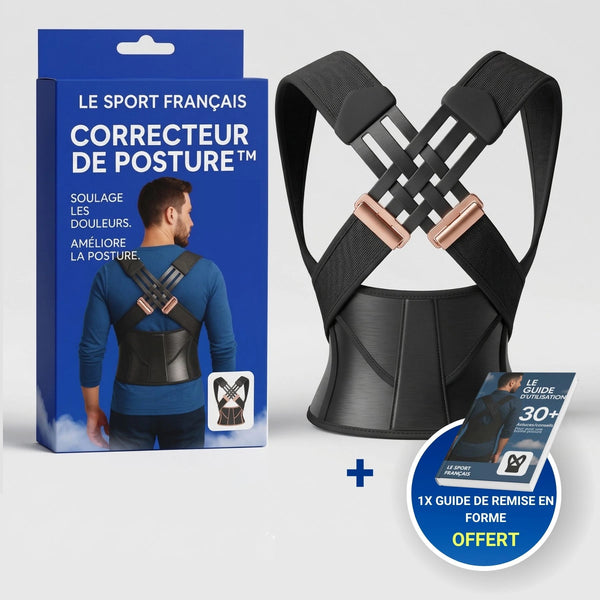
Our Le Sport Français Posture Corrector was designed with these 5 criteria in mind. Breathable materials, adjustable straps, a discreet profile under clothing, and semi-flexible tension that guides the shoulders backward without immobilizing them. Worn 2 to 3 hours per day, combined with the strengthening exercises recommended in our guide, it produces visible and lasting postural improvements in 6 to 8 weeks.
To learn everything about postural correction, consult our articles on posture corrector: complete guide and on back pain and posture: relief exercises.