





Do you want to start beginner Pilates at home, without a studio or equipment? Good news: the 8 foundational exercises of the method can be performed on a simple mat, in a living room, in 15 minutes. This guide provides a step-by-step sheet for each exercise: starting position, breathing, repetitions, frequent mistakes, and an easy variation. You will also find a ready-to-use 15-minute mini-session and a 4-week progression plan to build the habit without getting injured.
We remain honest about what Pilates does and does not do. It strengthens the core, improves movement control, and increases flexibility. It does not lead to weight loss on its own and does not replace medical advice if you have back pain. It complements our complete guide to Pilates at home.
Why start Pilates at home?
Mat Pilates is the simplest entry point into the method. It requires no equipment, takes up only 2 m², and adapts to all levels. For a beginner, it is also the best way to learn the basics before considering accessories or a reformer, which we discuss in our guide to reformer Pilates at home.
Floor work primarily targets the transverse abdominis, obliques, pelvic floor, and deep back muscles. These are the muscles that stabilize the spine in daily life. Once they are awakened, more demanding exercises, such as dynamic planking or working with an abdominal wheel, become safer and more effective. Pilates is therefore a logical step before moving on to strength training tools.
What does science say about Pilates for beginners?
Scientific data on Pilates is real but measured. A controlled study conducted on sedentary adults compared 12 weeks of mat Pilates, consisting of two one-hour sessions per week, against a control group. Practitioners improved their abdominal endurance, hamstring flexibility, and upper body endurance. However, the study did not show significant improvement in posture or balance over that duration (Kloubec, 2010, Journal of Strength and Conditioning Research).
Regarding back pain, a Cochrane review analyzed 10 randomized trials involving 510 people suffering from chronic non-specific low back pain. Its conclusions: Pilates is more effective than minimal intervention for pain and functional limitation, with low to moderate quality evidence, but there is no proof that it is superior to other forms of exercise (Yamato et al., 2015, Cochrane Database of Systematic Reviews). In other words: moving matters more than the chosen method.
Finally, the World Health Organization recommends that adults get 150 to 300 minutes of moderate-intensity activity per week, plus muscle-strengthening exercises at least two days a week (WHO, 2020). Pilates falls into this second category: supplement it with walking, cycling, or running.
The 3 rules before the first exercise
Lateral breathing
In Pilates, you inhale through the nose, allowing the ribs to expand to the sides, and exhale through the mouth while gently tightening the abdomen. The exhalation accompanies the effort. This breathing prevents breath-holding and engages the transverse abdominis with every movement.
Neutral pelvis
Lying on your back, your lower back should be neither pressed into the floor nor strongly arched. It maintains its natural curvature: a space barely the thickness of a hand passes through it. This position protects the lumbar spine and serves as a reference for almost every exercise.
Engaged core
Before moving an arm or a leg, imagine drawing your navel slightly toward your spine, without pulling your stomach in as far as possible. It is a contraction of about 30%, held throughout the exercise. It should never restrict your breathing.
The 8 Pilates exercises for beginners, sheet by sheet
Perform each exercise slowly: quality of movement is more important than quantity. If the neutral pelvis or breathing is lost, switch to the easy variation.
Exercise 1: breathing in neutral position
Position: on your back, knees bent, feet flat and hip-width apart, arms at your sides. Breathing: inhale for 4 seconds while opening the ribs, exhale for 6 seconds while engaging the core. Repetitions: 8 to 10 breaths. Frequent mistake: inflating the belly or lifting the shoulders upon inhalation. Easy variation: place your hands on your ribs to feel them expand.
Exercise 2: pelvic curl
Position: same as exercise 1. Movement: exhale, tilt the pelvis, then peel the spine off the mat vertebra by vertebra up to the shoulder blades. Inhale at the top, exhale while lowering back down in the same reverse order. Repetitions: 8. Frequent mistake: lifting in one block and pushing with the lower back. Easy variation: lift only the pelvis and lower back, without going up to the shoulder blades.
Exercise 3: chest lift
Position: on your back, knees bent, hands behind the head, elbows open. Movement: exhale while lifting your head and shoulders, eyes toward the knees, lower back remaining neutral. Inhale while lowering back down. Repetitions: 10. Frequent mistake: pulling on the neck with your hands. Easy variation: keep arms extended along your sides and lift only the head.
Exercise 4: single leg stretch
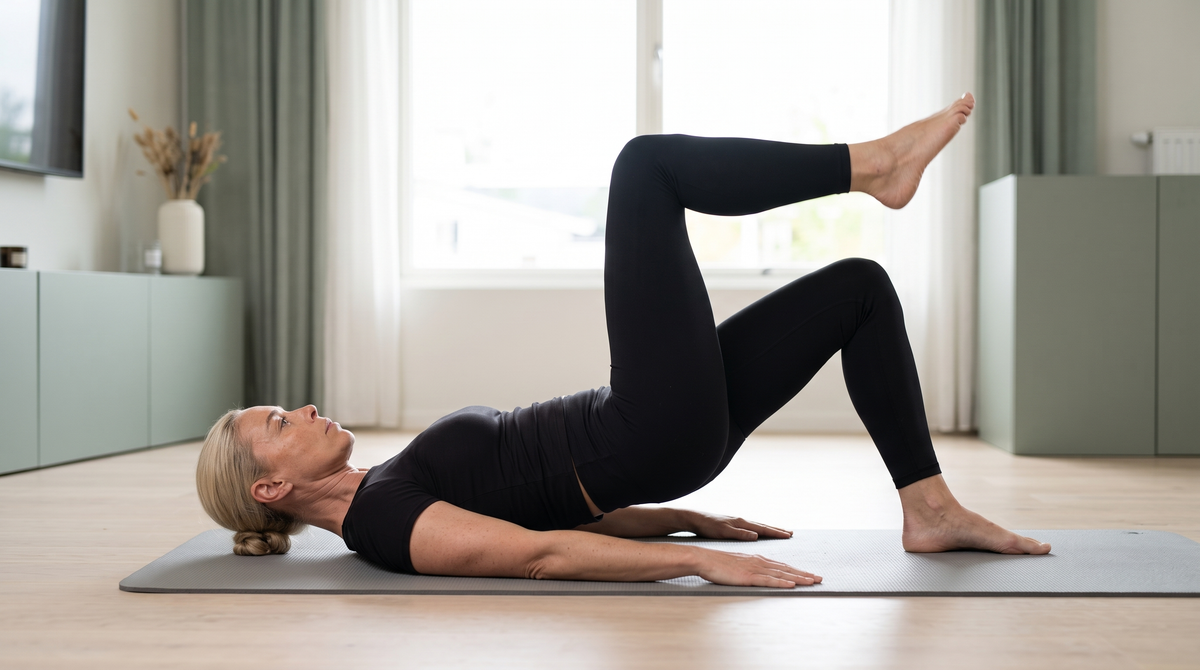
Position: on your back, head and shoulders lifted, one knee toward the chest, the other leg extended at 45 degrees. Movement: alternate legs while keeping the pelvis immobile. Breathing: exhale over two changes, inhale over two. Repetitions: 8 alternations per leg. Frequent mistake: arching the back when the leg moves away. Easy variation: keep your head on the floor and lift the extended leg higher.
Exercise 5: double leg stretch
Position: on your back, knees toward the chest, head and shoulders lifted, hands on the shins. Movement: inhale while extending arms backward and legs forward, exhale while bringing the knees back in and circling the arms. Repetitions: 6 to 8. Frequent mistake: lowering the legs too far and losing the neutral pelvis. Easy variation: head on the floor, legs at 90 degrees.
Exercise 6: spine stretch forward
Position: seated, legs extended and apart, feet flexed, arms extended in front. Movement: inhale while lengthening the spine, exhale while rolling the head and then the back forward, as if going over a ball. Inhale while straightening up vertebra by vertebra. Repetitions: 6. Frequent mistake: folding from the hips with a flat back. Easy variation: sit on a firm cushion, knees slightly bent.
Exercise 7: swimming
Position: on your stomach, arms extended in front, legs extended, forehead toward the floor. Movement: lift arms and legs slightly, then beat the right arm and left leg, then the opposite. Breathing: inhale for 5 beats, exhale for 5. Repetitions: 20 beats. Frequent mistake: lifting the head and compressing the neck. Easy variation: lift only one arm and the opposite leg, hold for 3 seconds, switch.
Exercise 8: mermaid
Position: seated on one hip, legs folded to the side, one hand on the floor. Movement: inhale while lifting the free arm, exhale while leaning over the supporting hand to stretch the flank. Return, then lean to the other side. Repetitions: 5 per side. Frequent mistake: leaning forward instead of staying in the lateral plane. Easy variation: perform the movement while seated on a chair.
15-minute Pilates mini-session
This session links the 8 exercises in a logical order, from waking up the core to the final stretch. Keep a 30-second transition between each block.
- Minutes 0 to 2: breathing in neutral position, 10 slow breaths.
- Minutes 2 to 4: pelvic curl, 2 sets of 8.
- Minutes 4 to 6: chest lift, 2 sets of 10.
- Minutes 6 to 8: single leg stretch, 2 sets of 8 alternations.
- Minutes 8 to 10: double leg stretch, 2 sets of 6.
- Minutes 10 to 12: spine stretch forward, 6 slow repetitions.
- Minutes 12 to 14: swimming, 2 sets of 20 beats.
- Minutes 14 to 15: mermaid, 5 repetitions per side, then 3 breaths to finish.
Recommended frequency: 3 sessions per week, every other day. If you are short on time, an 8-minute version (exercises 1, 2, 3, 6, and 8) is better than skipping a session.
How to progress over 4 weeks
This progression, designed for a complete beginner, increases volume and then difficulty without sacrificing technique.
Week 1: learn the basics
Three 10-minute sessions. Work only on exercises 1, 2, 3, and 6 with the easy variations. The goal is to feel the lateral breathing and neutral pelvis. No muscle fatigue is expected: this is normal.
Week 2: the complete session
Three 15-minute sessions with all 8 exercises, in the easy version if needed. Add 1 repetition per exercise to each session if the technique remains clean.
Week 3: standard version
Three to four 15-minute sessions, all in the standard version. Slow down the tempo: 3 seconds to lift, 3 seconds to lower for the pelvic curl and chest lift.
Week 4: consolidation
Four sessions of 15 to 20 minutes. Do 3 sets instead of 2 for exercises 2 to 5. By the end of the week, you should be able to finish the session without losing the neutral pelvis. This is the signal to move on to the intermediate exercises in our Flat Stomach Pilates program or the 10 effective planks to do at home.
Limitations, errors to avoid, and contraindications
Mat Pilates is not magic. It does not melt abdominal fat, it does not replace the cardio recommended by the WHO, and its effects on posture are not demonstrated over 12 weeks in the Kloubec study. Expect primarily better trunk control and increased flexibility.
Most frequent mistakes: holding your breath, pulling on the neck, lowering legs too far in exercises 4 and 5, moving too quickly. Sharp pain or lumbar discomfort are signals to reduce the range of motion.
Contraindications: seek advice from a doctor or physical therapist in case of a recent herniated disc, severe osteoporosis, pregnancy, or in the weeks following childbirth. In the latter case, consult our physical therapist's guide to postpartum abdominals first, as some flexion exercises (chest lift, double leg stretch) are not recommended until the abdominal wall has been rehabilitated.
What equipment to choose for Pilates at home?
To start, a thick mat is enough. Le Sport Français is currently preparing a range dedicated to Pilates (ball, ring, roller, bar, and mini reformer) that will enrich the floor practice. In the meantime, several products already available usefully complement your sessions.
For recovery
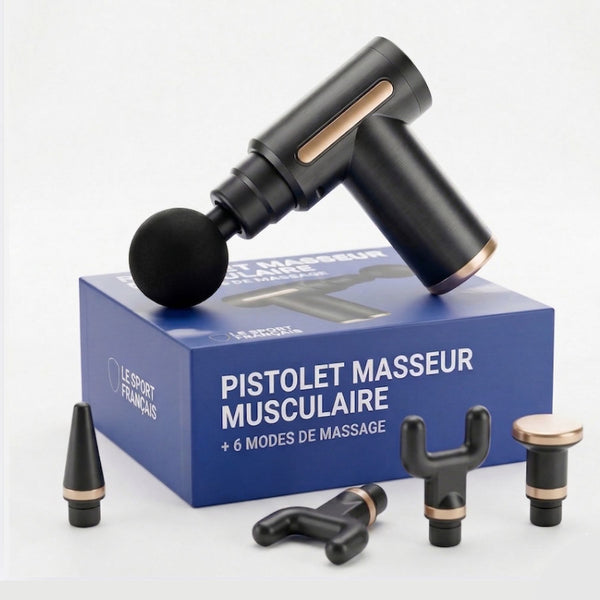
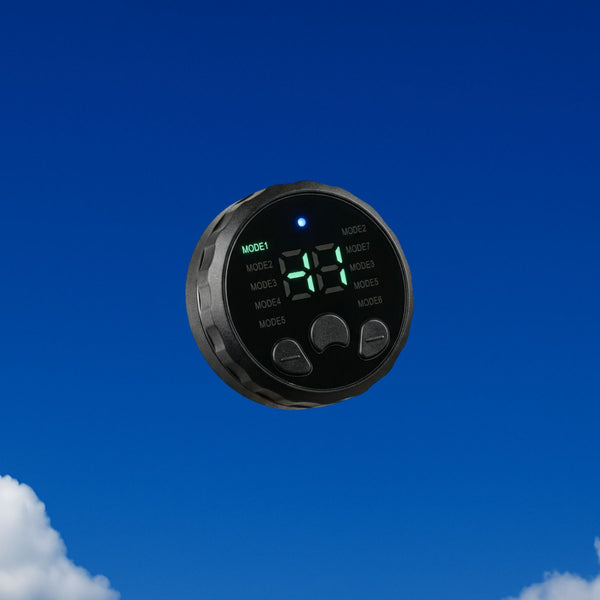
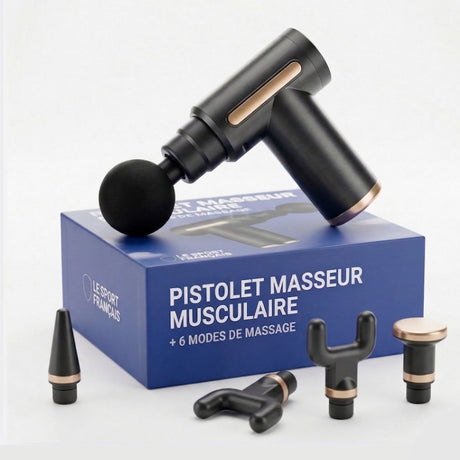
The first weeks awaken muscles that are rarely used, and soreness in the glutes or back is frequent. The muscle massage gun (5 speeds, 6 interchangeable heads, up to 3,200 percussions per minute, €59) helps relax these areas in a few minutes after the session.
For daily posture
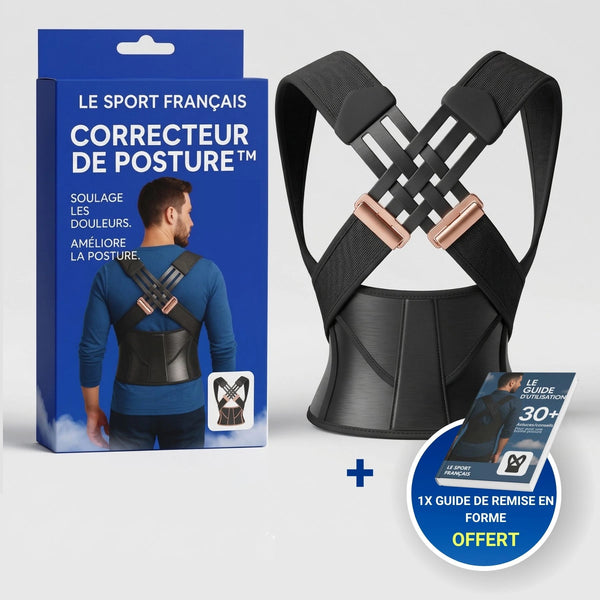
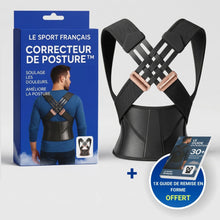
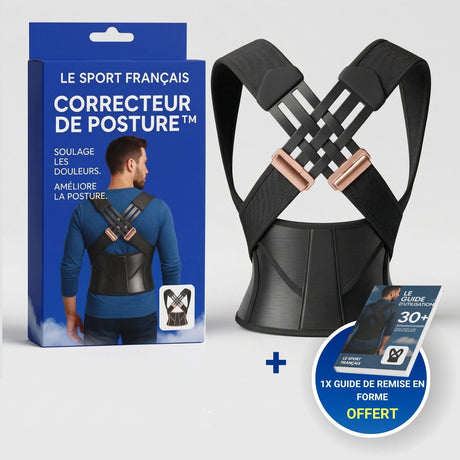
Pilates teaches you how to align the spine for 15 minutes. The rest of the day, a back and shoulder posture corrector (sizes S to XXL, €49) serves as a reminder to open the shoulders in front of a screen. It does not build muscle for you, but it helps maintain the sense of alignment worked on the floor.
For the next step
After the 4 weeks of progression, the silent anti-slip abdominal wheel (€39.90) is a very demanding dynamic planking tool for the transverse abdominis. Start on your knees, with a small range of motion, using the same neutral pelvis instructions as in your Pilates exercises.
As a complement to the session
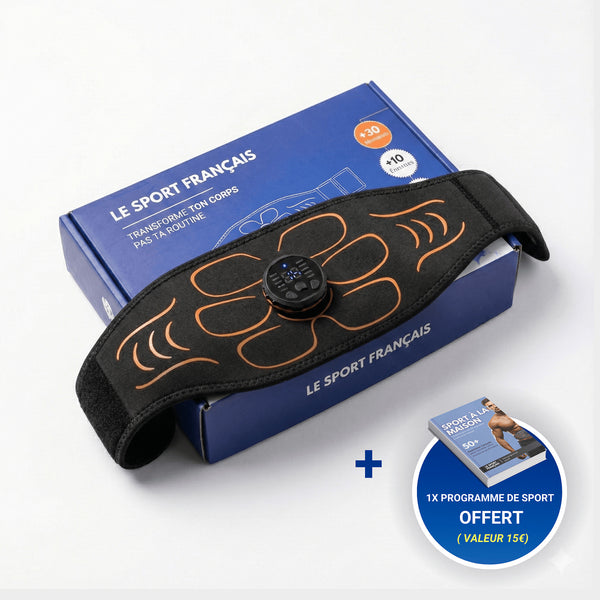
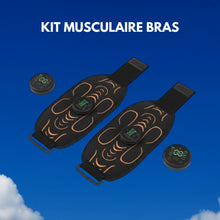
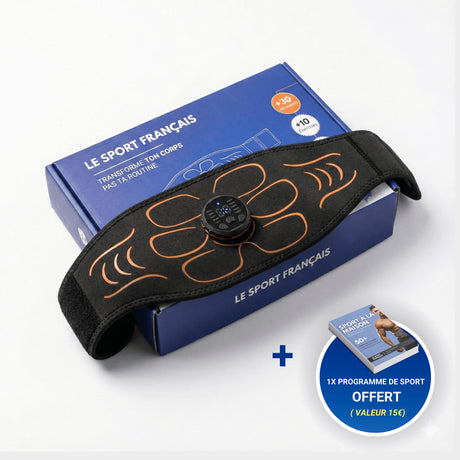
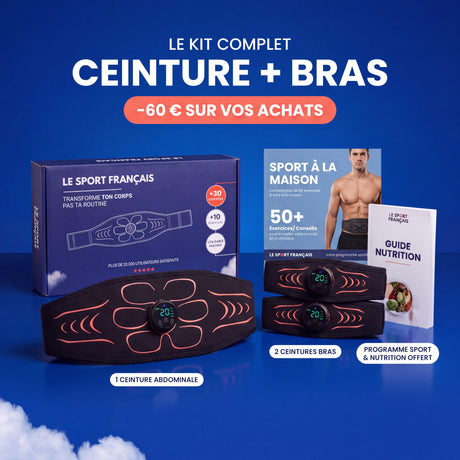
The EMS abdominal belt (€59.99) can be used on days without a session to stimulate the abdominal wall through electrostimulation. It does not replace the active work of Pilates and does not make you lose belly fat on its own: consider it a supplement, not a shortcut.
Frequently Asked Questions
How many times a week should you do Pilates when starting out?
Three 15-minute sessions, every other day, are a good starting rhythm. This is sufficient to learn the basics without accumulating fatigue. From the fourth week, you can move to four sessions or extend each session to 20 minutes, depending on how you feel and your schedule.
Do you need equipment to start Pilates?
No. The 8 exercises in this guide are done on a mat, without any accessories. A firm cushion can help for the spine stretch forward if your hamstrings are stiff. Accessories (ball, ring, roller) and the reformer provide variety later, once the fundamentals are mastered.
Does Pilates help you lose belly fat?
Pilates strengthens the transverse abdominis and improves trunk support, which can make the belly look flatter. It does not burn enough calories to lose fat on its own. For that, you need to combine regular cardio activity, a balanced diet, and sufficient sleep.
Can you do Pilates with back pain?
In cases of chronic non-specific low back pain, the 2015 Cochrane review indicates that Pilates is more useful than inactivity, without being superior to other exercises. In cases of acute pain, a recent hernia, or pain radiating into the leg, consult a healthcare professional before practicing.
What to remember
- Beginner Pilates is practiced at home with a mat, in 15 minutes, without equipment.
- Three rules above all: lateral breathing, neutral pelvis, and engaged core.
- The 8 foundational exercises cover the core, the spine, the back, and the flanks.
- Science confirms gains in abdominal endurance and flexibility in 12 weeks, with no demonstrated effect on posture (Kloubec, 2010).
- Against chronic low back pain, Pilates helps, without being superior to other exercises (Yamato et al., 2015).
- Follow the 4-week progression before increasing the difficulty.
- Pilates does not lead to weight loss alone: combine it with the cardio recommended by the WHO.
Conclusion
Starting Pilates at home requires neither a subscription nor a device. You need a mat, 15 minutes, and consistency. The 8 sheets in this guide and the 4-week progression provide a solid, honest foundation without exaggerated promises. Once this base is acquired, you will be able to move on to intermediate exercises, the Pilates range that Le Sport Français is preparing, or more demanding planking tools like the silent abdominal wheel. Roll out your mat, and have a great first session.
Sources
- Kloubec J.A. (2010). Pilates for improvement of muscle endurance, flexibility, balance, and posture. Journal of Strength and Conditioning Research, 24(3), 661-667. pubmed.ncbi.nlm.nih.gov/20145572
- Yamato T.P., Maher C.G., Saragiotto B.T. et al. (2015). Pilates for low back pain. Cochrane Database of Systematic Reviews, CD010265. cochrane.org
- World Health Organization (2020). WHO guidelines on physical activity and sedentary behaviour. who.int