









A Pilates reformer at home is a dream: the sliding carriage, the springs, the feeling of training like in a studio, without a subscription or fixed schedule. But before spending hundreds or even thousands of euros, it is better to answer four questions: what are the real benefits, what is the price, who is it for, and what are the alternatives? This 2026 buying guide provides you with concrete benchmarks: types of reformers, realistic price ranges, space requirements, selection criteria, 8 basic exercises, and floor-based solutions if the equipment is not (yet) for you.
Our position is simple and honest: a reformer is an excellent tool, but it is neither a prerequisite nor a miracle machine. Many practitioners progress for years on a mat. If you are a beginner, start with our complete guide to Pilates at home and come back here when the question of equipment truly arises.
What is a Pilates reformer?
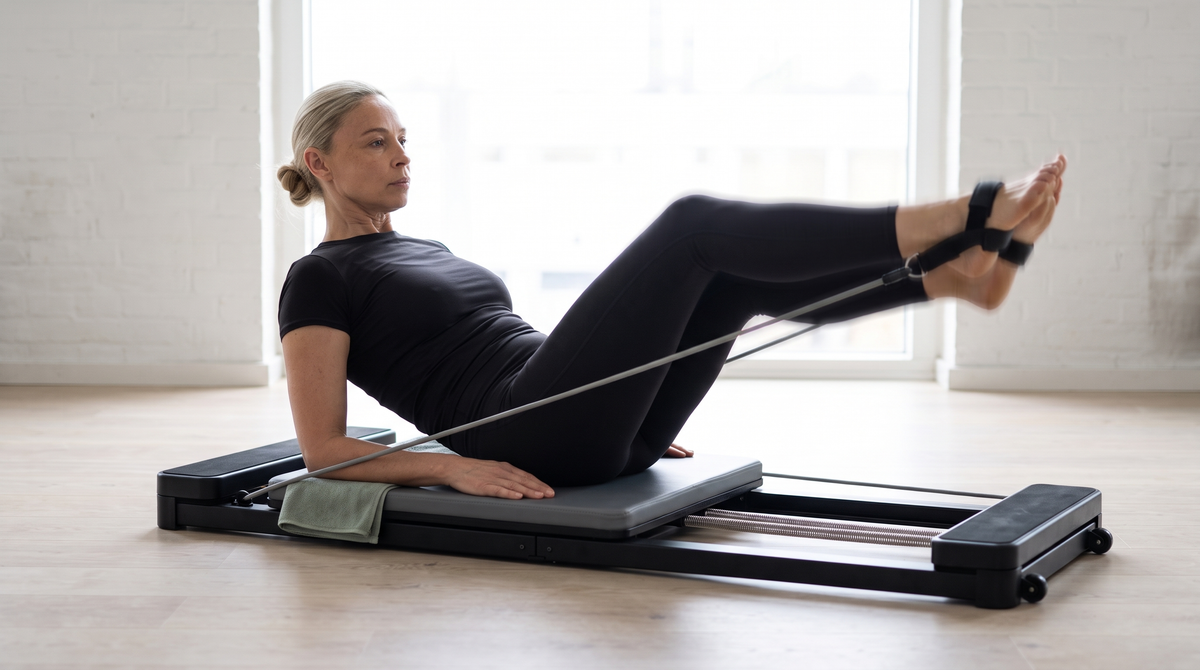
The reformer is the apparatus designed by Joseph Pilates in the early 20th century. It consists of a frame, a mobile carriage mounted on rails, interchangeable resistance springs, an adjustable footbar, and straps for hands or feet. You push or pull the carriage while lying down, sitting, kneeling, or standing, and the springs create either resistance or assistance depending on the exercise.
It is this dual function that distinguishes the reformer from the mat. A light spring helps a beginner perform a movement they could not control on the floor. A heavy spring, on the contrary, turns the same gesture into a strength exercise. The glide of the carriage also forces the core to stabilize constantly, which is also sought after by simpler tools like the silent ab wheel, on a much more modest scale.
What are the real benefits of the reformer?
What the reformer does well: vary resistance very finely, guide movement thanks to the rails, work the legs and upper body in addition to the core, and offer hundreds of variations without changing equipment.
What it does not do: lose weight for you, correct posture in a few sessions, or replace medical care. Scientific evidence mainly concerns Pilates in general, not the apparatus in particular. A controlled 12-week study on mat Pilates (two one-hour sessions per week) showed gains in abdominal endurance, hamstring flexibility, and upper body endurance, without significant improvement in posture or balance (Kloubec, 2010, Journal of Strength and Conditioning Research). There is nothing to suggest that the reformer would perform better than the mat on these criteria.
For back pain, a Cochrane review covering 10 trials and 510 people suffering from chronic low back pain concludes that Pilates is more effective than minimal intervention, with low to moderate quality evidence, but that it is not proven to be superior to other forms of exercise (Yamato et al., 2015, Cochrane Database of Systematic Reviews). The WHO recommends that adults get 150 to 300 minutes of moderate activity per week and muscle strengthening at least two days a week (WHO, 2020). A reformer can contribute to this, like any other strengthening tool.
What types of reformers exist?
The mini reformer or compact reformer
Short structure (often less than 1.5 m), reduced carriage, resistance springs or bands. This is the entry-level of the domestic market: light, easy to store under a bed, but with limited range of motion and less stability.
The folding reformer
Almost full size (2.1 to 2.4 m unfolded) but can be folded vertically or in half. Aluminum or steel frame, 4 to 5 springs. It is the most common compromise for an apartment. Check the sturdiness of the folding mechanism and the weight (often 40 to 60 kg).
The fixed reformer, wood or aluminum
The reference model, similar to those in studios. Rigid frame, large carriage, 5 springs of different resistances, multi-position footbar, sometimes a tower or half-cadillac. More stable, more durable, but bulky and expensive.
How much does a Pilates reformer cost in 2026?
The ranges below correspond to prices observed in 2026 on the French market, delivery not included. They vary according to brands, materials, and provided accessories (box, jump board, tower).
- Mini reformer or compact reformer: approximately €300 to €700.
- Domestic folding aluminum reformer: approximately €900 to €1,500.
- Fixed wood or aluminum reformer, semi-professional quality: approximately €1,500 to €3,000.
- Professional studio reformer, with tower or cadillac: €3,000 to €6,000 and up.
Compare this with the cost of classes: in a studio, a reformer session in France is often between €25 and €45, more for private lessons. At two sessions per week, a €1,200 folding reformer corresponds to about 6 to 9 months of classes. But this calculation only makes sense if you actually practice twice a week, and if you already know what to do on the equipment.
Also consider additional costs: delivery of a heavy package, replacement springs eventually, and a few lessons to learn the basics.
How much space should you allow at home?
A standard reformer is 2.1 to 2.4 m long and 0.6 to 0.8 m wide. Add space to move around it: plan for a zone of at least 3 m by 1.5 m, as many exercises are done standing next to the carriage or lying down with legs extended beyond the frame. Ceiling height is only an issue for models with a tower.
Protect the floor with a mat, and consider the noise of the carriage for neighbors below. In an apartment, a folding or mini reformer is often the only realistic choice.
For whom is a home reformer worth it?
It is relevant if you have already been practicing Pilates for several months, if you have taken at least a few reformer classes in a studio, if you have the space, and if you are ready to commit to two to three sessions per week on the equipment. It is also suitable for people who find it difficult to work on the floor, subject to the advice of a healthcare professional.
It is not a priority if you are a complete beginner, if your budget is tight, if you lack space, or if you are primarily looking for a versatile tool to get back in shape. In that case, our 12-week beginner strength training program or the floor exercises presented below provide an excellent foundation for a fraction of the price.
8 basic exercises on a reformer
Start with a light to medium spring, 8 to 10 repetitions per exercise, effort on the exhale. Increase resistance only when control is perfect.
1. Footwork
Lying on the carriage, feet on the bar, push to straighten your legs, then return slowly. Vary foot position (heels, balls of the feet, toes). Target: quads, glutes, calves, and knee alignment.
2. Hundred on reformer
Lying down, straps in hands, head and shoulders lifted, legs at 45 degrees. Pump your arms for 10 cycles of 5 inhales and 5 exhales. Target: core endurance and respiratory coordination.
3. Leg circles with straps
Feet in straps, legs extended toward the ceiling, draw slow circles in one direction and then the other. Target: hip mobility and pelvic stability.
4. Frog
Feet in straps, heels together, knees open. Extend legs to 45 degrees then return. Target: inner thighs, glutes, and lumbar control.
5. Stomach massage
Sitting facing the footbar, rounded back, hands on the edge of the carriage. Push with legs and return. Target: core, legs, and spinal mobility in flexion.
6. Elephant
Standing on the carriage, hands on the footbar, body in an inverted V. Push the carriage backward with straight legs, then pull it in using your abdominals. Target: hamstrings, core, and shoulders.
7. Knee stretches
Kneeling on the carriage, hands on the bar, rounded back then flat back. Push the carriage back with your knees and pull it in. Target: core, hips, and coordination.
8. Mermaid on reformer
Sitting sideways on the carriage, one hand on the bar, push to open the flank then return. Target: obliques, thoracic mobility, and lateral stretch. This is also an exercise you find on the mat in our article Beginner Pilates: 8 simple exercises.
8-week beginner program
Weeks 1 and 2: two 20-minute sessions, exercises 1, 2, 3, and 8 only, light spring, 8 repetitions. Weeks 3 and 4: two 25-minute sessions, add exercises 4 and 5, increase to 10 repetitions. Weeks 5 and 6: three 30-minute sessions with all 8 exercises, medium spring on footwork. Weeks 7 and 8: three 35-minute sessions, 2 sets per exercise, and keep a log to note the springs used. After 8 weeks, if control is mastered, you can explore intermediate variations or supplement with our Flat Belly Pilates program.
What are the alternatives to the reformer on the floor?
Resistance bands
Fixed to a piece of furniture or held in the hands, they reproduce part of the spring work: lying footwork, leg circles with the foot in the loop, arm rows. They do not recreate the glide or the assistance of the carriage, but cover the essentials of progressive resistance.
Pilates bar
A short bar connected to two bands and a foot strap allows for squats, rows, and rotations while standing. It stores in a closet and correctly replaces the leg and upper body exercises made possible by the reformer. Le Sport Français is preparing a Pilates range including a bar + bands kit and a mini reformer; these products are not yet available for sale.
The mat and body weight
Do not underestimate matwork: Joseph Pilates' 34 historical exercises are done on the floor. The hundred, leg circles, or mermaid exist in mat versions; add progressive planks for the core.
Limitations, errors to avoid, and contraindications
Error number one: buying before trying. About ten studio sessions prevent an unnecessary purchase and teach you basic safety (straps, spring adjustment, getting on and off the carriage). Error number two: choosing the cheapest model without checking stability, carriage length, and availability of replacement springs. Error number three: increasing resistance too quickly at the expense of control.
Also beware of marketing promises. No device burns fat locally, and the effect of Pilates on posture is not demonstrated at 12 weeks in the Kloubec study. Expect the reformer to provide strength, mobility, and control, not a guaranteed transformation.
Contraindications: in case of recent herniated disc, severe osteoporosis, pregnancy, recent surgery, or acute pain, seek the advice of a doctor or physiotherapist before using a reformer. Exercises in straps with straight legs are particularly demanding on the lower back.
What equipment to choose while waiting for the reformer?
Whether you are waiting or supplementing a reformer you have already purchased, here are the products from our catalog useful for a Pilates practice. They do not replace the machine.
For post-session recovery
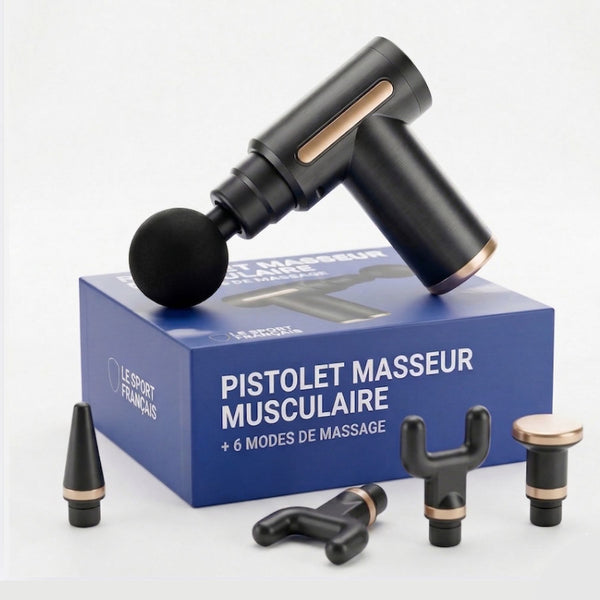
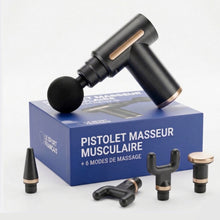
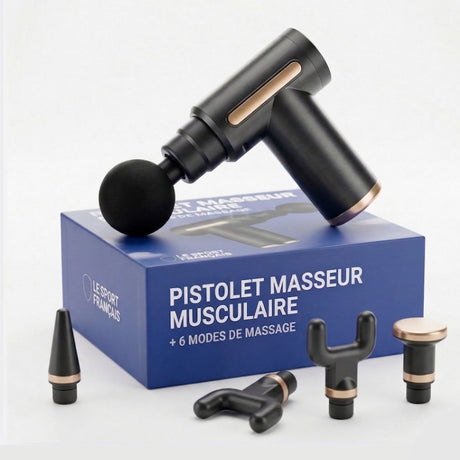
Footwork and elephant heavily stress calves, hamstrings, and glutes. The muscle massage gun (5 speeds, 6 heads, up to 3,200 percussions per minute, €59) helps release these areas in a few minutes after training.
For daily maintenance
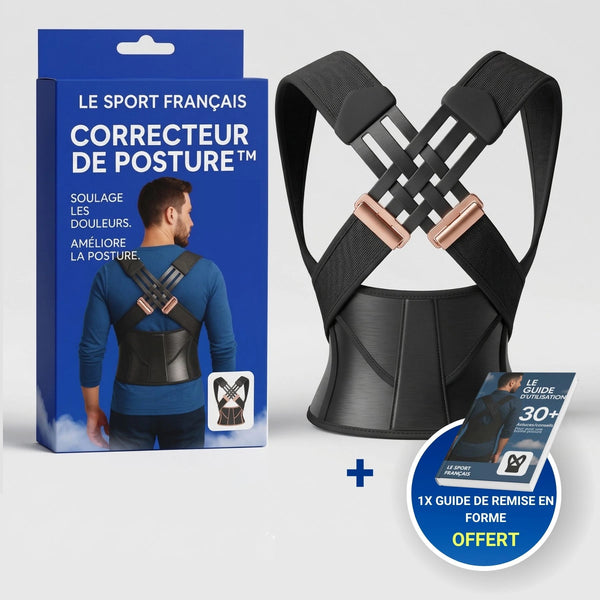
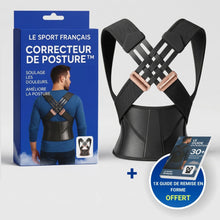
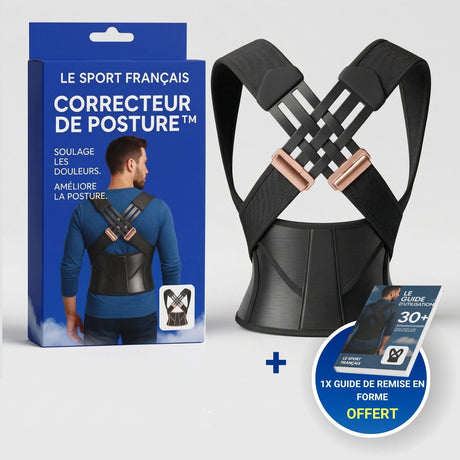
The reformer teaches alignment during the session; the back and shoulder posture corrector (sizes S to XXL, €49) serves as a reminder the rest of the day, for example, in front of a screen. It does not build muscle for you and should be worn for short periods.
For core strengthening
The silent anti-slip ab wheel (€39.90) is the floor tool that comes closest to the logic of the carriage: a support that slides and a core that must control it. Start on your knees, with a small range of motion, neutral pelvis.
As a passive supplement
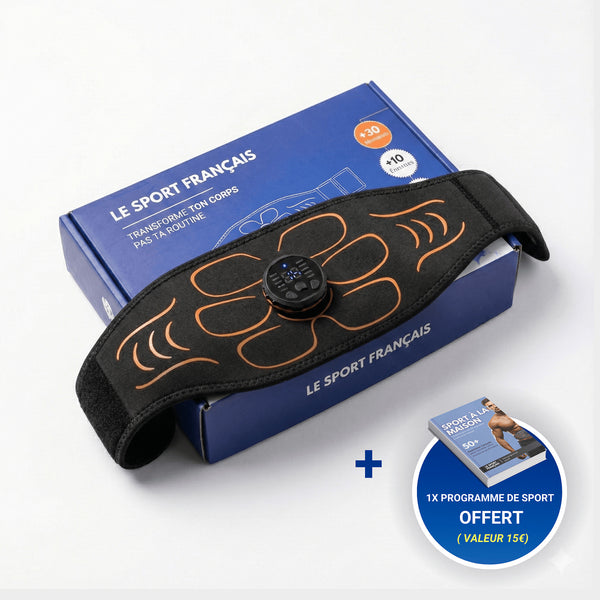
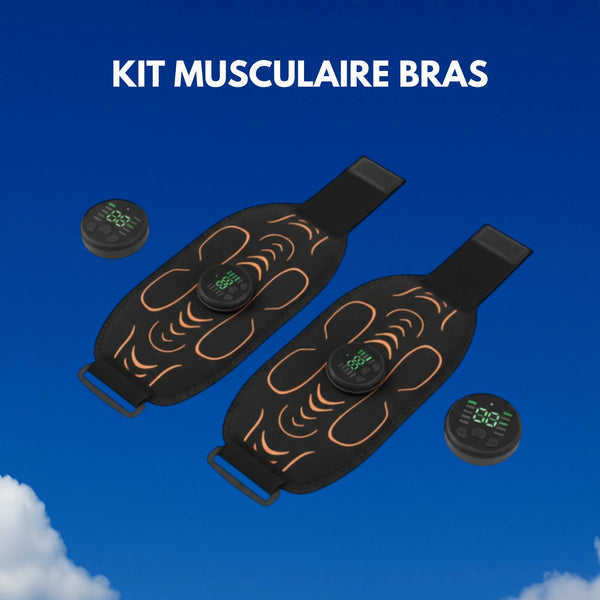
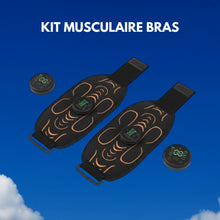
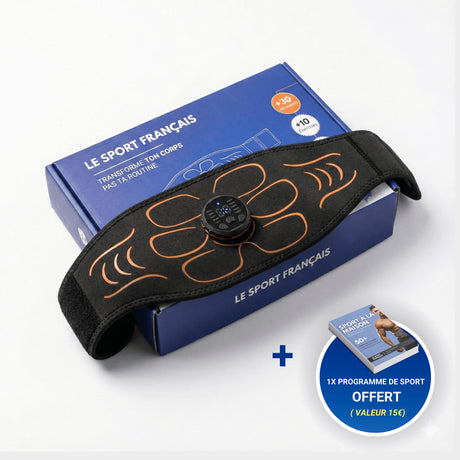
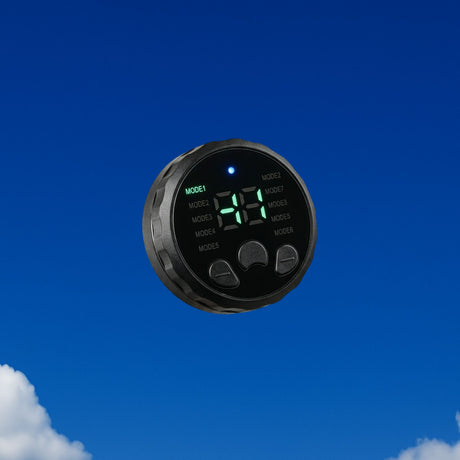
The EMS abdominal belt (€59.99) can stimulate the abdominals via electrostimulation on days without a session. It is a supplement, not a substitute for active work, and it does not burn belly fat on its own.
Frequently asked questions
Can you learn the reformer alone at home?
It is possible to progress alone with videos, but a few studio classes beforehand are highly recommended. They teach you how to adjust the springs, how to get on and off the carriage safely, and how to feel a neutral pelvis.
What is the minimum budget for a decent reformer?
For regular domestic use, expect about €900 to €1,500 for a folding aluminum reformer with several springs. Below that, the mini reformers at €300-700 are suitable for discovering the feel of the carriage, but with limited range and stability that quickly cap progression.
Mini reformer or full reformer: which to choose?
The mini reformer is suitable if space is limited and you mainly want to add resistance to your floor exercises. The full reformer is necessary for standing exercises, the elephant, stomach massage, and large leg ranges of motion.
Is the reformer suitable for seniors?
Often yes, because the lying position and the assistance of the springs facilitate movements that are difficult on the floor. But it depends on health status: in case of osteoporosis, recent prosthesis, or balance disorders, medical advice and guidance from a trained professional are essential before practicing at home.
What to remember
- The reformer provides variable resistance, assistance, and variety, but no evidence shows it outperforms the mat on measured criteria (Kloubec, 2010).
- For chronic low back pain, Pilates helps without being superior to other exercises (Yamato et al., 2015).
- 2026 Price: €300 to €700 for a mini reformer, €900 to €1,500 for a folding one, €1,500 to €3,000 for a fixed one, more for professional.
- Plan for a 3 m by 1.5 m area and a protected floor.
- Buy after a few studio classes, never before.
- Bands, bars, and matwork cover most of the benefits at a lower cost.
- Le Sport Français is preparing a Pilates range with a mini reformer and bar + band kit.
Conclusion
A Pilates reformer at home is a great investment for a regular, informed, and well-equipped practitioner. For everyone else, the mat, bands, and a bar offer the essential work at a fraction of the cost, without cluttering the living room. While waiting for the Pilates range that Le Sport Français is preparing, you can already strengthen your core on the floor with the silent ab wheel and progress on your fundamentals.
Sources
- Kloubec J.A. (2010). Pilates for improvement of muscle endurance, flexibility, balance, and posture. Journal of Strength and Conditioning Research, 24(3), 661-667. pubmed.ncbi.nlm.nih.gov/20145572
- Yamato T.P., Maher C.G., Saragiotto B.T. et al. (2015). Pilates for low back pain. Cochrane Database of Systematic Reviews, CD010265. cochrane.org
- World Health Organization (2020). WHO guidelines on physical activity and sedentary behaviour. who.int