









A strength training program for female beginners must address both a fear and a reality. The fear: "I will become too muscular." The reality: along with walking, strength training is the activity that most transforms a woman’s silhouette, posture, energy, and bone health, without making her look like a bodybuilder. This 12-week home plan, divided into three phases, requires no equipment at the start and gradually introduces a few accessories. It is based on WHO recommendations and studies that have compared how women and men respond to strength training.
Women's strength training: what science really says
A 2020 meta-analysis (Roberts, Nuckols, and Krieger, Journal of Strength and Conditioning Research) compiled studies comparing men and women following the same programs: women gain as much muscle proportionally as men, and even progress slightly faster in relative upper-body strength. What differs is the starting point (less absolute muscle mass) and testosterone levels, which are about 15 times lower, making significant muscle gain physically impossible without years of intensive training and, often, pharmacological assistance.
In concrete terms, a beginner who follows a structured program 3 times a week will achieve the following in 12 weeks: firmer and more defined muscles, improved posture, often a reduced waistline, better insulin sensitivity, protected bone density, and a slightly higher resting energy expenditure. Furthermore, the WHO recommends that all adults perform at least two weekly strength-training sessions, in addition to cardio activity.
The 5 rules of the program
Three sessions per week, non-consecutive, 35 to 50 minutes each. Progressive overload: every week, add one more repetition, one more set, or increase the difficulty. This is the only principle that guarantees results. Technique before weight: one clean set is worth more than three sloppy ones. Two repetitions in reserve: stop each set when you could still do two more, unless indicated otherwise. Sufficient volume: research (Schoenfeld et al., 2017) shows that 10 or more sets per muscle group per week produce more muscle than 5; this program reaches that level gradually in phases 2 and 3.
Phase 1, weeks 1 to 4: foundations
Objective: learn basic movements, awaken the muscles, and build the habit. No equipment needed. Each session begins with a 5-minute warm-up (marching in place, shoulder and hip rotations, 10 slow squats) and ends with 5 minutes of gentle stretching.
Session A: lower body and core
Bodyweight squats 3 × 12. Reverse lunges 3 × 10 per leg. Glute bridges 3 × 15. Calf raises 2 × 20. Plank 3 × 20 to 40 seconds. Rest 60 to 90 seconds between sets.
Session B: upper body
Knee push-ups or wall push-ups 3 × 8 to 12. Rowing with a towel or weighted bag 3 × 12. Lateral raises with water bottles 3 × 15. Chair dips 3 × 8. Superman (back extension on the floor) 3 × 12.
Session C: full body
3-round circuit, 40 seconds of effort and 20 seconds of rest per exercise: squats, push-ups, alternating lunges, towel row, glute bridge, side plank (20 seconds per side), slow mountain climbers. 2 minutes of rest between rounds.
Progression: week 1, the numbers at the lower end of the range; week 2, one extra repetition per exercise; week 3, one extra set for squats and push-ups; week 4, slow tempo (3-second descent) on squats, lunges, and push-ups.
Phase 2, weeks 5 to 8: development
Objective: increase volume and difficulty, introduce resistance. Two accessories are enough: an ab roller for anti-extension core work, and a pair of light dumbbells or two 1.5-liter bottles. Sessions increase to 45 minutes.
Session A: legs and glutes
Goblet squats (dumbbell held against the chest) 4 × 12. Bulgarian split squats (rear foot on a chair) 3 × 10 per leg. Hip thrusts with back on the couch 4 × 15, with a 3-second squeeze at the top. Stiff-legged deadlifts with dumbbells 3 × 12. Kneeling ab roller 3 × 8 to 10.
Session B: upper body and arms
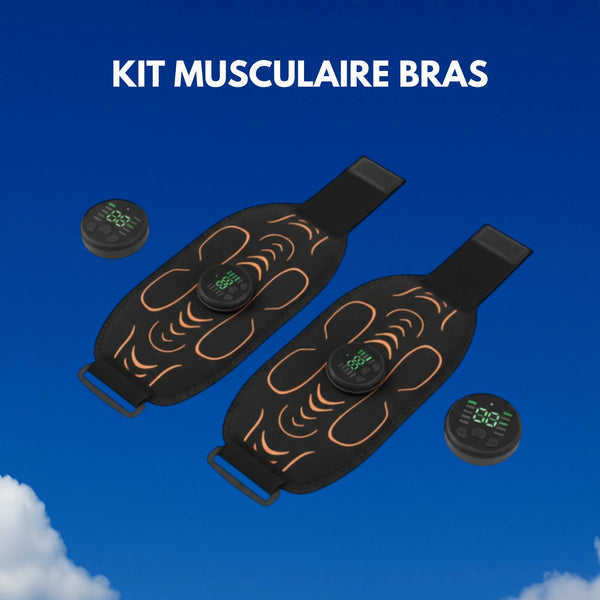
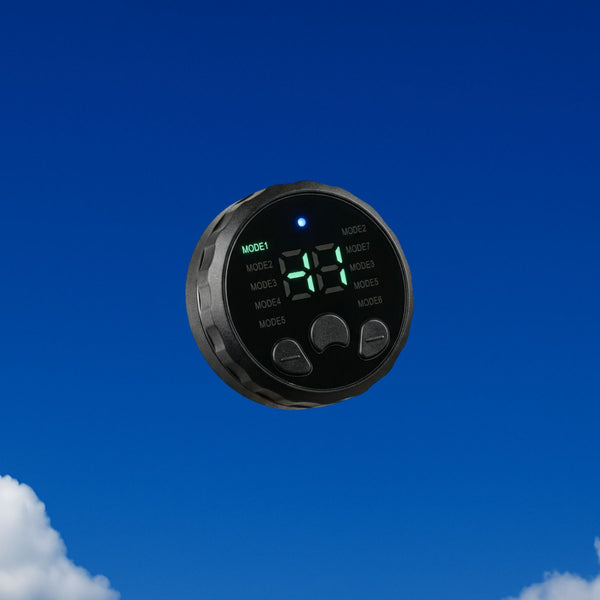
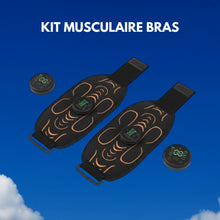
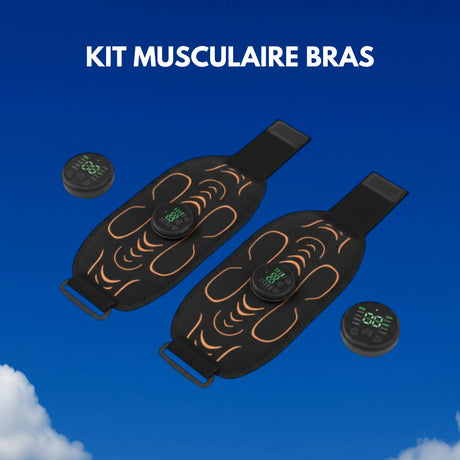
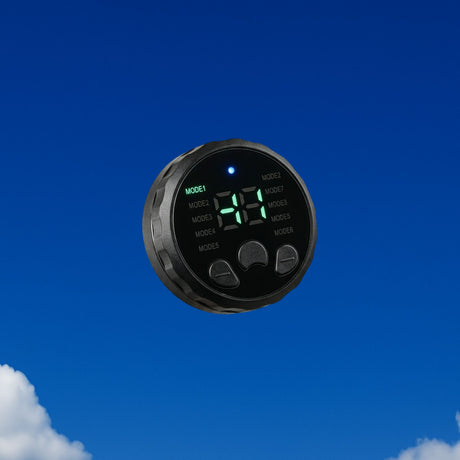
Standard or knee push-ups 4 × 8 to 12. One-arm dumbbell row 3 × 12 per side. Dumbbell shoulder press 3 × 12. Bicep curls 3 × 12. Overhead tricep extensions 3 × 12. To complement arm work on rest days, the EMS muscle arm kit stimulates biceps and triceps in 15 minutes without joint strain.
Session C: metabolic circuit
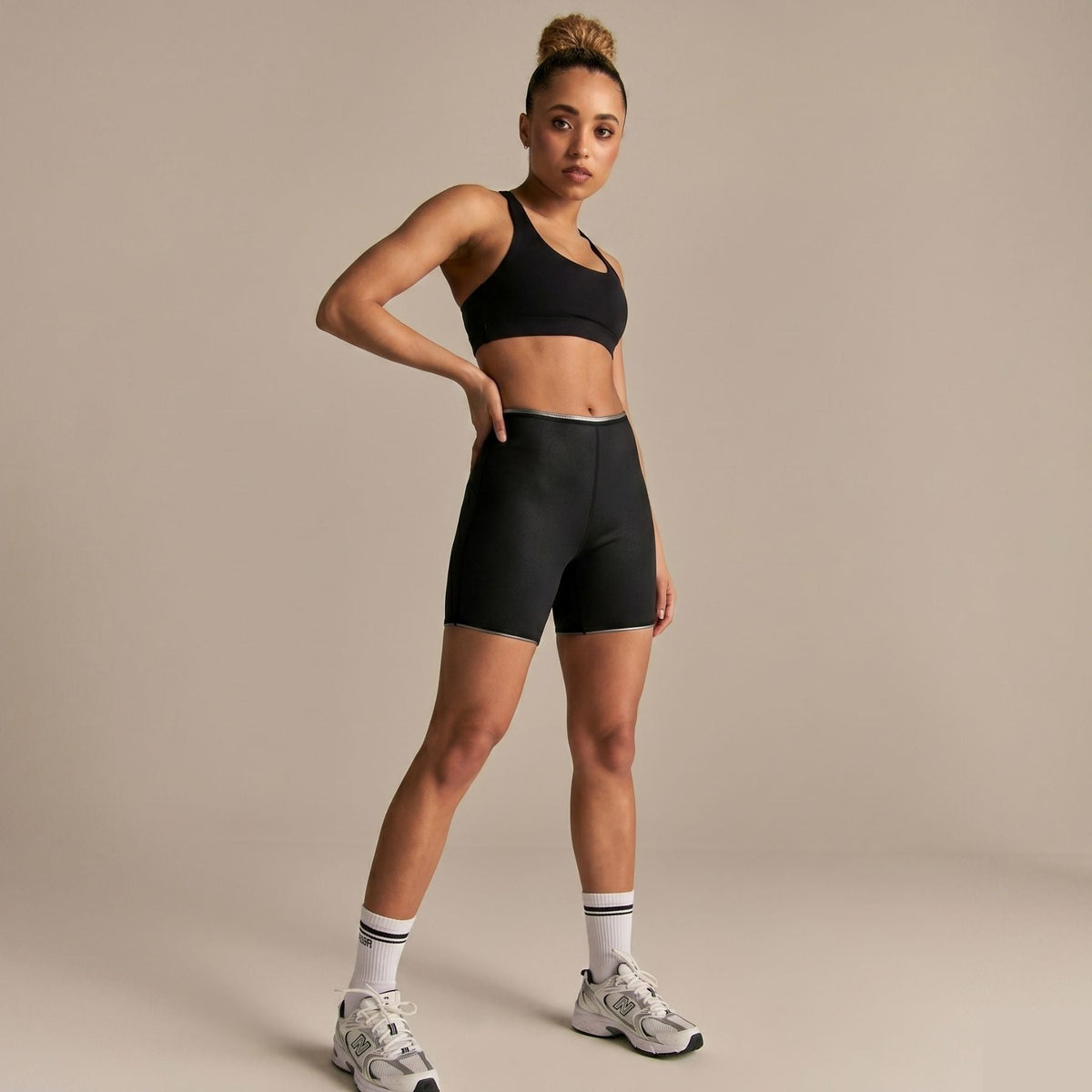
4 rounds, 45 seconds of effort and 15 seconds of rest: jump squats or fast squats, push-ups, walking lunges, rowing, no-jump burpees, plank with shoulder taps, jumping jacks. This session is where a high-waisted sweat legging or a sweat top increases thermal stress and energy expenditure, as measured in the trials cited in our sweat t-shirt guide.
Progression: add one repetition per exercise each week; in week 7, increase dumbbell weight or switch to standard push-ups if you were on your knees.
Phase 3, weeks 9 to 12: performance
Objective: strength and definition. Sets become heavier and shorter, rest times longer (90 seconds to 2 minutes), and an optional fourth short session is introduced.
Session A: lower body strength
Heavy goblet squats 5 × 8. Bulgarian split squats with dumbbells 4 × 8 per leg. Hip thrusts with dumbbell on the pelvis 4 × 10. Stiff-legged deadlifts 4 × 8. Ab roller 3 × 10 to 12.
Session B: upper body strength
Elevated-feet push-ups 4 × 6 to 10. Heavy one-arm dumbbell row 4 × 8 per side. Shoulder press 4 × 8. Bicep curl and tricep extension superset 3 × 10. Plank 3 × 60 seconds.
Session C: intensive full body
5-round circuit, 40/20: jump squats, push-ups, jump or walking lunges, rowing, burpees, ab roller, side plank. Optional Session D (20 minutes): abs and glutes, using the exercises from our at-home flat stomach abs program.
Progression: weeks 9 and 10, increase the weight; weeks 11 and 12, add a set to the main movements. In week 12, test yourself: maximum number of push-ups, squats in 1 minute, plank duration, and compare to week 1.
Nutrition to support the program
Three simple benchmarks. Protein: 1.4 to 1.8g per kilo of body weight per day, spread over 3 to 4 meals (eggs, fish, poultry, dairy, legumes, tofu); this is the nutrient most often lacking in women who start strength training. Calories: at maintenance level if the goal is toning, with a slight deficit of 200 to 300 kcal if the goal includes fat loss; too steep a deficit prevents muscle gain. Timing: a meal or snack with protein and carbohydrates within two hours after the session. Iron and calcium deserve special attention for women; in case of unusual fatigue, a blood test is helpful. For meals around your workout, see what to eat before and after training.
Menstrual cycle and training
Data do not allow for imposing strict periodization based on the cycle: individual responses vary too much. In practice, many women feel stronger in the first half of their cycle and more tired in the days preceding menstruation. Adapt without guilt: keep the three sessions, but reduce the weight or circuit rounds if energy is low. Moderate training often actually reduces menstrual pain.
Errors to avoid and precautions
Classic errors: doing only cardio for fear of "getting big" from strength training; eating too little protein; changing programs every two weeks; neglecting the lower body or, conversely, the upper body; skipping the warm-up; never increasing the difficulty. Consult a doctor before starting in case of pregnancy, recent postpartum (see our guide to resuming abdominal work after childbirth), heart conditions, diagnosed osteoporosis, or persistent joint pain. Sharp pain during an exercise means you must stop the movement, not "grin and bear it."
Expected results after 12 weeks
By following the program consistently and with proper nutrition: frequently doubling the number of push-ups and plank duration, performing squats and lunges with weight, noticeably more defined glutes and shoulders, improved posture, clothes fitting differently even at the same weight (muscle is denser than fat), improved sleep and energy. What you will not get: massive bulk, spectacular weight loss without dietary changes, or a transformation in 4 weeks. Strength training rewards consistency. To continue after week 12, our article getting back to strength training at home offers further progressions.
Frequently asked questions
Will I get too muscular?
No. Female hormonal levels do not allow for significant muscle gain without years of very intensive training. Three sessions per week tone, define, and firm; they do not cause puffiness.
Is equipment needed to start?
None for the first 4 weeks. Afterward, a pair of light dumbbells and an ab roller are enough until week 12. Sweat accessories or electrostimulation are supplements, not prerequisites.
Strength training or cardio for weight loss?
Both, but strength training is what preserves muscle during a deficit and shapes the silhouette. Two to three strength sessions plus daily walking provide better long-term results than cardio alone.
How long until I see results?
Strength improves within 2 to 3 weeks. Visible changes (firmness, posture, definition of shoulders and glutes) generally appear between week 6 and week 10.
Can you train during your period?
Yes, if you feel up to it. Reduce intensity if necessary; moderate activity often relieves pain. Do not train in case of dizziness or debilitating pain.
Key takeaways
- Women gain strength and muscle at the same proportional rate as men, with no risk of excessive bulk.
- 3 sessions per week, progressive overload, two reps in reserve.
- Phase 1: bodyweight; phase 2: light dumbbells and ab roller; phase 3: strength and intensive circuits.
- 1.4 to 1.8g of protein per kilo per day, slight deficit or maintenance depending on the goal.
- Adapt intensity to your cycle without cancelling sessions.
- Visible results between week 6 and week 10; consistency beats everything else.
Conclusion
Twelve weeks are enough for a beginner to go from "I've never done strength training" to full push-ups, weighted squats, a one-minute plank, and a noticeably more toned silhouette. The secret is not in a miracle exercise but in the progression and consistency of three sessions per week. Gear up simply in phase 2 with an ab roller and, for your circuits, a high-waisted sweat legging; then keep going with our 10 at-home core exercises.
Sources
- Roberts B. M., Nuckols G., Krieger J. W. (2020). Sex Differences in Resistance Training: A Systematic Review and Meta-Analysis. Journal of Strength and Conditioning Research, 34(5), 1448-1460. PubMed
- Schoenfeld B. J., Ogborn D., Krieger J. W. (2017). Dose-response relationship between weekly resistance training volume and increases in muscle mass: A systematic review and meta-analysis. Journal of Sports Sciences, 35(11), 1073-1082. PubMed
- World Health Organization (2020). WHO guidelines on physical activity and sedentary behaviour. who.int