











Getting back into abdominal exercises after childbirth is one of the most frequent questions, and one for which you will find the most dangerous advice. No, you do not "get your stomach back" with sit-ups at three weeks; yes, you can regain a strong and functional abdominal wall, provided you follow a precise order: the pelvic floor first, the transverse abdominis next, and classic abdominal exercises last. This guide incorporates the French recommendations from the National College of Gynecologists and Obstetricians (CNGOF) and studies on diastasis recti to provide you with a realistic timeline, safe exercises for each stage, and those to avoid.
What pregnancy and childbirth do to your abs
For nine months, the rectus abdominis muscles separate to make room for the uterus: this is diastasis recti, which is physiological and almost universal at the end of pregnancy. A follow-up study (Sperstad et al., 2016, British Journal of Sports Medicine) found it in about 60% of women at 6 weeks postpartum, 45% at 6 months, and still 33% at 12 months. At the same time, the pelvic floor—the floor of muscles that supports the bladder, uterus, and rectum—has been stretched by the weight of the pregnancy and the passage of the baby, and the transverse abdominis, the deep muscle that sheathes the abdomen like a corset, has lost its tone.
The practical consequence is simple: forcing the superficial abdominal muscles (sit-ups, crunches, long planks) before the pelvic floor and transverse abdominis have recovered pushes the organs downward and widens the midline further. This is the reason for the sequence of steps described below.
What the CNGOF and physical therapists recommend
The CNGOF clinical practice recommendations (Deffieux et al., 2015) are clear on several points. Pelvic floor physical therapy is recommended with a high level of evidence in cases of persistent urinary incontinence at 3 months, with at least three guided sessions followed by home exercises. "Early" rehabilitation in the first two months is not recommended: the body must heal first. Electrostimulation alone, without active exercise, is not recommended either. Finally, no abdominal rehabilitation method has proven superior to the others: what matters is progressivity and respect for the pelvic floor.
In France, pelvic floor rehabilitation is covered by national health insurance after the postnatal check-up, performed by a midwife or a physical therapist, usually between 6 and 8 weeks after childbirth. It is the mandatory first step before any serious resumption of abdominal training.
The recovery timeline, step by step
Weeks 0 to 6: recovery and breathing
No abdominal exercises. What is authorized and useful: daily walking, starting with 10 minutes and gradually increasing to 30; abdominal breathing while lying on your back, inflating the belly on the inhale and letting it deflate on the exhale; and, as soon as the pelvic floor is no longer painful, light pelvic floor contractions for 3 seconds, 10 times, several times a day, as if you were holding back the urge to urinate. After a C-section, wait for the doctor's approval before performing any voluntary contractions.
Weeks 6 to 12: pelvic floor rehabilitation and waking the transverse abdominis
This is the time for rehabilitation with a midwife or physical therapist. In parallel, the first authorized abdominal exercise is engaging the transverse abdominis: lying down with knees bent, exhale slowly through your mouth while pulling your navel toward your spine without holding your breath or bulging your stomach, 10 times, 3 sets per day. Then add a simplified "dead bug" (lying down, slowly moving one arm then one leg away without the lower back lifting) and a glute bridge with an exhale. These exercises should always be done while exhaling, with the pelvic floor slightly contracted.
Months 3 to 6: progressive strengthening
Once rehabilitation is validated and in the absence of urinary leakage, pelvic heaviness, or diastasis wider than two fingers, you can strengthen: plank on the knees 3 × 20 to 30 seconds, side plank on the knees, bird-dog (on all fours, extending opposite arm and leg), bodyweight squats and lunges. Always exhale during the effort, never hold your breath. This is also the period when brisk walking can become a return to gentle cardio.
After 6 months: classic abs and high impact
Crunches, leg raises, long planks, and exercises with accessories (ab wheel, weights) can gradually return if the previous stages have been mastered, and running or HIIT can be resumed from 6 months for most women, or later in case of pelvic symptoms. Our at-home women's ab program and the 12-week beginner strength training program for women take over at this stage.
How to test your diastasis at home
Lying on your back with knees bent, place two fingers horizontally just above your navel. Lift your head and shoulders slightly while exhaling, as if to start a crunch, and feel the space between the two muscle bands. Measure again 5 cm above and 5 cm below the navel. A gap of 2 fingers or less, without the belly forming a bulge or a dip along the midline, is considered functional. Beyond that, or if a bulge appears during exertion, consult a specialized physical therapist before strengthening: adapted exercises exist, but they must be individualized.
Exercises to avoid, and until when
Until rehabilitation is validated (usually 3 months): crunches and sit-ups, straight leg raises, long planks, breath-hold core work, jumping, running, lifting heavy loads while holding your breath. Until 6 months or until diastasis disappears: forceful torso rotations, ab wheel exercises, weighted abdominal work. At any time: any exercise that causes a bulge along the midline, urinary leakage, pelvic pain, or a feeling of heaviness. These signs are not "normal after a baby": they indicate that the exercise is performed too soon or incorrectly, and justify professional advice.
Posture, back, and carrying: the forgotten postpartum issues
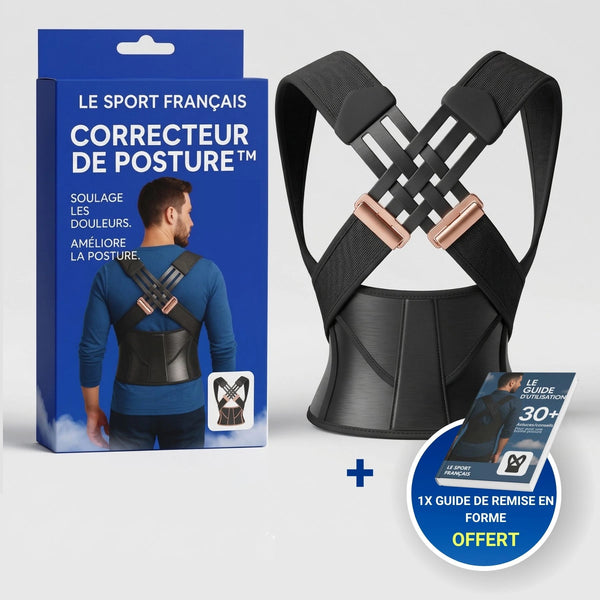
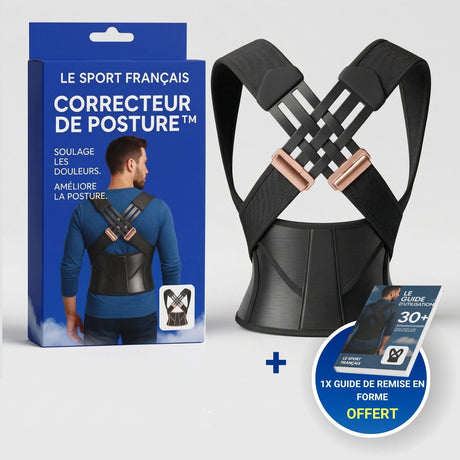
Postpartum lower back pain and rounded shoulders result from carrying the baby, breastfeeding, and fatigue as much as from abdominal weakness. Three habits help: carrying the baby on alternating sides, raising the baby with a pillow during feedings rather than leaning over, and 5 minutes daily of opening the shoulders and extending the back. A posture corrector worn for 20 to 30 minutes a day can serve as a reminder during this period, as a complement to the exercises and never as a replacement; our article back pain and posture: 5 exercises details the movements.
EMS belts after childbirth: when and how?
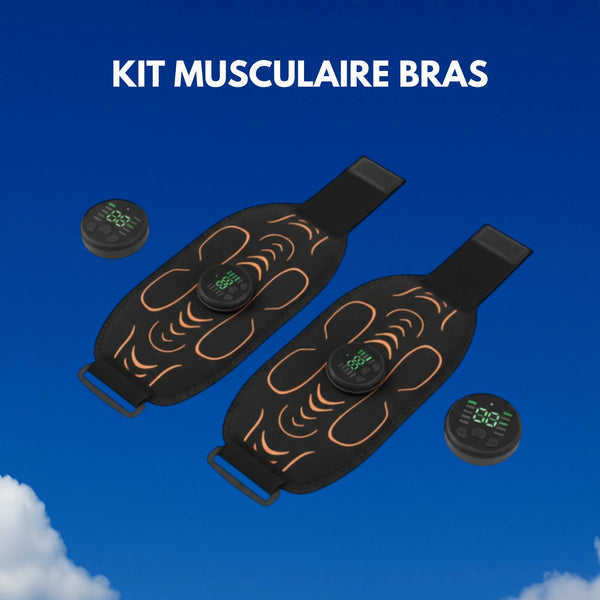
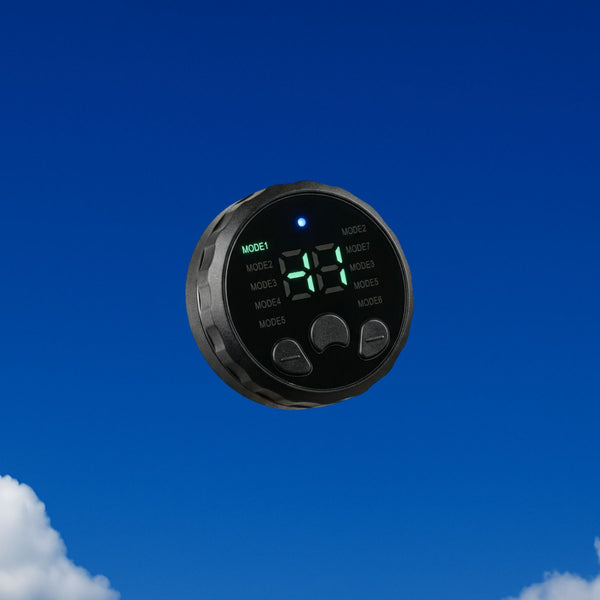
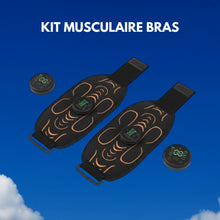
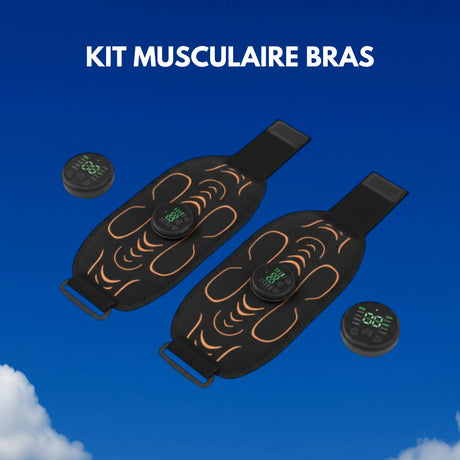
The honest answer has three points. Not before the end of pelvic floor rehabilitation and the agreement of your midwife, physical therapist, or doctor: generally not before 3 months, and never in case of an unhealed C-section, significant diastasis, or pelvic symptoms. Not alone: the CNGOF specifies that electrostimulation without active exercise is not recommended; the belt is a supplement to voluntary work of the transverse abdominis and pelvic floor, not a replacement. Not for weight loss: EMS tones the muscle and can reduce waist circumference, but it does not burn fat, as shown in studies summarized in EMS belt: real results over 8 weeks. In this context, from the 4th month and with professional approval, the Le Sport Français EMS abdominal belt can help reactivate an abdominal wall that does not respond well to voluntary contractions, 15 to 20 minutes, 3 times a week, at low intensity. Our guide women's abdominal belt: effectiveness and errors to avoid specifies the settings.
Diet, sleep, and realistic expectations
The postpartum belly is made of stretched muscles, loose skin, sometimes fat stored during pregnancy, and a uterus that takes 6 to 8 weeks to return to its size. No restrictive diets during breastfeeding or in the first months: energy requirements are high and fatigue is already significant. A diet sufficient in protein, fiber, and water, daily walking, and sleep whenever possible do more than any "flat stomach" plan. Expect 9 to 12 months to regain a strong abdominal wall; that is how long the pregnancy took.
Frequently Asked Questions
When to resume abs after childbirth?
Transverse abdominis work and breathing from 6 weeks with medical approval, progressive strengthening after pelvic floor rehabilitation around 3 months, classic abs and impact exercises after 6 months if no pelvic symptoms persist.
And after a C-section?
The schedule is delayed by 2 to 4 weeks and all abdominal contractions must wait for healing to be validated by the doctor. Walking and breathing are possible early on; pelvic floor rehabilitation is just as useful, as pregnancy has strained the pelvic floor even without a vaginal delivery.
Does diastasis close on its own?
Partially: it decreases spontaneously in the first 6 months for the majority of women, but persists in about a third after one year. Transverse abdominis exercises help; early crunches aggravate it. A wide or symptomatic diastasis requires a specialized physical therapist.
Can you wear a corset or support belt?
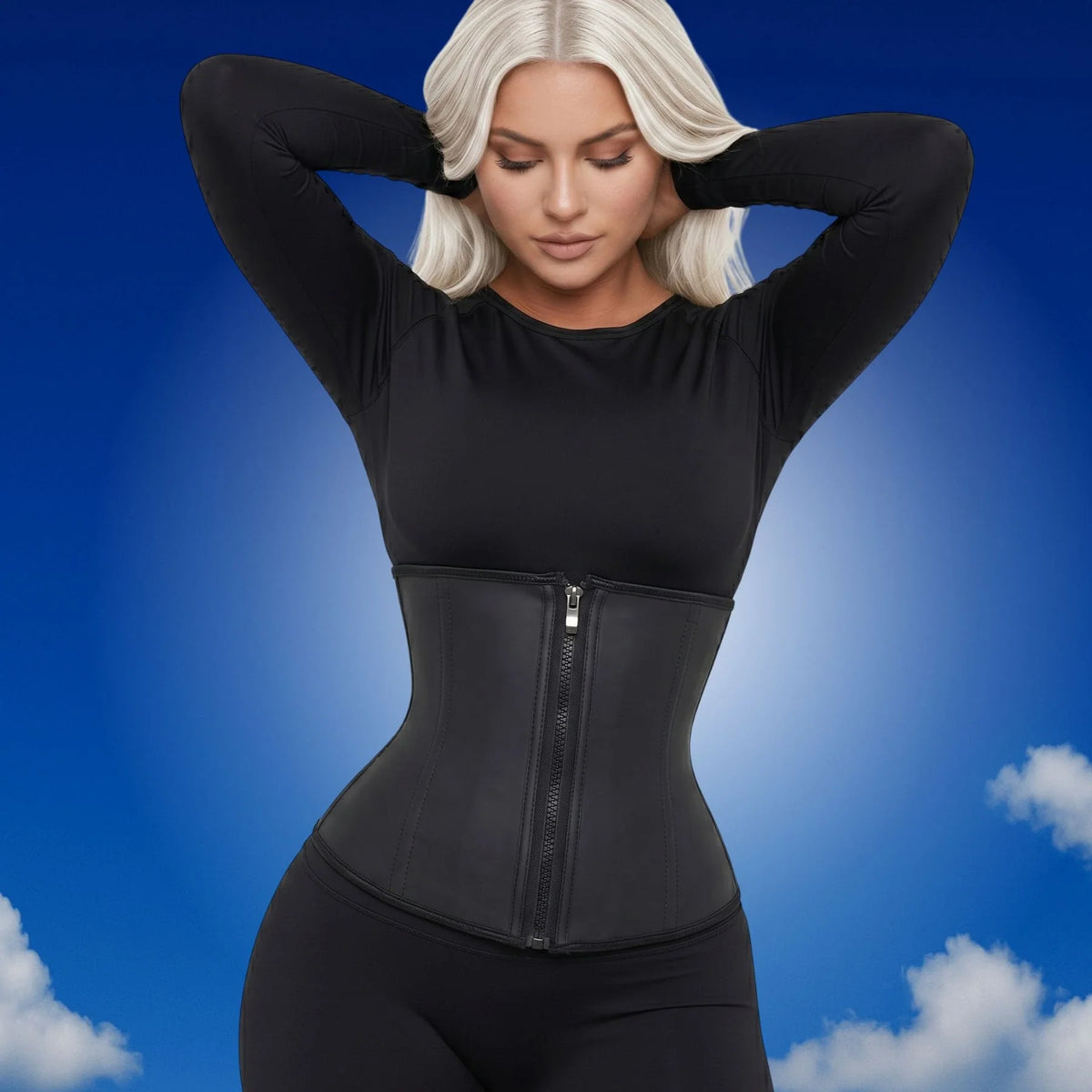
A soft support band can provide relief in the first few weeks, especially after a C-section, but it does not replace muscle work and should not be worn continuously, at the risk of leaving the muscles inactive. Seek advice from your midwife.
When to resume running?
Not before 3 months, and most often around 6 months, once rehabilitation is validated, without leakage or pelvic heaviness, starting with brisk walking then the walk-run method from our beginner running plan.
What to remember
- Order of resumption: pelvic floor, then transverse abdominis, then classic abs, never the reverse.
- No abs before 6 weeks; no crunches or impact exercises before validation of rehabilitation (around 3 months); classic abs after 6 months.
- Diastasis is normal at birth and persists in a third of women after one year: test it and adapt.
- Leakage, heaviness, bulge on the midline: the exercise is too soon, consult.
- The EMS belt should only be used after rehabilitation, with professional agreement, as a supplement to active exercises, and it does not make you lose fat.
- Walking, breathing, sleep, and sufficient food do more than any diet during this period.
Conclusion
Regaining your abs after childbirth is a multi-month journey that begins with the pelvic floor and breathing, passes through guided rehabilitation, and ends with progressive strengthening that the body is ready to support. Respecting this order protects against incontinence, prolapse, and the worsening of diastasis, and ultimately results in an abdominal wall that is stronger than before the pregnancy. When the time is right, the EMS abdominal belt can supplement your active work; in the meantime, a posture corrector and our exercises for the back will relieve the days of carrying your baby.
Sources
- Deffieux X. et al. (2015). Perineal and abdominal rehabilitation in the postpartum period: recommendations. Journal of Gynecology, Obstetrics and Human Reproduction, 44(10), 1141-1146. Clinical practice recommendations of the CNGOF. em-consulte.com
- National College of French Gynecologists and Obstetricians (2015). Clinical practice recommendations: Postpartum. cngof.fr
- Sperstad J. B., Tennfjord M. K., Hilde G., Ellström-Engh M., Bø K. (2016). Diastasis recti abdominis during pregnancy and 12 months after childbirth: prevalence, risk factors and report of lumbopelvic pain. British Journal of Sports Medicine, 50(17), 1092-1096. PubMed