






Looking for Pilates ring (magic circle) exercises that really work your arms, thighs, glutes, and abs, without a studio or reformer? This small, flexible circle, invented by Joseph Pilates himself, is the most underrated accessory for at-home Pilates. This guide provides you with 10 exercise cards, a 20-minute workout, a 4-week progression, the criteria for choosing your ring, and, as always at Le Sport Français, what it does and doesn't do.
If you are a complete beginner, start with our 8-exercise beginner Pilates guide: lateral breathing and a neutral pelvis are essential to getting the most out of the ring.
What is the magic circle and what is it really used for?
The magic circle, also known as the Pilates ring, is a 35 to 38 cm diameter ring made of fiberglass or spring steel covered in foam, equipped with two padded handles. It resists when you compress it between your hands, knees, or ankles, and then returns to its shape: the principle of a reformer spring, in an object that fits in a bag.
It is used for three things: light resistance that keeps targeted muscles working continuously, sensory feedback (between your knees, you immediately feel if the adductors are releasing), and an alignment marker that reveals a rising shoulder or a tilting pelvis.
What it doesn't do: it doesn't replace heavy weights for building mass, and it doesn't help you lose weight. Its low-intensity strengthening fits into the 2 weekly strengthening sessions recommended by the World Health Organization, but it does not count as cardio.
As for evidence, to our knowledge, there is no specific study on the magic circle. However, the benefits of mat Pilates are documented: over 12 weeks, two weekly sessions improved abdominal endurance, flexibility, and upper body endurance in sedentary adults (Kloubec, 2010, Journal of Strength and Conditioning Research). And for the adductors, the muscle group the ring engages the most, a randomized trial conducted on 35 football teams showed that an adductor strengthening program reduced the prevalence of groin pain by approximately 41% (Harøy et al., 2019, British Journal of Sports Medicine). This is not a study on the ring, but it confirms the value of strengthening these often forgotten muscles.
How to hold and use the ring without getting injured?
The number one mistake is squeezing the ring as hard as possible. The magic circle should be compressed to 20 or 30% of its capacity, never until the edges touch. The pressure must be stable and continuous. Three rules for every exercise:
- Wrists remain neutral. Palms press on the pads with the heel of the hand, fingers relaxed.
- Shoulders remain low. If the trapezius muscles lift, reduce the pressure by half.
- Exhalation accompanies pressure. Inhale while releasing slightly, exhale while pressing, without ever holding your breath.
Always place the ring on a fleshy area or on the pads, never on a bare kneecap or ankle bone. Between the knees, position it just above the kneecaps.
The 10 exercises with the Pilates ring (magic circle)
Each card indicates the position, movement, repetitions, and the most common error. Perform the movements slowly, with your core engaged. If you lose your neutral pelvis, reduce the range of motion.
Exercise 1: Lying adductor pressure
Target: adductors, pelvic floor, transverse abdominis. Position: on your back, knees bent, feet flat, ring between the knees. Movement: exhale while pressing the ring for 3 seconds, inhale while releasing halfway without letting go. Repetitions: 12, then 10 short pulses. Common error: pressing the lower back into the floor to squeeze harder.
Exercise 2: Glute bridge with ring
Target: glutes, hamstrings, adductors. Position: same as exercise 1. Movement: exhale while lifting the pelvis vertebra by vertebra while pressing the ring; inhale at the top, exhale while lowering without releasing the pressure. Repetitions: 10. Common error: lifting all at once and arching the back at the top.
Exercise 3: The hundred with ring between ankles
Target: transverse abdominis, rectus abdominis, adductors. Position: on your back, legs extended at 45 degrees (or knees at 90 degrees for the easy version), ring between ankles, head and shoulders lifted. Movement: pump your straight arms, 5 beats on the inhale, 5 on the exhale, ring slightly compressed. Repetitions: 50 to 100 beats. Common error: pulling on the neck.
Exercise 4: Chest lift, ring in front of the sternum
Target: rectus abdominis, transverse abdominis, pectorals. Position: on your back, knees bent, ring held between palms, arms extended toward the ceiling. Movement: exhale while pressing the ring and lifting head and shoulder blades, gaze toward the knees; inhale while lowering. Repetitions: 12. Common error: bringing the ring toward your face.
Exercise 5: Seated arm pressure
Target: pectorals, biceps, triceps, back muscles. Position: sitting cross-legged or on a chair, back straight, ring between palms at sternum height, elbows wide. Movement: exhale while pressing for 3 seconds, inhale while releasing halfway. One set at sternum height, another with arms extended in front, a final one with arms overhead. Repetitions: 10 per position. Common error: raising shoulders in the high position.
Exercise 6: Lateral abductor pressure
Target: gluteus medius, tensor fasciae latae. Position: lying on your side, legs extended, ring upright on the floor: the bottom ankle outside the ring, the top ankle inside, against the top edge. Movement: exhale while pushing the top leg toward the ceiling against the resistance, inhale while lowering. Repetitions: 12 per side. Common error: rocking the pelvis backward.
Exercise 7: Side adductor pressure
Target: adductors, obliques. Position: lying on your side, ring between ankles, legs extended and slightly in front of the body, head resting on your arm. Movement: exhale while pressing the top leg downward, inhale while releasing halfway. Repetitions: 15 per side. Common error: rolling forward.
Exercise 8: Spine stretch with ring
Target: back muscles, hamstrings, transverse abdominis. Position: sitting, legs extended and wide, ring upright on the floor between feet, hands on the top handle. Movement: inhale to lengthen, exhale while curling the head then back forward while gently pressing the ring toward the floor; inhale as you straighten up vertebra by vertebra. Repetitions: 6. Common error: folding from the hips with a flat back.
Exercise 9: Kneeling side plank with ring
Target: obliques, gluteus medius, shoulders. Position: on your side, supported on the bottom knee and hand, top leg extended, ring held in the free hand above the head. Movement: exhale while lowering the ring toward the top hip while pressing it against the thigh, inhale while raising it. Repetitions: 8 per side. Common error: letting the hip sag toward the floor.
Exercise 10: Standing roll down with ring
Target: transverse abdominis, back, backs of thighs, arms. Position: standing, feet hip-width apart, ring between palms in front of thighs. Movement: exhale while curling the head and then the back, vertebra by vertebra, the ring moving toward the floor with light pressure; inhale at the bottom, exhale as you straighten up from the pelvis. Repetitions: 6. Common error: locking the knees.
20-minute session and 4-week progression
Here is how to chain the 10 exercises into a complete session, with 30 seconds of transition between each block.
- Minutes 0 to 2: standing roll down (exercise 10), 6 slow repetitions to mobilize the spine.
- Minutes 2 to 5: lying adductor pressure (1), 2 sets of 12 plus 10 pulses.
- Minutes 5 to 8: glute bridge with ring (2), 2 sets of 10.
- Minutes 8 to 10: the hundred with ring (3), 50 to 100 beats.
- Minutes 10 to 12: chest lift with ring in front of the sternum (4), 2 sets of 12.
- Minutes 12 to 14: seated arm pressure (5), 10 repetitions per position.
- Minutes 14 to 17: lateral pressures (6 then 7), 12 and 15 repetitions per side.
- Minutes 17 to 19: kneeling side plank (9), 8 repetitions per side.
- Minutes 19 to 20: spine stretch (8), 6 repetitions to finish.
Week 1: Taming the resistance
Two 12-minute sessions with exercises 1, 2, 5, 8, and 10 only, 20% pressure maximum. Goal: feel the adductors and core working without tensing the shoulders.
Week 2: The complete session
Three 20-minute sessions with the 10 exercises, easy versions allowed.
Week 3: Slow tempo
Three sessions, slowed tempo (3 seconds pressure, 1 second partial release), one extra set on exercises 1, 2, and 7.
Week 4: Consolidation
Three to four 20 to 25-minute sessions, standard versions, 30% pressure. If you can hold the session without losing your neutral pelvis or raising your shoulders, you are ready to combine the ring with our flat stomach Pilates program.
Which Pilates ring to choose: diameter, resistance, pads?
Three details make all the difference in use. Diameter: 35 to 38 cm is the adult standard and suits the vast majority of body types. Resistance: a flexible ring (foam-covered fiberglass) is ideal for beginners and arms; a firmer ring (spring steel) is suitable for intermediate practitioners who want more weight on their legs. Pads: choose a double pad (inside and outside) to place the ring against your ankles without any bony pressure points.
Le Sport Français is preparing a range dedicated to home Pilates, gathered in our Pilates collection: magic circle ring, small ball, foam roller, bar with bands, and mini reformer. A flexible 38 cm ring with double pads is enough to follow this entire program.
The Le Sport Français selection
Magic circle ring, ball, roller, bar, and mini reformer: all the equipment for practicing at home. Discover the Pilates collection →
Limits, errors to avoid, and contraindications
The magic circle is an excellent light strengthening tool, not a results machine. It doesn't melt inner thigh or belly fat: localized fat loss does not exist. What it really brings: better control of the adductors, glutes, and core, and a feeling of tone.
Most common errors: squeezing the ring at 100%, holding breath, raising shoulders during arm exercises, placing the ring on a bare kneecap or ankle bone, doing pulses too quickly.
Contraindications: seek the advice of a doctor or physical therapist in case of groin pain (sports hernia), recent hip replacement, painful herniated disc, severe osteoporosis, or pregnancy. After childbirth, chest flexion exercises (3 and 4) are not recommended until the abdominal wall is rehabilitated: read our postnatal abdominal physiotherapy guide first. Sharp pain or a sensation of downward pressure on the perineum are signs to stop.
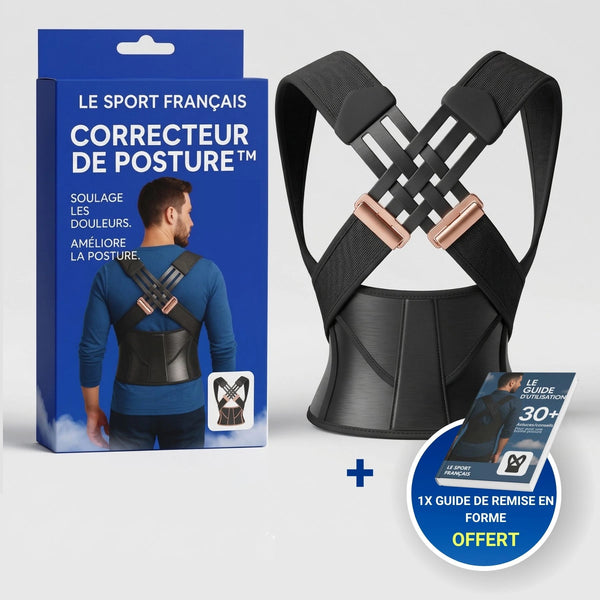
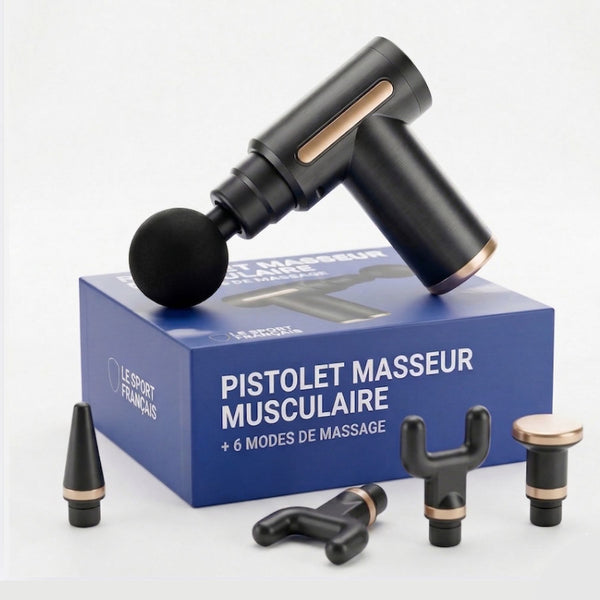
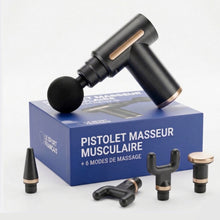
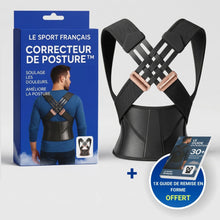
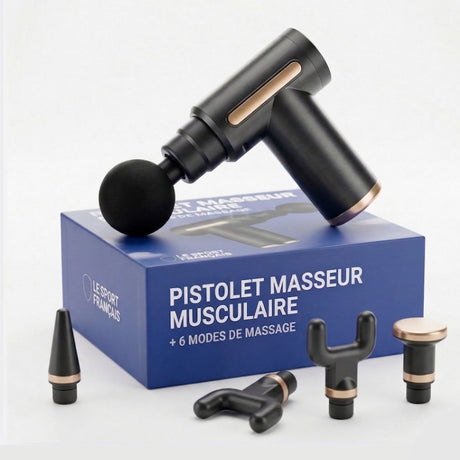
Finally, adductor soreness is common in the first two weeks. A 2-minute pass per thigh with the Le Sport Français massage gun, at low speed, helps relax the area after the session. To extend the alignment worked on with the ring during your seated days, the back and shoulder posture corrector serves as a reminder in front of the screen, without strengthening for you.
Frequently Asked Questions
Is the magic circle effective for the inner thighs?
Yes for strengthening the adductors, the muscles most engaged by the ring. No for melting inner thigh fat in a targeted way: this effect does not exist for any exercise. Expect more toned thighs, not a loss of centimeters without a dietary change.
How many times per week to use the Pilates ring?
Two to four 20-minute sessions per week, every other day. Adductors need a day of recovery between two sessions in the first few weeks; arm presses can be practiced daily with low pressure.
Can the ring be replaced by a ball or a band?
Partially. A small 20-25 cm ball replaces the ring between the knees (exercises 1 and 2). A band mainly works on separation, the opposite of the ring. Arm presses have no equivalent without a ring.
Is the Pilates ring suitable for beginners and seniors?
Yes, with a flexible ring and 20% pressure at the start. Most exercises are done lying down or sitting, which limits joint stress; arm and knee presses can even be done on a chair.
Does the Pilates ring help you lose weight?
No, not on its own: a 20-minute session is a low-intensity strengthening workout that burns few calories. To lose weight, combine it with regular cardio and a suitable diet. Our complete guide to home Pilates explains how to organize a balanced week.
Conclusion
The Pilates ring (magic circle) is a modest accessory in terms of price and footprint, but precious in what it teaches: pressing without tensing, holding resistance while breathing, feeling muscles you never feel. The 10 exercises, the 20-minute session, and the 4-week progression give you a complete framework, with realistic expectations. Start with light pressure, focus on your breathing, and let the ring do its revealing work. To complement your sessions, the massage gun relaxes the adductors after exertion, and our Pilates collection gathers the accessories that will enrich your mat practice. To go deeper, read our beginner Pilates guide and our flat stomach Pilates program.