









Looking for a 30-day at-home Pilates program that fits into a real month, with work, kids and evenings when motivation runs low? Here's a complete day-by-day calendar, designed for beginners as well as anyone getting back into it: 15 to 30 minutes per session, a mat, and rest days built in on purpose.
You'll also find what most online challenges leave out: what 30 days really changes (and what it doesn't), three simple tests to measure your progress, and the situations where it's better to get medical advice before rolling out your mat.
Why a 30-day Pilates program at home?
Thirty days is long enough to build a habit and short enough to stay motivated. The Pilates method rests on six principles (breathing, concentration, centering, control, precision, flow) that call for repetition: the first sessions are mostly about learning to engage your core without holding your breath. A 7-day challenge ends at exactly the point where the movements start to feel natural.
The at-home format has another advantage: no commute, no fixed class time and no one watching. Its drawback is well known: no one corrects your alignment. That's why this program progresses slowly, with few exercises repeated often. If you've never practiced before, start by reading our guide Pilates for beginners: 8 simple exercises to do at home, which covers the basic positions in detail.
What can you really expect from 30 days of Pilates?
Let's be honest: one month won't transform your figure. Mat Pilates burns few calories compared with brisk walking or cycling, and no exercise melts fat from one specific spot. If your main goal is weight loss, it will depend first on your diet and your overall activity; Pilates is a useful complement, not the driving force.
On the other hand, here's what you can reasonably notice after four weeks of regular practice:
- Better core control: you can feel your deep abdominal muscles working and you hold planks for longer.
- Posture that's easier to maintain: less rounded shoulders, a back that tires less when sitting.
- Less stiffness in the backs of your thighs and your lower back.
- An established routine, which remains the most valuable result of the month.
In terms of evidence, Pilates has mainly been studied for back pain. A systematic review of 14 controlled trials published in PLoS One concludes that, in people with chronic low back pain, it improves pain and functional ability in the short term compared with usual care, without being clearly superior to other forms of exercise. In other words: it's a good activity, not a miracle method. Visible changes to your figure generally take several months and vary a lot from one person to another.
Equipment, space and program rules
You need a mat thick enough to protect your spine, two square meters of floor space and clothes that don't restrict your movement. That's it. Accessories come later, for variety: our guide to essential at-home Pilates equipment explains what to buy first, and above all what not to buy. From week three, a Le Sport Français resistance band lets you add a light load to leg and back exercises.
Four rules shape the month:
- Four Pilates sessions a week, one gentle mobility session, and two days of rest or walking.
- Never any pain: feeling your muscles work is normal, sharp or radiating pain is not. Stop.
- Quality over quantity: six controlled reps are worth more than fifteen sloppy ones.
- A fixed time slot: same time, same place. Habits are built by repeating the context.
The three tests to do on day 1 and day 30
Write your results down on paper; they'll be a more reliable point of comparison than the scale:
- Kneeling plank: how long you hold it, back flat, without arching (in seconds).
- Seated forward bend, legs straight: distance between your fingertips and your toes (in centimeters).
- Shoulder bridge: number of slow reps before your glutes give out or your lower back takes over.
The program's 8 core exercises
The whole calendar is built on eight classic moves, grouped into three standard sessions. Learning them before you start saves you from spending half the session rereading instructions.
- Lateral breathing: hands on your ribs, inhale while expanding your rib cage sideways, exhale while gently drawing in your lower belly.
- Pelvic tilt and shoulder bridge: lying down, knees bent, roll your spine up vertebra by vertebra until your knees, hips and shoulders are aligned.
- Dead bug: on your back, legs in tabletop, lower one arm and the opposite leg without lifting your lower back.
- Modified Hundred: head and shoulders lifted, knees bent, small arm pulses over five counts of inhaling and five counts of exhaling.
- Single leg stretch: one leg extends while the other knee comes in toward your chest, hips still.
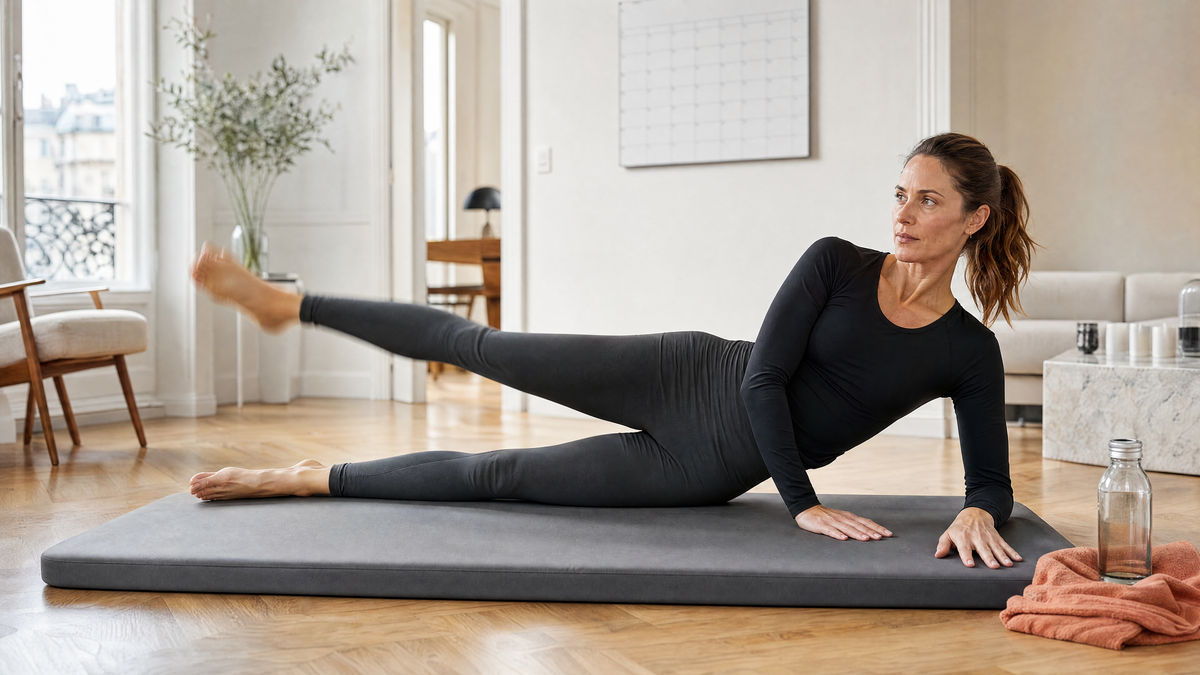
- Side-lying leg lifts: lying on your side, body aligned, raise and lower your top leg without letting your hips roll.
- Bird-dog: on all fours, extend one arm and the opposite leg, back flat, without shifting your weight.
- Cat-cow and spine stretch: slow mobilization of the back, in flexion then extension.
Session A (core): breathing, dead bug, modified Hundred, single leg stretch. Session B (back and posture): cat-cow, bird-dog, shoulder bridge, kneeling plank. Session C (legs and glutes): shoulder bridge, side-lying leg lifts, bird-dog, spine stretch. Session D (mobility): ten minutes of breathing, cat-cow and slow stretches. For a session focused on your abs, you can also pick from our Pilates for a flat stomach program.
30-day at-home Pilates program: the day-by-day calendar
Do 2 sets of each exercise for the first two weeks, then 3, with 30 seconds of rest. Session times include two minutes of breathing at the start and two minutes of stretching at the end.
Week 1 (days 1 to 7): learn the positions, 15 minutes
- Day 1: baseline tests + session A, 6 reps per exercise.
- Day 2: session B, 6 reps, plank held for 15 seconds.
- Day 3: active rest, 20 to 30 minutes of walking.
- Day 4: session C, 8 reps per side.
- Day 5: session D, gentle mobility.
- Day 6: session A, 8 reps.
- Day 7: full rest.
Week 2 (days 8 to 14): stabilize, 20 minutes
- Day 8: session B, 8 reps, plank for 20 seconds.
- Day 9: session C, 10 reps per side.
- Day 10: active rest, walking.
- Day 11: session A, 10 reps, Hundred with 50 pulses.
- Day 12: session D, gentle mobility.
- Day 13: sessions B and C back to back, 1 set of each exercise.
- Day 14: full rest.
Week 3 (days 15 to 21): strengthen, 25 minutes
Move up to 3 sets and make three exercises harder: Hundred with legs in tabletop, single-leg shoulder bridge, forearm plank (knees down if your back arches).
- Day 15: session A, 10 reps, Hundred with 80 pulses.
- Day 16: session C, 12 reps per side, resistance band optional.
- Day 17: active rest, walking.
- Day 18: session B, 10 reps, plank for 30 seconds.
- Day 19: session D, gentle mobility.
- Day 20: circuit A + B + C, 1 set of each exercise.
- Day 21: full rest.
Week 4 (days 22 to 28): flow, 30 minutes
The goal is no longer to add reps but to link the movements together, with no break between two exercises in the same set.
- Day 22: session B as a flow, 12 reps, plank for 40 seconds.
- Day 23: session A as a flow, full Hundred (100 pulses).
- Day 24: active rest, walking.
- Day 25: session C, 15 reps per side.
- Day 26: session D, gentle mobility.
- Day 27: circuit A + B + C, 2 sets.
- Day 28: full rest.
Days 29 and 30: full session and review
Day 29: circuit A + B + C, 2 sets, at your own pace. Day 30: ten minutes of mobility, then redo the three tests from day 1 and compare. Gaining a few seconds on the plank or a few centimeters on the forward bend is a real result, even if you can't see it in the mirror.
Should you do Pilates every day for 30 days?
No, and this calendar deliberately doesn't suggest it. Many challenges promise a daily session; in practice, that's the number one reason people quit around day ten. Your deep muscles improve between sessions, not during them. Two lighter days a week also protect your wrists, neck and lower back, which often get strained the wrong way when you start out on your own.
Days without Pilates don't have to be days without movement, though. France's national health insurance (Assurance Maladie) points out that it's recommended to exercise at least five days out of seven, and the World Health Organization stresses that any amount of physical activity is better than none. The walks on days 3, 10, 17 and 24 are therefore a full part of the program. If you miss a session, don't make up for it by doubling up the next day: simply pick the calendar back up where you left off.
Mistakes to avoid and contraindications
The most common mistakes at home are always the same:
- Holding your breath during the effort: exhale on the hardest phase.
- Pulling on your neck in the Hundred: keep a fist-sized space between your chin and chest, or rest your head down.
- Arching your back in the plank or dead bug: reduce the range of motion until your back stays stable.
- Going too fast: Pilates is done slowly, and that's what makes it challenging.
- Skipping steps: moving on to week 3 without mastering week 2 gets you nowhere.
Ask for advice from a doctor or physiotherapist before starting if you're pregnant, have recently given birth, or have a herniated disc, current sciatica, osteoporosis, recent surgery or lingering pain. After giving birth, getting back into exercise starts with pelvic floor rehabilitation: our guide to ab exercises after childbirth walks you through the steps. And whatever your profile, pain that persists after a session isn't muscle soreness to be ignored.
After day 30: how to keep going?
The real challenge starts on day 31. Three options work well. The first: keep the week 4 pace (four 30-minute sessions) for a second month, adding an accessory. The ring is the easiest to work in: our 10 Pilates ring exercises slot straight into sessions A and C. The second: switch to three longer sessions and add an endurance activity. The third, if you want to recreate the studio experience: a Pilates reformer at home, more expensive and not essential.
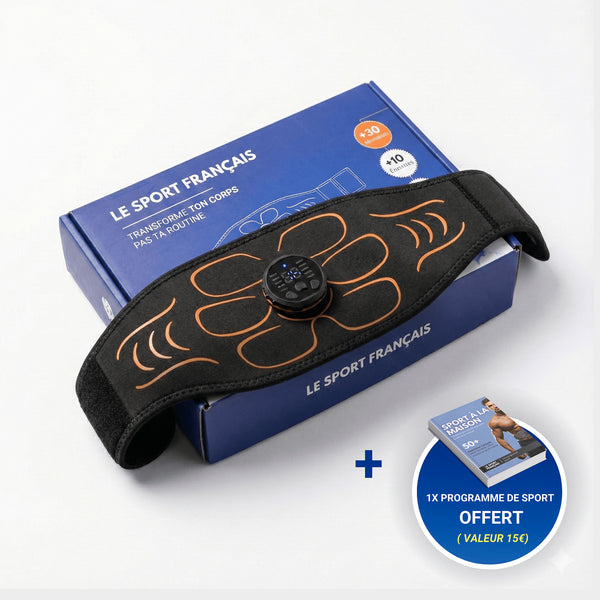
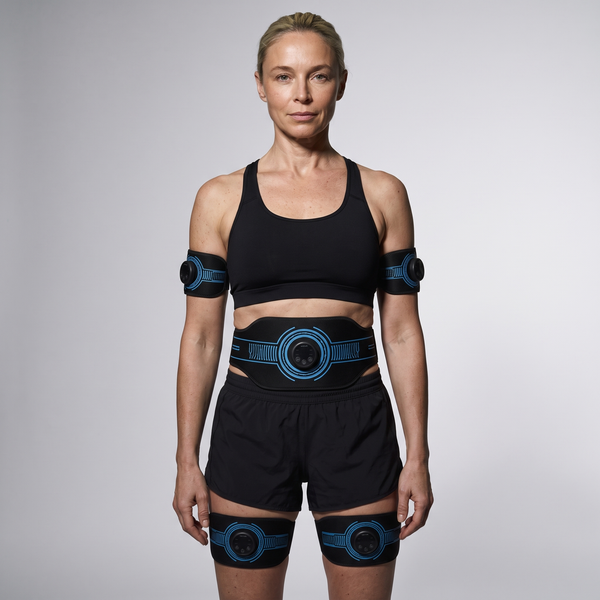
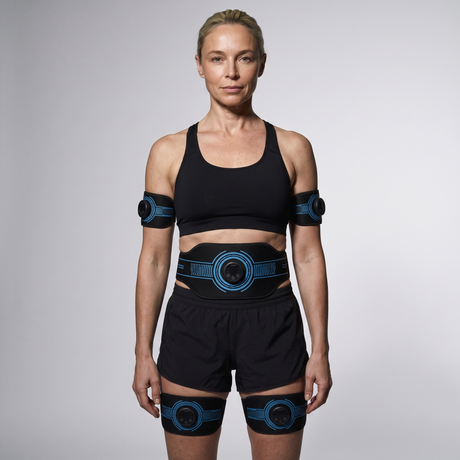
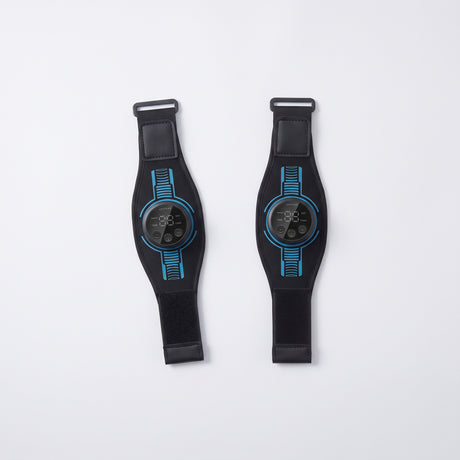
Some readers pair their sessions with an EMS ab belt on rest days. It's a possible complement to stimulate the abdominal muscles, but it replaces neither the control work of Pilates nor physical activity.
Frequently asked questions
Can you lose belly fat with 30 days of Pilates?
Pilates strengthens your deep abdominal muscles and improves posture, which can give you a firmer-looking stomach. On its own, it won't make belly fat disappear: that mainly depends on your diet and your total energy expenditure over several months.
How long should you practice each day?
This program goes from 15 to 30 minutes per session. At first, consistency matters more than duration: four short, careful sessions are better than one long weekly session.
Is it better to practice in the morning or the evening?
The best time is the one you'll stick to for a month. In the morning, your body is stiffer, so extend your warm-up. In the evening, avoid practicing right after a big meal.
What if the program is too hard?
Stay at the same level for an extra week, reduce the reps or stick to the easier versions (knees down, head resting). Repeating a week isn't a failure; that's exactly how the method is built.
Is Pilates enough as your only physical activity?
It covers strength, mobility and posture well, but less so endurance. Ideally, combine it with brisk walking, cycling or swimming, as the calendar's active rest days are designed for.
This 30-day at-home Pilates program doesn't promise a new body; it gives you a realistic framework: eight exercises, four sessions a week and three tests to measure how far you've come. Print the calendar, block out your time slot and start with day 1. To get equipped without spending unnecessarily, check out our guide to at-home Pilates equipment, and to review the positions, our Pilates exercises for beginners.
Sources: Wells C. et al., "The effectiveness of Pilates exercise in people with chronic low back pain: a systematic review", PLoS One, 2014; Assurance Maladie (ameli.fr), "L'exercice physique recommandé au quotidien" (Recommended daily physical exercise); World Health Organization, "Physical activity", key facts. This article is for information only and does not replace medical advice.